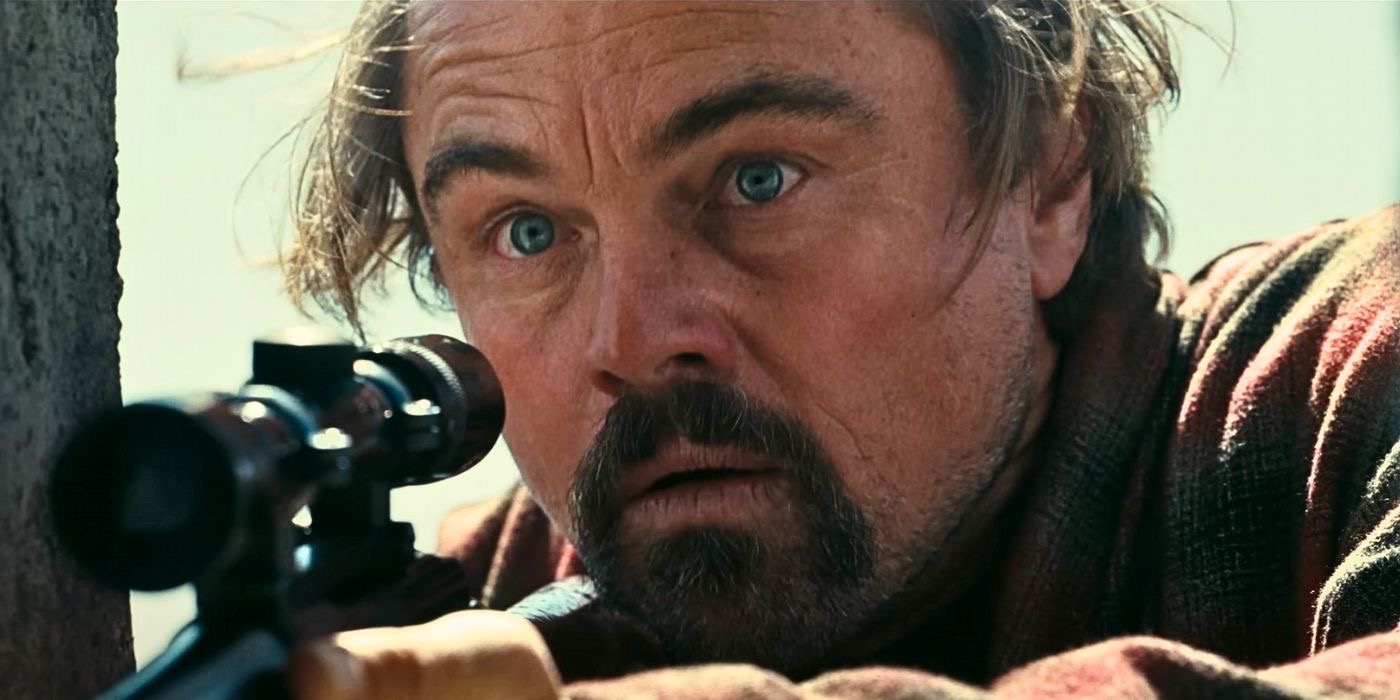
Leonardo Di Caprio
“ONE BATTLE AFTER ANOTHER” My rating: B+ (In theaters)
161 minutes | MPAA rating: R
Rarely has a journey from cautious cringing to outright admiration been as marked as in the case of Paul Thomas Anderson’s “One Battle After Another.”
For the first 20 or so minutes of this epic satiric actioner I feared that the movie was going over a cliff. Anderson is here practicing a form of exaggerated realism that, until you lock into his ethos, feels like slapstick caricature. And not very clever slapstick at that.
The dialogue in the opening minutes — most of it spoken by a sexuality-fueled young black woman with the unlikely name of Perfidia Beverly Hills (she’s played with feral ferocity by Teyana Taylor) — seems almost a parody of blaxploitation/hippie era speechifying.
The target of her taunting is one Col. Steven J. Lockjaw (Sean Penn, looking as if he grooms with a dull-bladed Lawn Boy), the turkey-necked commander of an immigrant detention camp being raided by the French 75, the underground army of which Perfidia is one of the most outspoken and violence-prone members.
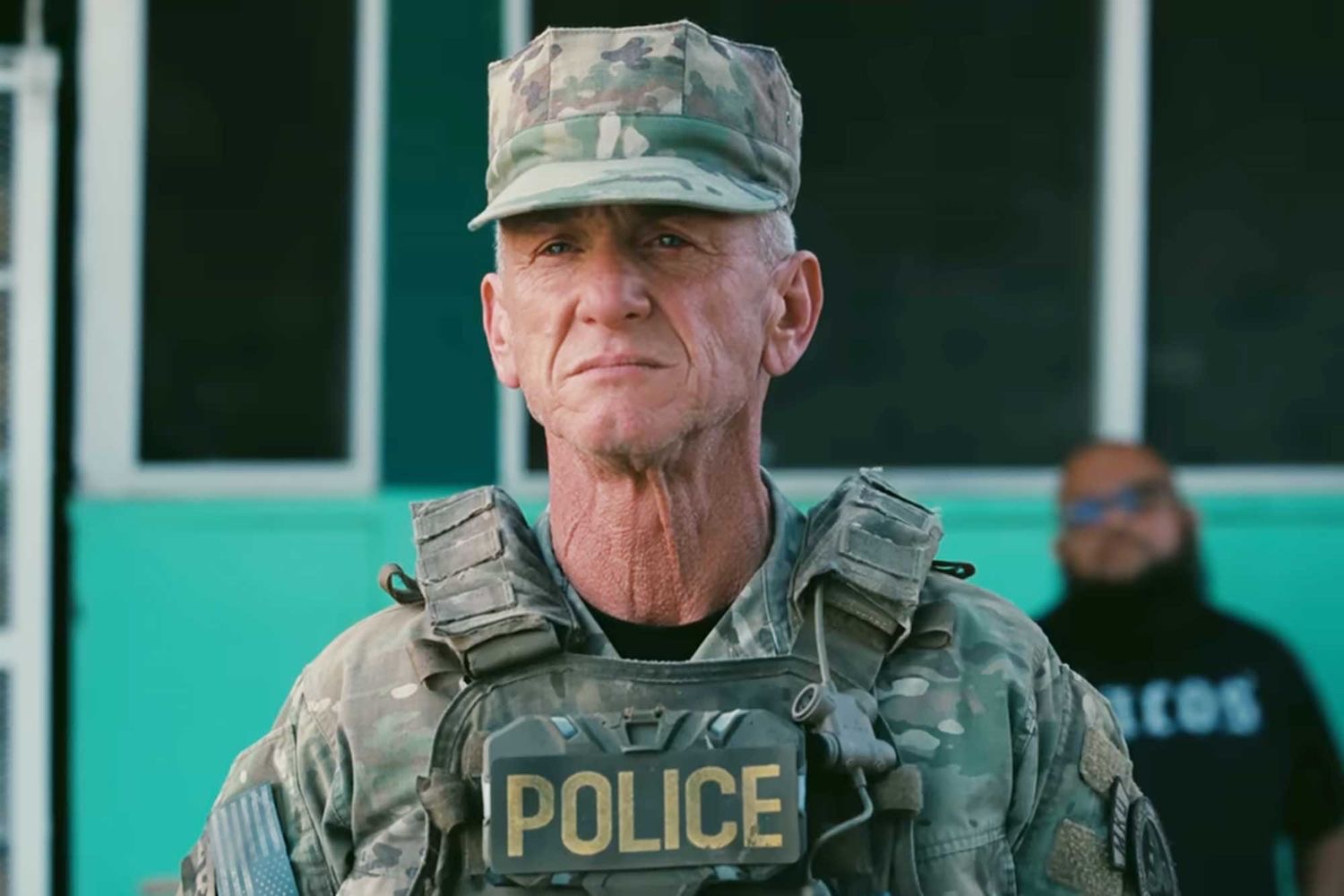
Sean Penn
Clearly Colonel Lockjaw (the names alone should have provided me with a clue as to how to navigate this material) is torn: He’s a racist being held at gunpoint by a young black woman, which is humiliating. At the same time, this situation fulfills his most twisted fantasies; Perfidia sneeringly comments on the involuntary bulge in his camouflage pants.
If all this sounds pretty over the top…well, I thought so, too. But a funny thing happened…as the film progressed I found myself warming up to its unique blend of violence, “Dr. Strangelove”-level social/political black comedy and goofball characters. Weirdest of all, perhaps, is “Battle’s” genuinely moving depiction of father/daughter bonding.
The film’s prologue depicts Perfidia’s life with her lover and fellow terrorist, a bomb-maker played by Leonardo DiCaprio. When the two find themselves facing the prospect of parenthood, he’s all for dialing back on the radical behavior. But not Perfidia…she keeps pushing for more and bigger actions against the Establishment.
The segment ends with Perfidia’s arrest. Her lover and their baby girl are relocated by the underground army to a small city in what appears to be the Pacific Northwest. He changes his name to Bob and devotes his spare time to weed. His daughter Willa (Chase Infiniti) grows up hearing stories of her legendary mother; she’s an overachiever who seems determined to make up for her doofus dad’s dropout lifestyle.
The bulk of the film (it’s 2 1/2 hours long but feels much shorter) centers on Colonel Lockjaw’s obsessive hunt for Perfidia’s lover and child. To that end he orders the military invasion of the sanctuary city where the pair reside. In the chaos father and daughter are separated; the heart of the film centers on Bob’s quest to get Willa back.

Chase Infiniti
Willa is abetted in her escape by one of her parents’ old French 75 comrades (Regina Hall), while Bob (clad in plaid bathrobe) relies on the vast underground network run by Willa’s karate instructor (a scene-stealing Benecio Del Toro), who blends zen calm with barrio bravado.
Along the way Anderson dishes some genuinely biting satire. Willa finds herself sheltered in a leftist convent where the nuns have daily machine gun practice. And there’s an entire subplot involving the billionaire members of the Christmas Adventurers, a clandestine ultra-right cabal dedicated to racial purity (Tony Goldwyn and Kevin Tighe are among the fat-cat members).
DiCaprio has a truly hilarious segment in which he phones the underground army’s call center (the music you hear while on hold is Gil Scott Heron’s “The Revolution Will Not Be Televised”) and totally freaks out because after years of drugs he can no longer remember the password that will allow him to talk to his old French 75 buddies.
Now it’s pretty clear that a movie like this takes several years to get off the ground, yet “One Battle…” feels as if it was torn from today’s headlines. Its depiction of alien roundups, concentration camps and ICE-type military actions smack of our evening news.
And the Christmas Adventurers are a savage sendup of American oligarchy that in the long run feels less satirical than prescient.
I mentioned earlier that “Battle…” features “Strangelove-ean” humor. There are moments, in fact, when the film feels like a homage to Kubrick. A meeting of the Adventurers unfolds with the same stiff-necked formality we saw in “2001” in the office gathering on the moon. And who is Lockjaw if not a descendant of Gen. Jack D. Ripper?
Given the outrageousness of it all, it’s a miracle that the players achieve a surprising level of depth and believability. Exhibit No. 1 is Penn’s Lockjaw, a cartoon of military macho (the guy literally walks as if there’s a ramrod up his butt) who somehow segues from silly to weirdly chilling and maybe even a little compelling.
“One Battle After Another” is so diverting that it’s easy to overlook Anderson’s dead-serious ideas about radicalism and the difficulty of keeping one’s idealistic edge in this America of consumer excess and moral erosion. Laugh until you cry.
| Robert W. Butler
 Butler's Cinema Scene