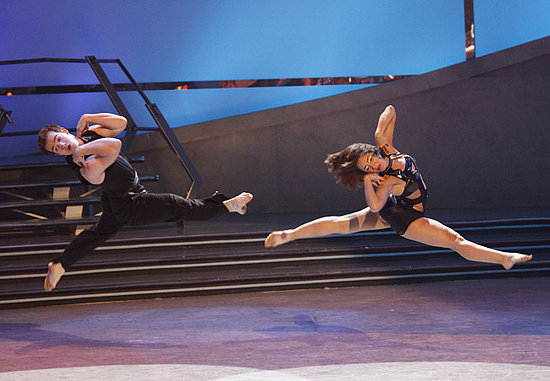
 I’m a huge fan of TV’s “So You Think You Can Dance,” which recently ended its current season.
Not the whole show, just the dancing. The dancing is so terrific that I find myself choking up two or three times in every broadcast because I’ve just seen something that so seamlessly blends movement, emotion and intellectual content that it’s like a crash course in esthetics.
It’s just so goddam…beautiful.
The Fox show itself gives me a bit of an ass pain. I’m not terrifically interested in SYTYCD as an “American Idol”-type competition that begins with weeks of tryouts in cities across the country and starts properly with 20 elite dancers, two of whom (one man, one woman) are eliminated each week until we end up with a season champion.
I don’t like the voting process and never participate.
As with “Idol,” TV viewers cast their ballots by phone or text at the end of each episode. The following week the dancers receiving the least votes must perform a solo “dance for your life” routine before the judges. Each show ends with two of these kids going home.
I dislike the voting process because most Americans have the all taste of a Busch Lite. They vote less for talent than for cuteness. They’re almost as bad as the studio audience, who are encouraged to cheer particularly spectacular steps and lifts as if they’d just seen a singularly violent hit during an NFL game.
Dance as spectator sport.
And then there’s the fact that some very good dancers have been eliminated because that week they drew a choreographer and a style of dance (hip hop, waltz, whatever) that just wasn’t simpatico with their their abilities.
By this time I’m sick of thin, blonde hostess Cat Deeley’s self-congratulatory laughter and huggie-huggie cameraderie with the contestants. (Although I doubt I’ll ever get sick of her legs. The show’s costumer will see to that.)
And God bless those judges, who have already said everything there is to be said about dance and yet still have to come up with pithy analyses of each number. Englishman Nigel Lythgoe is the professorial type; brassy cohort Mary Murphy whoops and yells about her “Hot Tamale Train” (which sounds like a cabaret sex performance in Tijuana). Some of the guest judges — frequently an actor or actress who has starred in a Broadway musical — are little more than cliche recyclers.
Given my antipathy for so much of the show, why do I keep coming back, week after week?
Because during the dance numbers themselves it’s like mainlining high art.
“So You Think You Can Dance” hires the best choreographers in America to come up with original dance numbers — in the early stages of the competition at least 10 a week.
That’s a staggering amount of creativity, and the surprise is not that sometimes their ideas don’t work but that they so overwhelming work spectacularly.
Sonia Tayeh (who a few seasons back kept me perennially amused with her classic punk Mohawk), Travis Wall, Mia Michaels, Tyce Diorio, Stacey Took, Mandy Moore, married couple Tabitha and Napoleon D’Umo — these are the true stars of the show. You can tell there’s a fierce competition to come up with a routine that will knock the socks off their fellow choreographers. After several seasons you understand where each is coming from and anticipate what magic they’ll produce — but they always surprise you.
They’ve created dances about cancer, about abusive relationships, about bullying that tear your heart out. But they’ve also come up with toe-tapping Broadway-type numbers that make you glad you’re alive.
Here’s how I prefer to watch the show. I DVR each episode, and then fast forward so that ALL I watch are the routines themselves.
If I see a dance number that particularly moves me I sometimes watch the judges’ comments…because there’s something fascinating about seeing these experienced dance professionals caught so off guard by a routine that they can barely talk through their tears.
Seriously, folks, this is the weepiest show on television. But, hell, the talent on display merits every salty drop.
|Robert W. Butler
 Butler's Cinema Scene
I, too, love the show and am blown away with the talent, both dancers and choreographers. I, too, don’t like the voting process. As in Idol, it turns out to be a popularity contest more than talent. I prefer the voice, where the singers are screened first and invited to participate.
Loved seeing your review. I’m a SYTYCD fanatic with more tolerance than you for the format. I do wish the judges had more control over who goes or stays,
but relish the auditions, too. They show fewer of the self-deluded weirdos than American Idol, and it lets us see that first moment when judges are stunned enough to cry. It also shows us phenomenal dancers in one style that can’t carry them through the choreography round, especially those with physical handicaps that would make them unsuitable for the partnered dances. Thank you!
It is an incredible show. Not for the Teen Magazine Up Close & Personals which tell us cutsie things about the stars….not for the voting which tells us way too much about the quality of popular taste (but, sadly, nothing surprising)…not for the occasional judge whose presence on the panel is nothing more than a nod towards the people who vote for the dancer with the best hair…but for the magic: the artistry of the choreography, the incredible intensity of the effort, and the manytimes transcendent beauty of the dance.
When it’s at its best, it takes your breath away.
There isn’t anything else which comes close.
It doesn’t happen everytime but, as Robert says, it happens often. And when it does, when the choreographer has created something the world has never seen before, when the talent of the dancers melts into the music, when God-Knows-How-Many-Hours of practice, blood, sweat, and exhaustion all combine in this instant of aching beauty — we learn, once again, what it means to be human.
I can even put up with Carly Rae Jepsen for that.