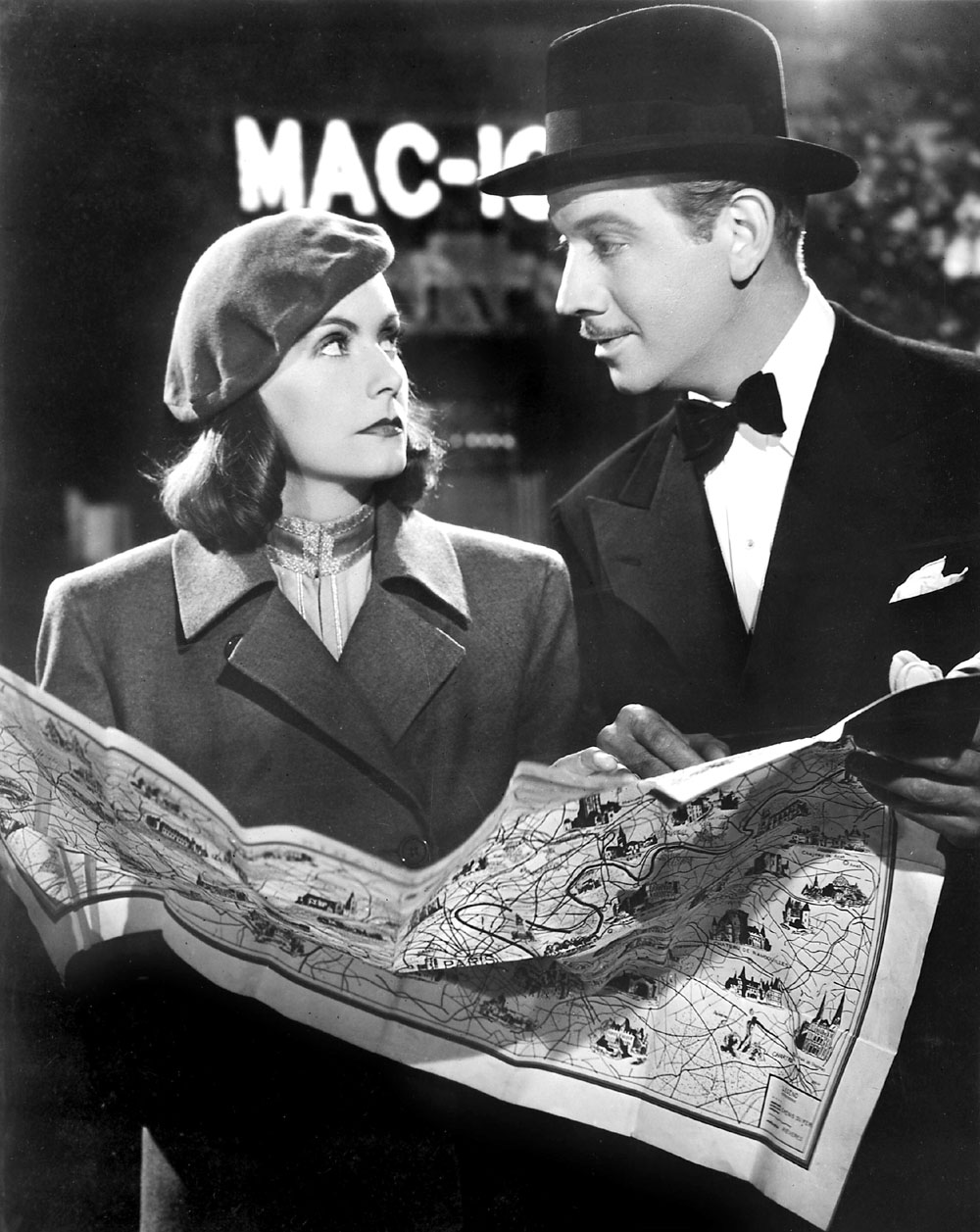
Greta Garbo, Melvyn Douglas
“Ninotchka” screens at 1:30 p.m. Saturday, January 4, 2014, in the Durwood Film Vault of the Kansas City Central Library, 14 W. 10th St. Admission is free. It’s part of the year-long film series America’s Greatest Year, which offers movies released in 1939.
For most of her career, the great Swedish star Greta Garbo (1905-1990) was known as a dramatic actress. A tragic actress, in fact.
In films like “Flesh and the Devil” (1926), “Anna Karenina” (’35), and “Camille”(‘36), the ethereal-looking Garbo loved, suffered, and died. With regularity.
Audiences were riveted by Garbo’s subtlety of expression, something they were unaccustomed to in silent film. In just a few years she became the best-known woman in world, the “unapproachable goddess of the most widespread and remarkable mythology in human history,” according to social critic Alistair Cooke.
Garbo was considered the movies’ most mysterious and seductive leading lady. Most of her films were box office sensations, and the public became obsessed with her personal life and loves … a situation the fundamentally shy and insecure actress found distressing. As a result she went to extremes to shun unwanted publicity and protect her privacy.
Comedians and even animated cartoons often spoofed a line from Garbo’s film “Grand Hotel” in which her moody ballerina character says, “I want to be alone.”










 Butler's Cinema Scene