Feeds:
Posts
Comments

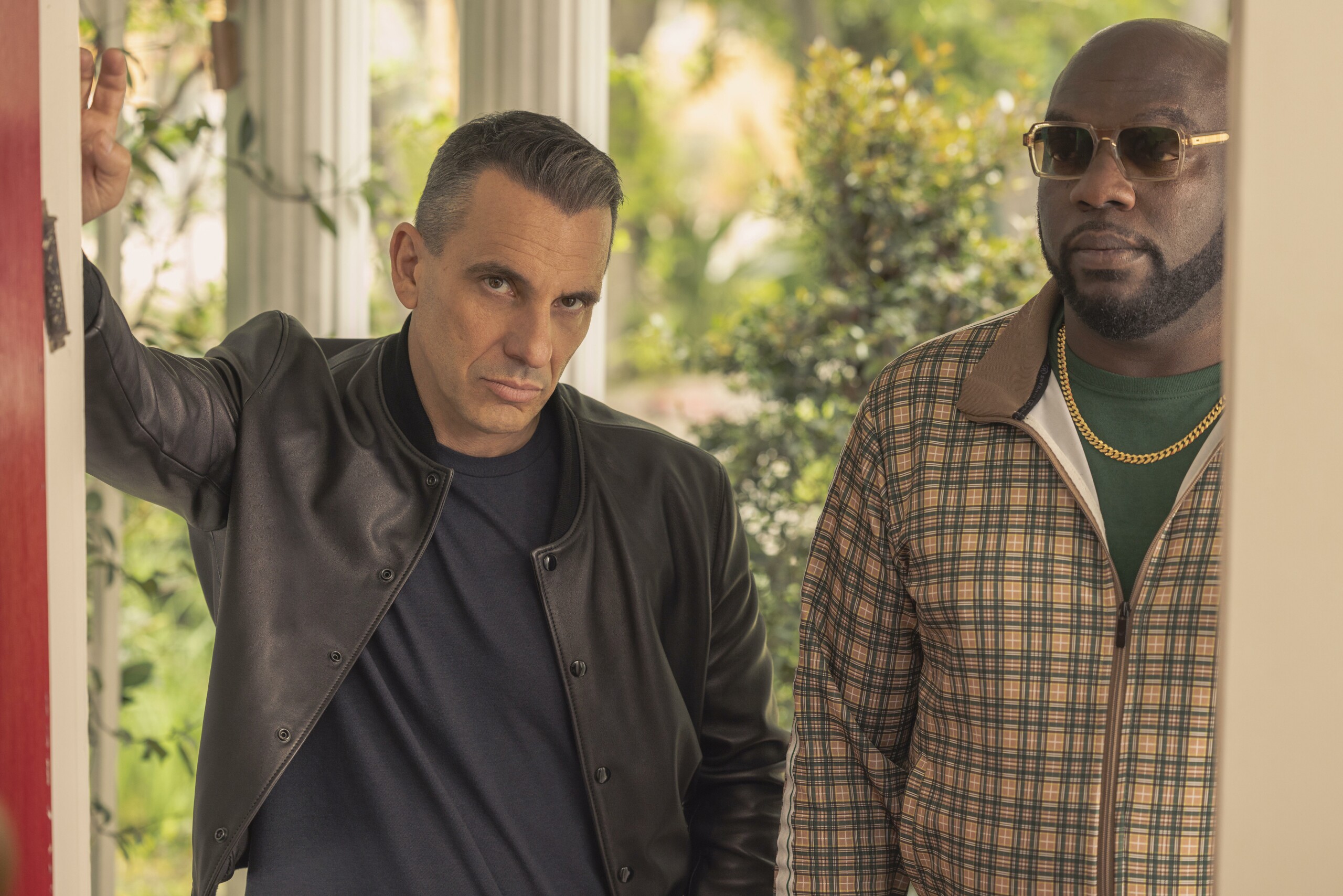
Jonathan Bailey, Matt Bomer

“FELLOW TRAVELERS” (Showtime, Paramount+)

“Fellow Travelers” is the gay “The Way We Were” — an epic intimate romance spanning decades and peppered with political and cultural landmarks.

Not to mention the most graphic sex scenes this side of Pornhub. 

Remember when straight people used to wonder just what it was that gay guys did to each other in the sack?

Wonder no more.

Ron Nyswaner’s 8-part adaptation of Thomas Mallon’s novel centers on the on-again, off-again obsession shared by the charismatic and impossibly handsome Hawk Fuller (Matt Bomer), a rising star in the U.S. diplomatic corps, and mensch-y Tim Laughlin (Jonathan Bailey), a naive newcomer to D.C.

Hawk and Tim meet in the early ‘50s just as the government’s ranks are being cleansed of homosexuality by right-wing Sen. Joe McCarthy (Chris Bauer) and his Machiavellian sidekick and closet queer Roy Cohn (Will Brill).

The romance intermittently continues through Hawk’s marriage to a Senator’s daughter (Allison Williams) and Tim’s stint as a seminarian and anti-war activist. 

Throughout the two men remain unlikely bedfellows…Hawk is an unapologetic hedonist skilled at hiding his homosexuality, while Tim is an idealist who outs himself fairy early on.

But like they say, you can’t choose who you love.

The yarn stretches into the 1980s, the Harvey Milk assassination and the rising AIDS crisis. At the same time the show’s mood shifts from furtive paranoia to proud self-acceptance.

Periodically the drama switches to the experiences of Marcus Gaines (Jelani Alladin), a black gay journalist chafing under the  yoke of self-suppression.

Acting and production values are off the chart.  But I wonder about the show’s time-bending narrative, zapping back and forth across the years. Sometimes it seems like obfuscation for the sake of obfuscation.

Still, “Fellow Travelers” packs a huge emotional wallop.

Natasha Lynne, Benjamin Bratt

“POKER FACE”(Peacock):

A little Natasha Lyonne goes a long way. After a while that Runyon-esque verbosity and self-referential hipness can wear thin.

“Poker Face” solves the problem by having its star appear deus ex machine-style halfway through every episode to solve a murder.

The premise: Charlie Cale (Lyonne) is on the run after crossing a casino-operating crime family. She’s persona non grata at the tables because she has been blessed/cursed as a human lie detector.  She knows when another player is bluffing.

Each episode starts out with a different murder in a town into which Charlie has washed up.  

One episode is about the members of a has-been punk rock band (Chose Sevigny is the snarling lead singer) who kill their drummer so they can claim writing rights to his song.  

Another finds a woman and her brother-in-law murdering the husband, the founder of a Deep South barbecue empire who is threatening everything by going vegan. 

Joseph Gordon-Levitt is a soulless white-collar criminal holed up in a snowbound motel in the Rockies and covering up a hit-and-run death.

Each situation is set up well before Charlie stumbles into the scene to solve the crime with her psychic ability.  And to make matters even more interesting, she’s being followed on her cross-country flight by a mob enforcer (Benjamin Bratt).

“Poker Face” employs creative storytelling (just about every episode has an extended flashback to show us how we got to where we are) and the repartee from Lyonne is often screamingly droll.

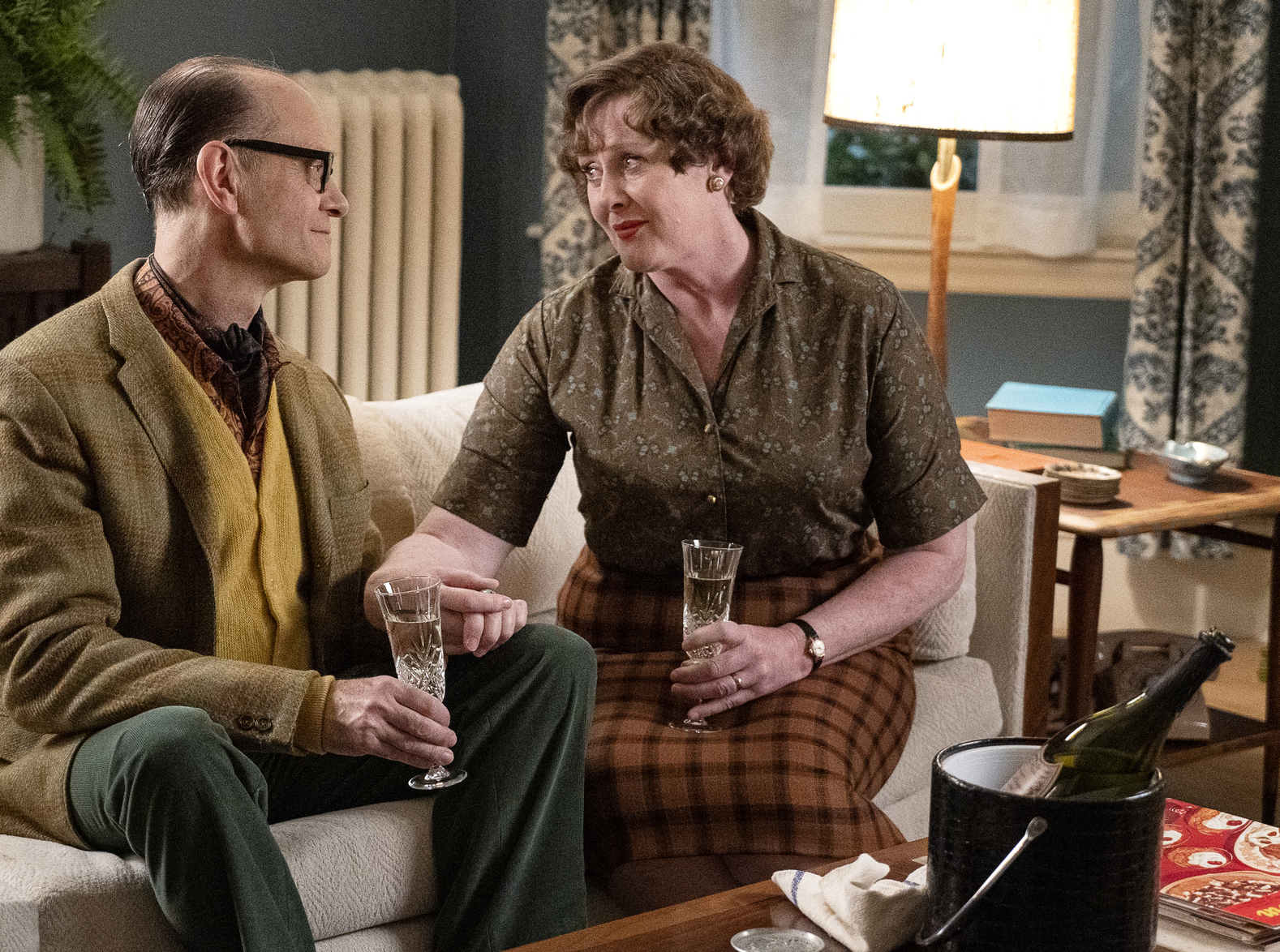
David Hyde Pierce, Sarah Lancashire

“JULIA” (MAX):

The single best performance I’ve seen in recent months belongs to Brit actress Sarah Lancashire, who so fully embodies famed TV chef Julia Child that it’s less acting than alchemy.

Geeks for Brit TV know Lancashire as a lesbian headmistress in “Last Tango in Halifax” and as a long-suffering small-town cop in “Happy Valley,” both solid perfs but only an appetizer for the gluttonous feast that is “Julia.”

Now in its second season, “Julia” (created by Daniel Goldfarb of “Marvelous Mrs. Maisel”) is a deep dive into Child’s life, from the very creation of her TV show on a small Boston station to her worldwide fame.

But it’s as much about the private woman as it is the public icon.  Her marriage to former CIA guy Paul Child (David Hyde Pierce) is examined on almost a molecular level.

And while Lancashire absolutely nails Julia’s mannerisms and vaguely ridiculous vocal patterns, what really blew me away is that her Julia is — wait for it — a sexual creature.

Middle-aged love is viewed here not as a joke but as a celebration. Who’d have figured?

There are plenty of sideshows reflecting the political and social ethos of the late 50s and early 60s.

Robert Joy and Fran Kranz are the station drones who give Julia a chance. 

Isabella Rossellini is Julia’s traditionalist writing partner for the famous cookbook; Fiona Glascott is their editor, while Judith Light is both touching and infuriating as a doyen of publishing now circling the drain.

There are plenty more strong supporting players, especially Bebe Neuwirth as the Childs’ widowed best friend.

I used think of Julia Child as a sort of comic relief.  But clearly there was a lot more to the lady. 

Robert W. Butler

“THE IRON CLAW” My rating: B+ (In theaters)

132 minutes | MPAA rating: R

Less a wrestling movie than a Greek tragedy in Spandex, “The Iron Claw” is based on the real story of the Von Erich brothers, a family of professional grapplers who came to prominence in the 1980s.

Writer/director Sean Durkin is way less interested in the ring action (although there’s plenty of it nicely staged) than in presenting a portrait of family dysfunction so complete that the first thing we hear in the voiceover narration is that the clan is cursed.

Literally.

Our main  protagonist is Kevin Von Erlich (Zac Efron, pumped almost beyond recognition), who like his three brothers has been raised by their father, Fritz (Holt McCallany),  to excel at the family tradition.

Back in the day Fritz was on his way to a wrestling title, but claims it was denied him by the “bastards” who run the business. Now he’s determined that one — or better still, all — of his boys wear the big belt. (Along with ambition the boys have inherited from Dad the “iron claw,” a skull-squeezing wrestling move.)

Initially the Von Erichs’ life on a ranch outside Dallas seems semi-idyllic.  There’s farm work, endless hours pumping iron in the home gym, big family dinners and church on Sunday.

The boys — Kevin, Kerry (Jeremy Allen White), David (Harris Dickinson) and Mike (Stanley Simons) — revere their father and want nothing more than to please him.

Over the course of a decade their dedication will prove itself more than dangerous.  It’s deadly.

The film has been superbly acted (other cast members include Maura Tierney as the uber-religious mother and Lily James as the veterinary student who falls hard for Kevin) and despite the raucous acrobatics of the fight scenes the overwhelming mood is one of ever-tightening desperation and sadness.

Not a happy story, but beautifully done.

Teo Yoo, Greta Lee

“PAST LIVES” My rating: B (For rent on Prime, Apple+, etc.)

105 minutes | PG-13

Astonishingly delicate and quivering with emotional possibilities, Celine Song’s “Past Lives” wonders what would happen in childhood sweethearts met up many years later.

In the film’s opening scenes, set in South Korea, we are introduced to Nora and Hae Sung, 12-year-olds whose platonic friendship might over time become something more.

But Nora’s parents emigrate to Canada. Twenty years later the grown Nora (Greta Lee) lives in NYC with her husband Arthur (John Magaro). Their lives are settled and largely uneventful.

And then word arrives that Hae Sung (Teo Yoo) will be visiting the Big Apple and would like to reconnect.

It’s a setup rife with erotic possibilities, most of which writer/director Song keeps on the back burner. “Past Lives” is much more about its characters’ emotional interiors than physical betrayal.

Off the bat it’s obvious that while Nora has achieved a level of mature sophistication, Hae Sung is stymied in a sort of sad adolescence. He still lives with his parents and is indifferent when it comes to a career. 

Apparently he’s lived two decades in “what could have been” mode.

The film is mostly conversations between the two old friends as they walk around the city.

Arthur, meanwhile, is trying to stifle his anxiety that he might lose his wife…his alienation is heightened by his inability to participate in their intimate conversations in Korean.

“Past Lives” is one of those films in which nothing seems to happen, while emotionally all sorts of stuff is going on. The performances are really terrific, with Teo Yoo creating a portrait of sweet longing so heartbreaking you want to give him a hug.

| Robert W. Butler

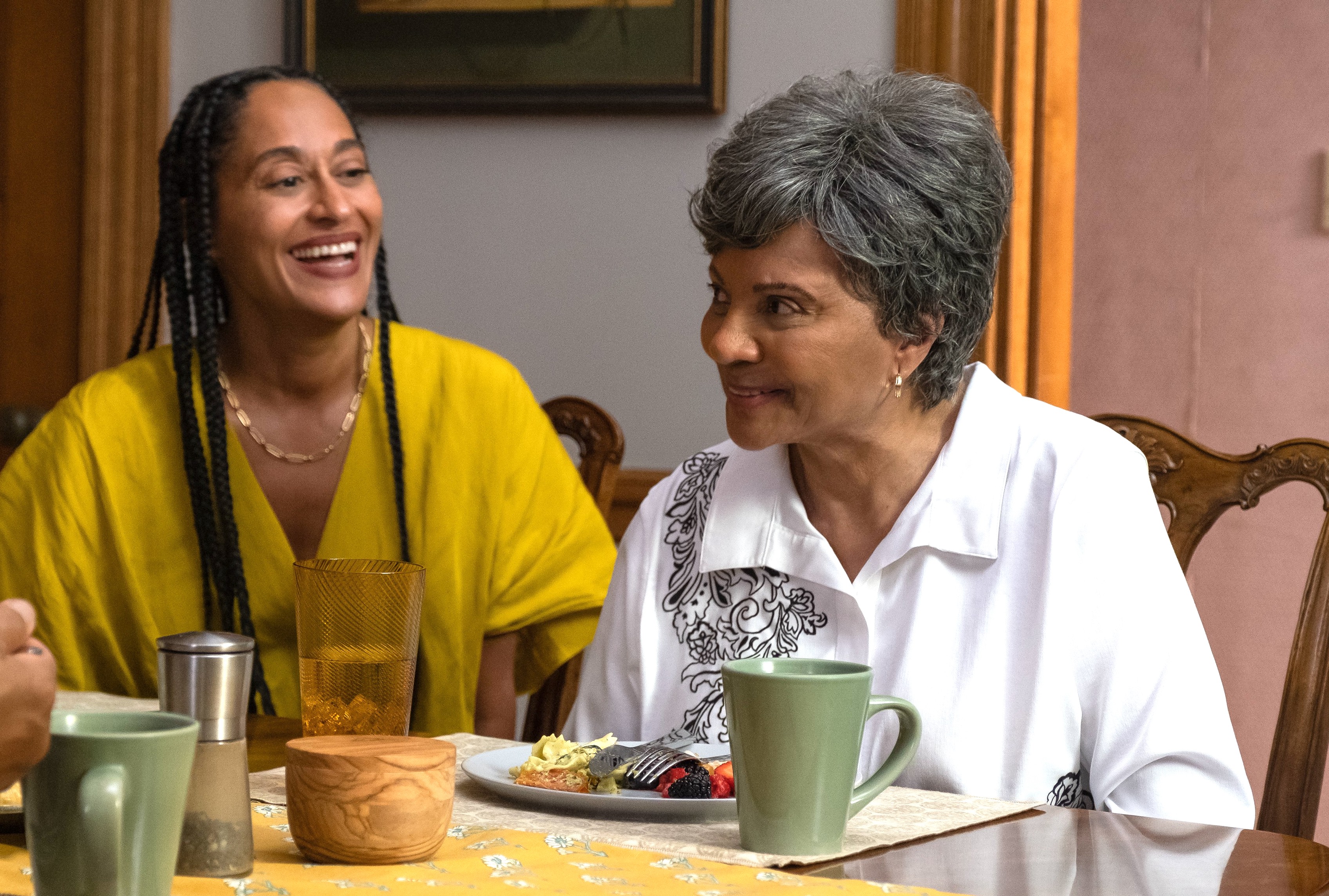
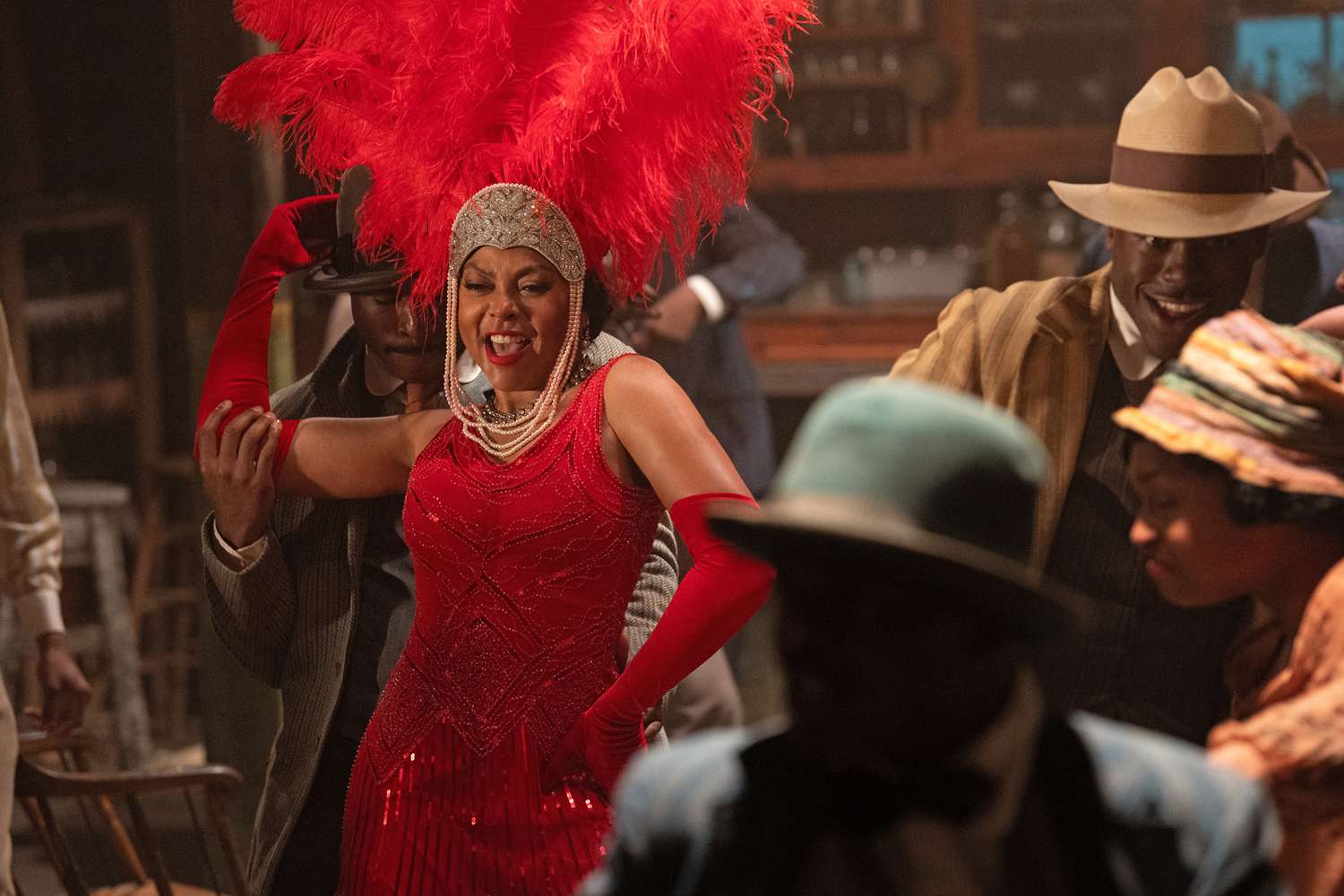
Taranji P. Henson

 “THE COLOR PURPLE” My rating: B- (In theaters)

 140 minutes | MPAA rating: PG-13

Good but not great, the new musical version of “The Color Purple” is a largely faithful adaptation of Alice Walker’s Pulitzer-winning novel.

But what does it say that while watching it I was constantly reminded of Steven Spielberg’s 1985 non-musical version? Weirdly enough, the original film feels fresher to me than this new iteration. 

The reason for this can be summed up, I believe, in two words: Whoopi Goldberg.  Goldberg was so fantastically good, so consummately entertaining as the long-suffering Celie  in the original that by comparison the musical’s Celie — “American Idol” winner Fantasia Barrino  in her feature film debut — seems a bit meh.

Not bad, just meh. This Celie is always having things happen to her; she is more a pawn of fate than a discernible personality.

That’s not an issue with other members of the virtually all-black cast: Tara P. Henson’s Shug Avery,  a lusted-after bluesy songstress, or Colman Domingo’s Mister, a study in toxic/stupid chauvinism, or Danielle Brooks’ Sofia, who tragically learns that her strong-willed independence is problematic in a white man’s world.

The story covers nearly a half century and Kris Bowers’ songs reflect most of the salient black musical styles of the era, from solo-guitar Delta blues to work chants, big band blues shouting, gospel, cakewalks and proto-soul. These numbers work fine within the framework of the story, but none struck me as particularly earworm-worthy. I didn’t go home humming them.

The production values offered by director Biltz Bazawule and his design staff are first-rate, as is the staging of most of the musical numbers. They are the film’s highlights.

In its final moments this “Color Purple” hit some of the emotional notes I’d been looking for…it took a while to get there.


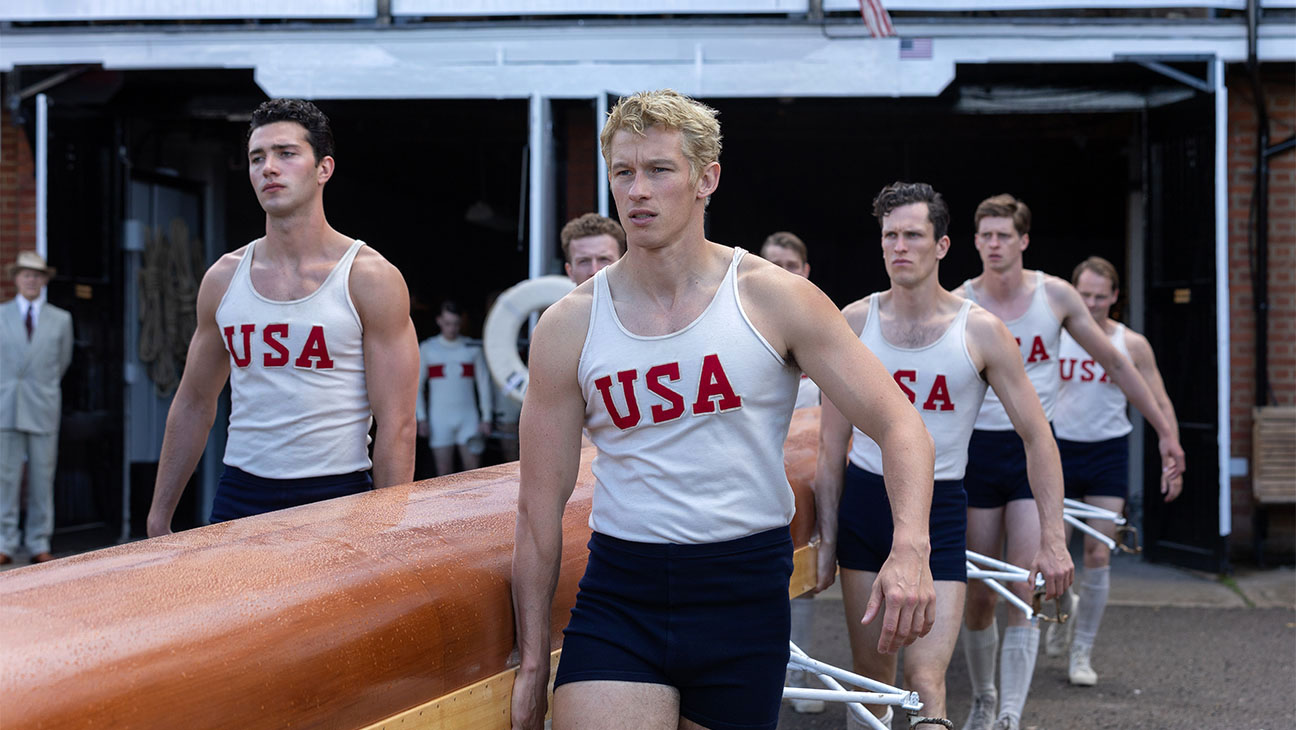
Callum Turner (center)

”THE BOYS IN THE BOAT” My rating: B (In theaters)

124 minutes | MPAA rating: PG-13

Let’s admit upfront that George Clooney’s “The Boys in the Boat” is a superficial drama densely packed with sports-movie cliches.

This makes it no less enjoyable.

For one thing, the cliches — training montages, a romantic subplot, the “big game” — are applied to the world of crew racing, the details of which most of us are ignorant.

So the film — a slightly fictionalized version of Daniel James Brown’s best-seller —immerses its audience  in an exotic sport in which individual excellence and ambition must be subservient to the group effort.  

When you’re rowing with eight other guys you do NOT want to stand out. It means you’re the broken cog in the well-oiled machine.

Mark L. Smith’s screenplay is set in the months leading up to the 1936 Berlin Olympics. Our nominal hero is Joe Rantz (Callum Turner), a pennyless University of Washington student who lives in a  burned-out car in a Depression-Era homeless encampment in Seattle; he tries out for crew simply because it offers its rowers three squares a day and a roof overhead.

We learn the punishing sport along with Joe and his crewmates, most of whom never are developed beyond a first impression.   Only a couple stand out. 

Coxswain Bobby Moch (Luke Slattery) is a small guy capable of bullying/coaxing his muscled rowers to greatness. (Since coxswains don’t row, every pound they add to the load is a liability.) And there’s Don Hume (Jack Mulhern), the crew’s strongest member but so painfully shy his friends aren’t sure he can speak.

Somewhat more fleshed out is Coach Al Ulbrickson (Joel Edgerton), desperate to end his reputation as an also-ran in the crew world, and perhaps George Pocock (Peter Guinness), the old fellow who designs and builds the boats and becomes a sort of philosophic mentor to Joe.

There is considerable inspirational speechifying, and many an observation about rowing being more poetry than sport.

But if the characters are barely developed, the boys’ David-and- Goliath story and the care with which Clooney and Co. recreate the crew world are utterly captivating.

Cheer yourself sick.

Suleika Jaouad, Jon Batiste

AMERICAN SYMPHONY” My rating: A- (Netflix)

104 minutes | MPAA rating: PG-13

Jon Batiste is a brilliant musician.

He’s an even better person.

That’s the takeaway from “American Symphony,” a documentary that originally was to chronicle Batiste’s efforts to write an orchestral piece but became about something far greater.

I knew going in that Matthew Heineman’s film would follow two tracks.  

First, there is Batiste’s creative journey in writing and performing “American Symphony,” an opus not only for orchestra but for jazz musicians, operatic singers, chanting Native Americans, Hispanic folk artists…it’s a real kitchen sink approach.

And then there’s the second plot, centering on Batiste’s wife Suleika Jaouad, a musician and essayist who found herself battling the leukemia she had originally beaten years earlier.

The portrait of Batiste that emerges here is that of a deeply spiritual man who embraces compassion as a lifestyle, who after a day of rehearsing and arranging for his work’s debut at Carnegie Hall would spend the night at the bedside of his wife.

Watching I kept asking myself if under the same circumstances I could be so patient, caring and supportive.

Doubtful.

It’s not like Batiste is an incarnation of Rebecca of Sunnybrook Farm.  He gets exhausted.  He admits to periods of depression. We see him having a texting session with his psychoanalyst.

But his innate goodness somehow always comes to the fore.

I cried easily and often watching “American Symphony,” a testament not only to human creativity but to humanity’s capacity for love. 

It’s one of the best cinematic gift we’ll get this Christmas.

| Robert W. Butler

Bradley Cooper, Cary Mulligan

“MAESTRO” My rating: A (Netflix)

129 minutes | MPAA ratingL R

Here it is, folks.  The year’s best film.

From the very first frame of “Maestro” we know that we’re in good hands.

Some movies are like that.  They flow effortlessly, leading us into their visual and aural landscape. They know what they’re about. They have their own personalities.

Bradley Cooper’s film (he directed, co-wrote and stars in it) centers on the relationship of real-life composer/conductor Leonard Bernstein and his actress wife, Felicia Montealegre.

It was not your conventional marriage.  Lenny (Cooper) was unapologetically bisexual. Five minutes into the film we see him waking up in bed with another man. At one point he addresses the new baby of friends, asking “Do you know that I slept with both your parents?”

But Felicia (Carey Mulligan), exhibiting a way-ahead-of-the-curve tolerance, buys into their partnership knowing the score. In her book, love is tolerant to a fault.

Here’s what I relish about “Maestro”: You can feel yourself falling in love as these two characters do.  Their repartee is amusing, seductive, astonishingly honest. You want to be part of it.

And like Lenny and Felicia we’re so smitten that we don’t think about how difficult it will be to maintain a mutually satisfying equilibrium.

The acting?  Holy crap it’s good.

Bradley Cooper

Cooper, with a bit of help from a prostethic nose, absolutely nails the Leonard Bernstein we recall.  He’s got the vocal patterns perfect, and on the podium he exhibits the intense joy and bodily enthusiasm that made him the most identifiable conductor in the world.

But he’s just as effective as the private Lenny, a man who was about as matter-of-fact when it comes to sex as is humanly possible. The problem, of course, is that few of us are so hangup free.

Mulligan’s Felicia is his perfect match. She is utterly supportive of her husband and children, but as time goes on Lenny’s escapades start to wear. Mulligan has a few moments of transcendent fury.

Expect Oscar nominations for both.

For that matter, comedian Sarah Silverman is astonishingly good in the straight role of Bernstein’s sister. 

Covering nearly 50 years of modern American cultural history, “Maestro” draws its musical score mostly from Bernstein’s compositions: “West Side Story,” “On the Waterfront,” “Candida,””Fancy Free,” not to mention samplings of various orchestral and choral works.

Yet it never becomes a “and-then-I-wrote…” musical biopic.

Lenny’s career is always there in the background, but its his relationship with Felicia (and later with his daughter Jamie, played by Maya Hawke) that provides the narrative and emotional spine.

Most of the film has been shot in gloriously rich black and white (Matthew Labatique is the cinematographer), with every frame meticulously composed for maximum effect. (Cooper reportedly has been working on the project for a decade; he has left little to chance, yet “Maestro” feels fresh and spontaneous.)

There are moments here that can leave a viewer in tears, both for our beautiful possibilities and for our inevitable shortcomings. In giving us the story of a great artist and his loved ones Bradley Cooper has tapped into the transcendent.

Can this really be only his second feature as director?  There’s a sort of Orson-Welles-makes-“Citizen Kane” wonder and audacity at work here.

Let’s just give him an armload of Oscars and be done with it.

| Robert W. Butler

Nicolas Cage

“DREAM SCENARIO” My rating: B (HBO Max)

102 minutes | MPAA rating: R

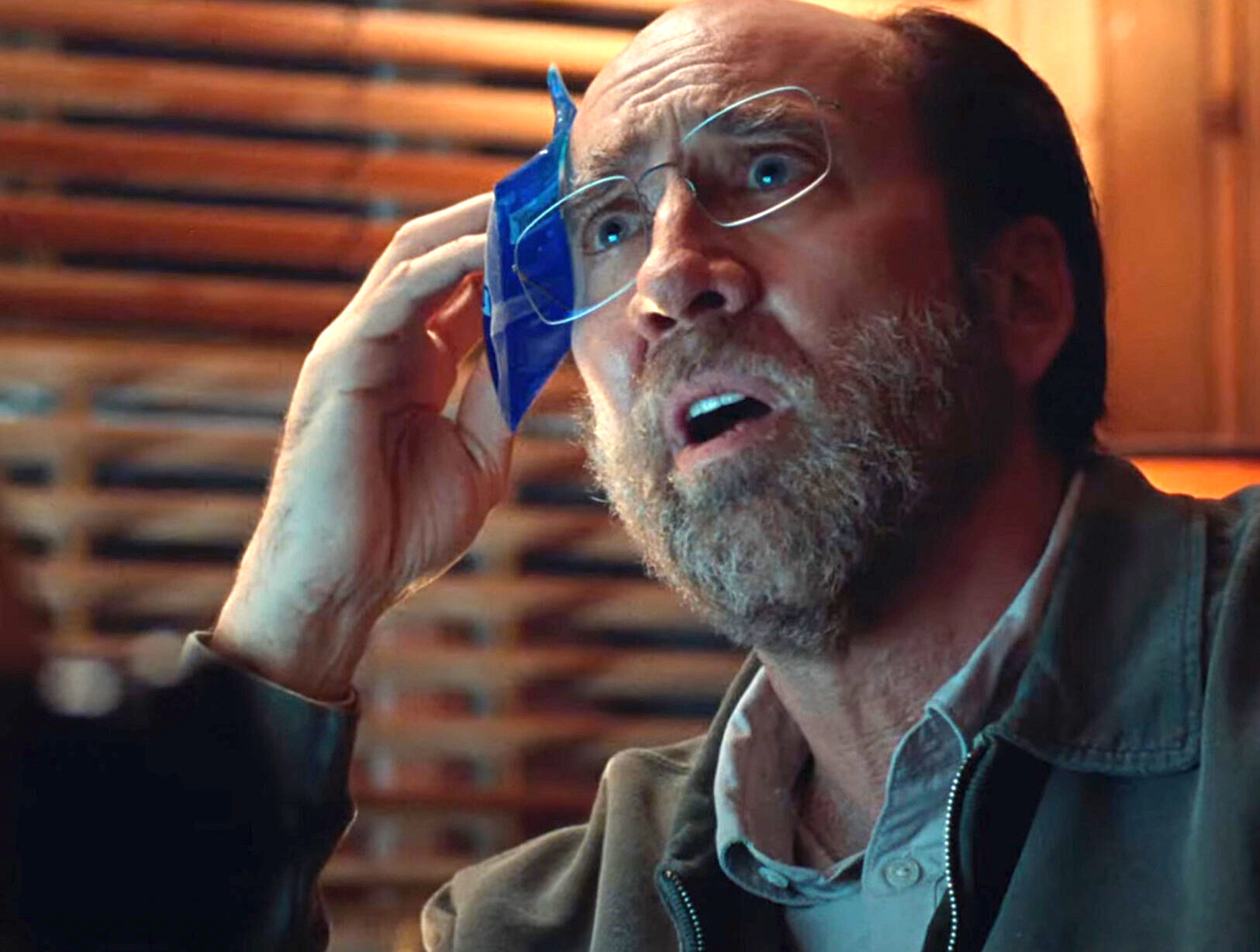
“See you in my dreams” takes on comedic/sinister possibilities in Kristoffer Borgli’s “Dream Scenario,” featuring Nicolas Cage at his most bleakly amusing.

Cage’s Paul Matthews is a bearded, balding, bespectacled professor of evolutionary biology at a small college.  He’s bland and boring (it’s all the kids can do to stay awake in class); at home he is just tolerated by his marriage-weary wife (Jiulianne Nicholson) and their two teen daughters.

In other words, Paul’s a nobody.

Until, that is, total strangers report seeing him in their dreams.  Initially this phantom Paul simply walks through or observes what’s happening to the slumbering citizens. Even in dangerous situations he doesn’t react…he’s as ineffectual in dreamland as he is in real life.

But as the phenomenon grows, Paul becomes famous.  Thousands, nay, millions of people around the globe are encountering him while they snooze.

Paul tries to parlay his notoriety into a book deal (one advertising whiz kid wants him to somehow endorse a soft drink during his somnambulant visitations). But as time goes by there are disturbing developments.  Dreamers report that Dream Paul has violently attacked them. Sexually assaulted them, even.

And suddenly, through no fault of his own, the dull professor is an object of hatred and disgust.

“Dream Scenario” frequently shifts from the “real” world to depictions of the characters’ dreams; by the time it’s over you may be guessing which is which.

This is only writer/director Borgli’s second feature after numerous shorts; he’s clearly a talent to watch for.

Julia Louis-Dreyfus, Tobias Menzies

“YOU HURT MY FEELINGS” My rating: B  (For rent on various streaming services)

93 minutes } MPAA rating: R

Nicole Holofcener, our foremost chronicler of contemporary angst, scores again with “You Hurt My Feelings.”

It’s a comedy about how people lie so as not to hurt each other’s feelings. And perhaps end up doing even more damage.

Our main characters are Beth and Don (Julia Louis-Dreyfus, Tobia Menzies), New Yorkers with what appears to be an ideal marriage.  She’s a writer seeking a publisher for her second book.  He’s a clinical psychologist.

A big part of their marriage is offering mutual encouragement. Which also means never doing or saying anything discouraging…even if you have to fib about it.

So when Beth asks Don to read her new book, he’s full of praise.  Phony praise, as it turns out.  He just wants to be supportive.

Holofcener  gives us a smorgasbord of characters —the couple’s twenty something son (Owen Teague), Beth’s sister and neurotic actor brother-in-law (Micheala Watkins, Trey Santiago-Hudson),  her kvetching mother (Jeannie Berlin) and various of Don’s patients (David Cross, Amber Tamblyn, Zach Cherry) — most of whom muddle through by saying not what they think but what they think  other people want to hear.

“You Hurt…” is often laugh-out-loud funny (nobody surpasses Louis-Dreyfus in the sarcastic putdown department) but ultimately makes a telling point: it’s virtually impossible to survive in this modern world without lying.

“ALBERT BROOKS: DEFENDING MY LIFE” My rating: B+ (HBO MAX)

88 minutes | No MPAA rating

If you don’t already consider Albert Brooks (born Albert Einstein) a comedy genius, this documentary from Rob Reiner makes the point repeatedly.

Turns out that Reiner and Brooks were school pals and have been buds ever since; “…Defending My Life” is something of a valentine to Brooks’ eccentric and eclectic talents.

There are priceless clips of his early conceptual comedy (he was Andy Kaufman before there was an Andy Kaufman), scenes from the many movie’s he’s directed (“Modern Romance,” “Lost in America,” “Defending Your Life”) and of the acting he’s done for others (“Drive,” “Finding Nemo,” “Taxi Deriver,” “Broadcast News”).

A big chunk of the film is devoted to a conversation between Reiner and his subject…it’s like hanging out with a couple of good friends.

And there’s a small army of Brooks-loving celebs (James L. Brooks, Larry David, Judd Apatow, Tiffany Haddish, Jonah Hill, Conan O’Brien, Chris Rock, Sarah Silverman, Steven Spielberg) to give testimonials.  Nobody seems to be kissing ass here…their sincere admiration is so genuine you could use it as a heating pad.

 | Robert W. Butler
Cailee Spaeny, Jacob Elordi

“PRISCILLA” My rating: B- (In theaters)

113 minutes | MPAA rating: R

The star-crossed saga of Elvis and his child bride Priscilla Beaulieu has been retold so often that Sofia Coppola’s “Priscilla” will hold few surprises for Presley-holics.

What the film does offer is a dreamlike take on a teenage girl swept off her feet by the Earth’s most famous man. (Coppola and Sandra Harmon’s screenplay is based on Priscilla Presley’s memoir; Presley was a producer of the film.)

It was a romance destined to fall apart. The initially charming rock star became increasingly controlling and, after Priscilla gave birth to a baby girl, turned his back on the marital bed in favor of frat-house partying with his notorious “Memphis Mafia” of good ol’ boys.

In the title role Cailee Spaeny undergoes a remarkable physical and emotional transformation over the course of the film. Though virginal (Elvis wouldn’t consummate the relationship until marriage), her Priscilla isn’t entirely naive about the pitfalls in her path.  In a sense “Priscilla” is a study of her painfully blossoming emotional maturity.

Brit actor Jacob Elordi doesn’t attempt an Elvis imitation so much as an approximation…and it pretty much works.  Note that we don’t see Elvis performing any of his hits; instead the film’s soundtrack is heavy on other late-‘50s artists. 

Michelle Williams

“SHOWING UP” My rating: B (For rent on various streaming services)

107 minutes | MPAA rating: R

Filmmaker Kelly Reichardt once again finds the perfect voice for her cinematic minimalism in Michelle Williams, here almost unrecognizable as a drabbed-down middle-aged artist.

When not performing administrative drudge work at an urban art school, Williams’ Lizzy devotes herself to her sculptures — foot-high ceramic statues of women caught in moments of expansive movement or somber contemplation. To the extent that the film has a plot, it’s about Lizzy preparing for a one-woman show at a small local gallery.

Mostly we eavesdrop on her life. She lives alone with a cat. (Is she straight? Gay?)  Her best friend and landlord Jo (Hong Chau, an Oscar nominee for “The Whale”)  is a fiber artist who is as outgoing and vivacious as Lizzy is dour and brooding.  

Lizzy’s divorced mother is also her boss; her father (Judd Hirsch) is a well-regarded (and egotistic) potter, now retired.  There’s also a schizophrenic brother (John Magaro) favored by their parents as a genius, though he’s unable to hold a job.

What we get here is a portrait of a woman as gray as the colorless clothes she favors, but nevertheless devoted to creating art, even though she’ll never make a living off it. At least she’s showing up.

And as much as “Showing Up” is a personality study, it is also an astonishingly lived-in depiction of a world whose inhabitants are devoted to creating.  Anyone familiar with an art school environment will find the film almost a documentary experience.

| Robert W. Butler

Natalie Portman, Julianne Moore

“MAY DECEMBER” My rating: B  (Netflix)

117 minutes | MPAA rating: R

Todd Hayne’s “May December” takes a lurid page from recent pop history and turns it into a troubling deep dive into bruised and battered psyches.

Set in moss-adorned Savannah, Samy Burch and Alex Mechanik’s screenplay centers on a visit from a Hollywood star.

Elizabeth Barry (Natalie Portman) has come to  town to research a role in an upcoming film. 

Specifically she’s here to interview and observe Gracie Yoo (Julianne Moore), the real-life woman she will be portraying.

When they first meet Gracie is hosting a raucus pre-graduation party for her college-bound twins and their friends. She’s obviously a perfectionist when it comes to wifely/motherly duties, but exhibits just enough world-weary Mom humor to soften her need to dominate every situation.

She appears determined to create a forced atmosphere of normalcy.

Right off the bat we notice something odd. There’s this guy, Joe (Charles Malton), about 20 years younger than Gracie who sometimes seems like a quiet servant. Is Joe her son? If so, isn’t that a rather disturbing kiss she plants on him?

What we quickly come to learn is that nearly two decades earlier Gracie and Joe were the center of a huge scandal.  The then-36-year-old Gracie had an affair with seventh grader Joe. She ended up having his baby in prison; they married upon her release and now have three offspring (the oldest, born behind bars, is already in college). 

And, yes, “May December” is clearly inspired by the story of the late Mary Kay Letourneau. 

In a sense the film is a detective story, with Elizabeth interviewing participants in the sordid saga:  Gracie’s blindsided first husband (D.W. Moffett) and emotionally burned-out adult son (Cory Michael SmithI), the pet shop owner (Charles Green) in whose storeroom the illicit lovers were found in flagrante delicto, Gracie’s supportive best friend (Joan Reilly).

Julianne Moore, Charles Melton

Outwardly, anyway, Gracie seems to have come through it all more or less intact.  She claims to have “no doubts, no regrets.” She keeps busy baking cakes for friends and running her household.

But behind closed doors she is often weepy and anxiety-riddled, sobbing in the arms of Joe, who in her presence smothers his own individuality in order to give unquestioning support.  Their dynamic is truly squirm-worthy.

Gracie —who is less than thrilled with Hollywood having another go at her story (some years earlier there was a tacky made-for-TV movie) — tells Elizabeth that it was 13-year-old Joe who seduced her, not the other way around.

“May December” is less interested in discovering who’s to blame than in examining the damage done.  The film explores level upon level of these characters…just when you think you’ve got one of them pinned down they do something that requires a quick reassessment.

Among those under the microscope is Elizabeth herself.  Ostensibly she’s our narrator/guide through this emotional minefield, but at some point we’ve got to ask if her show of friendship isn’t just another acting job. Clearly she’s determined to wring every bit of nuance out of Gracie’s story and to get there isn’t above creating collateral damage of her own.

In that regard “May December” is an indictment of show-biz duplicity and exploitation. Rarely has a film cast such a jaundiced eye on an actor’s process.

The acting is terrific. Moore and Portman, of course, are among our best film actresses. 

But the film’s real discovery is Melton, a veteran of TV’s “Riverdale” (he’s also a K-State alum) whose Joe undergoes the most striking transformation. Initially he seems to have almost no personality; get him away from Gracie, though, and you find an individual trap between childhood and adulthood, struggling to come to grips with a troubled past.

| Robert W. Butler

 “COMMON GROUND” My rating: B(At the Glenwood Arts)

195 minutes | No MPAA rating:

Exhaustive and a bit exhausting, the doc “Common Ground” makes an encyclopedic case for regenerative agriculture.

If that sounds like an earnest science lecture…well, it is, sort of.  But the filmmakers (Joshua Tickell and Rebecca Harrell Tickell) knock themselves out working to keep our attention over nearly two hours, filling the screen with arthouse cinematography and a small army of familiar Hollywood faces (Laura Dean, Rosario Dawson, Donald Glover, Jason Mom, Ian Somerhalder).

Mostly, though, there’s an avalanche of information that will convince most of us that modern agricultural methods are taking us down the highway to hell.  It’s time to change our ways.

The plot, if you will, consists of an opening section about the dangers of climate change that will leave most quaking in their boots, followed by examples of how we can turn the problem around and save ourselves and our planet.

We’re told early on that this is a movie about dirt. Well, soil to be more precise. “if the soil dies, we die.”

We meet Gabe Brown, a North Dakota farmer who is a  champion of the new agriculture. A big beefy guy in coveralls, Brown is also an erudite spokesman, pointing out how his land — farmed to minimize the loss of topsoil to wind and water — looks like an oasis compared two that of his neighbor who uses conventional methods and ends up with huge patches of unproductive dirt.

The neighbor’s system, we’re told, is working to kill things, while Brown’s is working in harmony and synchrony with nature, creating profit while enhancing the ecosystem for future generations.

Over the course of the film the same theme is hammered home: no tilling , use cover crops that return nurtrients to the soil, eliminate or reduce chemical use, integrate animals into cropland (the animals eat weeds and fertilize with droppings — you don’t have to eat them but you need them to be grazing).

“Common Ground” reaches far and wide.  There’s a section on Native American farming practices, on the contributions of black scientist George Washington Carver (who advocated the use of nitrogen-fixing cover crops to replenish soil) and of African women who, coming to his country as slaves, introduced crop seeds they had intentionally braided into their hair before the horrible sea voyage. That last one is a revelation.

A big chunk of the film is devoted to roasting Monsanto for promoting the cancer-causing herbicide glyphosate (sold commercially as Roundup). Particular attention is paid to the unfortunate fates of whistleblowers and investigative scientists and journalists who have dared challenge the chemical giant.

The bee die-offs? Yeah, that’s in here, too.  Pesticides are the culprit.

We even get into the mechanics of the annual Farm Bill, which to date has barely acknowledged the existence of restorative farming techniques, 

Factory farming of food animals is addressed. It’s an ugly business (don’t worry…no gross-out visuals here), but the film also points out that most of the new meat substitutes are crammed with plants grown with chemicals with names you can’t pronounce.

Woody Harrellson narrates a segment about hemp.  No comment necessary.

if there are moments when the viewer feels manhandled by the unyielding crush of information, “Common Ground” does assert there’s hope. 

We just have to change our ways.

| Robert W. Butler
Jacob Elordi, Barry Keoghan

“SALTBURN” My rating: B-(In theaters)

131 minutes | MPAA rating: R

Good-looking but off-putting, Emerald Fennell’s “Saltburn” is yet another examination of British class warfare.

Fennell, who made a remarkable directing debut a couple of years back with the female revenge dramedy  “Promising Young Woman,” here mines a favorite plot of English iconoclasts, that of a lowly commoner “adopted” by his societal betters.

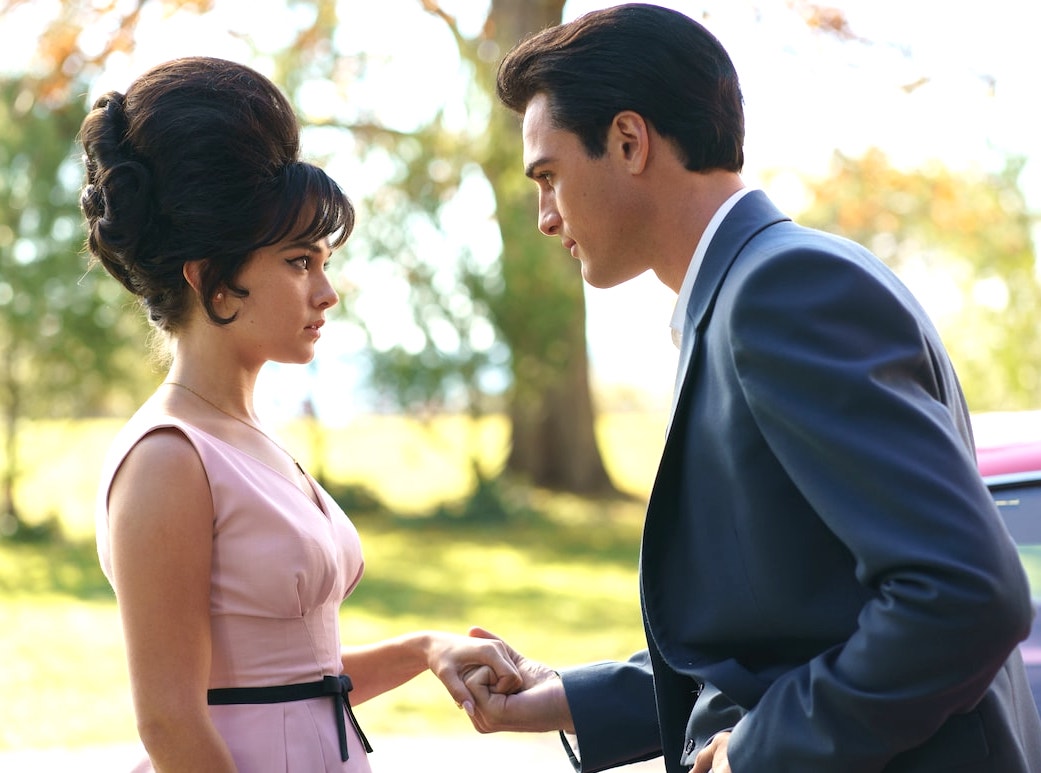
Our protagonist is the delightfully named Oliver Quick (Barry Keoghan), whose freshman year at Oxford is highlighted by a growing friendship with the beautiful, charming, rich-as-hell Felix Catton (Jacob Elordi).  

It’s an odd pairing.  Oliver, while a good student, is something of a blank-faced emotional drone, definitely not one of the handsomely entitled sort Felix usually runs with.  

They meet when Oliver does an unexpectedly generous and apparently selfless favor for Felix, and the latter decides that maybe this working-class  kid provides just the sort of down-to-earth genuineness lacking in his posh life.

Upon learning that Oliver’s father has died of a drug overdose, Felix suggests Oliver spend the summer with him at his palatial family estate, Saltburn. Good times.

“Saltburn” touches on most of the plot points and characters common to this sort of enterprise.

There’s a cousin (Archie Madekwe) who hates the low-born OIiver from the get-go; a sad, substance-abusing sister (Sadie Soverall) who offers sexual promise; the mother  (Rosamund Pike), eager to prove her open mindedness (“I was a lesbian for a while…too wet for me”) by doting on the lower-class visitor; the father (Richard E. Grant) so rich he can spend his days on his collecting obsessions.

There’s also another visitor, the freeloading Pamela (Carey Mulligan), one of Mother’s friends but now wearing out her welcome. Upon learning she has died a member of the household observes: “She’d do anything for attention.”

Mining some of the same psychological landscape as “The Talented Mr. Ripley,” Fennell’s film slowly reveals that the harmlessly bland Oliver is in fact a sort of emotional vampire (in one shocking scene he appears to be feasting on menstrual blood). In fact, he’s the human version of the cuckoo, a bird that takes over other birds’ nests, destroying their eggs and substituting one of its own.

Rosamund Pike

The results are unashamedly misanthropic. “Saltburn” satirizes the ruling class, but its avenging angel proletarian “hero” is no better than his titled targets.

Given the contempt and cynicism on display, the film is watchable enough; it certainly doesn’t hurt that most of the roles have been taken by beautiful people.

Not that Barry Keoghan is beautiful, exactly.  In the right light his potato face exudes a sort of brute animal cunning;  at other times he can seem almost handsome. It’s the perfect chameleonic approach to a shifty character like Oliver.

And the film ends with a sequence so perfect — a naked Oliver dancing rapturously through the halls of Saltburn — that I’m almost willing to blow off my reservations. A strong finish is always a good thing.

| Robert W. Butler

Annette Bening

“NYAD” My rating: B  (Netflix)

121 minutes | MPAA rating: PG-13

Athletic excellence and obsessive ambition are regular bedfellows, perhaps no more so than in this story of distance swimmer Diana Nyad,

Scripted by Julia Cox (from Nyad’s book Find a Way) and directed by Jimmy Chin and Eliizabeth Chai Vasarhelyi,  this,is a slow buildup to Nyad’s 2013 master achievement, a 110-mile solo swim at age 60 (sans shark cages and resting raft) from Havana to Key West.

It was her fifth attempt, earlier ones having been scuttled by unpredictable tides and unfavorable winds, jellyfish stings, low water temperature and sheer exhaustion creating a dissociative mental state not unlike a drug-free acid trip.

The film benefits hugely from its casting,  Annette Bening makes of her  Nyad an almost superhuman force willing to cajole, beg and borrow (if not steal) to get the funds for her expensive attempts, which required a motorized boat, kayaks and crew to man it all. 

There’s more than a little stubborn craziness at work here (one must wonder at the masochistic elements of the sport), and the film in flashbacks offers details about the adolescent Diana’s sexual  abuse at the hands of her Hall of Fame swimming coach.

In the present Nyad’s obsessions strain relations even with her best friend Bonnie Stoll (an excellent Jodie Foster), who puts her own life on hold to pitch in with the advance work and to accompany Nyad on her attempts (Stoll remains on the boat, feeding the swimmer thorough a tube but never touching her…that would violate the solo swim rules).

Viewers may wonder whether Nyad, who is openly gay, and Stoll were lovers.  The film isn’t clear on that point and in the end  it doesn’t matter. This is a film about friendship surviving just about everything life can throw at it.

Special nod also to Rhys Ifans for his portrayal of John Bartlett, a veteran Caribbean captain who piloted the escort ship on Nyad’s attempts, even as he was battling the illness that would kill him.

Colman Domingo

“RUSTIN” My rating: B (Netflix)

106 minutes | MPAA rating: PG-13

Martin Luther King Jr.’s “I Have a Dream” speech at the 1963 March on Washington may have been the single most memorable moment of the Civil Rights era.

It wouldn’t have happened without Bayard Rustin, a gay black man of outstanding intellectual power and organizational ability. 

 The march was largely Rustin’s idea, and he certainly was its greatest facilitator, overcoming obstacles thrown up not only by the white establishment but by his fellow African American leaders.

Here Rustin is portrayed by Colman Domingo as an aggressive (and often aggressively off-putting) visionary whose dreams are forever being threatened by his gayness, a chink in his otherwise impressive social armor that his enemies found all too easy to exploit.

“Rustin” is an impressive recreation of a specific time and place.  The script is by Julian Breece (TV’s “First Wives Club”) and Dustin Lance Black (“Milk”), while the insightful but unobtrusive direction is by George C. Wolfe (“Ma Rainey’s Black Bottom”).

And talk about a supporting cast!!! Chris Rock as a doubtful Roy Wilkins, Jeffrey Wright as a sneaky Rep. Adam Clayton Powell, Glynn Turman as A. Philip Randolph, and Ami Ameen as Martin Luther King, Jr.  Toss in Audra McDonald and CCH Pounder and you’ve got carefully applied star power almost everywhere you look…yet all provide just the right support for Domingo’s soul-stirring performance.

When it’s over you’ll be convinced that Bayard Rustin should be a household name.

Tommy Lee Jones, Jamie Foxx

“THE BURIAL” My rating: B (Prime)

136 minutes | MPAA rating: R

Based on a real court case, “The Burial” is a David-vs-Goliath legal drama that offers juicy roles for Tommy Lee Jones and Jamie Foxx while dabbling in racial issues.

Jones’ Jeremiah O’Keefe is the operator of a regional chain of mortuaries. But debt has forced him into bed with a gigantic funeral home conglomerate that has been gobbling up little mom-and-pop operations. Now O’Keefe is looking for a legal cavalier willing to take on the big boys (the heavy here is a ruthless corporate raider played by the ever excellent Bill Camp).

O’Keefe’s search leads him to Willie Gary (Foxx), a cocky and flamboyant lawyer who fancies himself the incarnation of Johnny Cochran. Initially Gay isn’t interested in the funeral home case. He specializes in personal injury; moreover, he proudly views himself as an African American lawyer going to bat almost exclusively for African American clients.

But despite the cultural divide separating them, Gary and O’Keefe click on a personal basis. So much so that when Gary’s black associates bail on the case, he continues to work it virtually as a one-man show.

As effective as it is as a courtroom drama (Jurnee Smollett is very fine as Gary’s opposing counsel), “The Burial” is most satisfying as an examination of two men with vastly different life experiences who evolve into something more like a friends than legal allies.

Jones has so often played the grumpy hard ass that it comes as a revelation that he here is so vulnerable and, well, decent. Similarly, Foxx is terrific at revealing the individual behind the TV-ad bravado.

| Robert W. Butler