Feeds:
Posts
Comments
Jack O'Connell

Jack O’Connell

“’71” My rating: B (Opens March 20 at the Glenwood Arts)

99 minutes | MPAA rating: R

The soldier trapped behind enemy lines has long been a staple of the war film, but the new British release “’71” gives it an original and singularly deadly spin.

The place: Belfast. The time: 1971.

Private Hook (Jack O’Connell, looking about 10 years younger than he did in “Unbroken”) finds himself deployed to Northern Ireland.

“You are not leaving this country,” an officer reassures. Technically, he’s correct, for Belfast is part of the United Kingdom. But for all practical purposes Hook might as well be stationed on an alien planet filled with wildlife bent on killing him.

His immersion into the “troubles” is sudden and deadly. Doing house-to-house searches in a Catholic neighborhood, his unit is mobbed by furious locals hurling stones. Hook is surrounded and beaten, barely escaping with his life.

Meanwhile, his unit has scrambled back into their trucks and hightailed it for their barracks.  Hook is alone in enemy territory.

Here’s the problem: As a newcomer Hook can’t tell the difference between a Catholic neighborhood, where the locals would happily kill him, and a Protestant one where — in theory anyway — he can find shelter.


Continue Reading »

cinderella“CINDERELLA”  My rating: B

112 minutes | MPAA rating: PG

Don’t go to Disney’s new live-action version of “Cinderella” expecting post-modern irony, a feminist perspective, or even psychological realism.

The makers of this movie take their fairy tales straight up and undiluted by any such intellectual folderol.

In last year’s “Maleficent” the Disney Studio reinterpreted its 1959 “Sleeping Beauty” from the evil fairy’s point of view.

But “Cinderella” director Kenneth Branagh and screenwriter Chris Weitz have no use for such revisionism. The fairy tale is enough for them. They aim for the heart, not the head.

Darned if they don’t pull it off.

This isn’t precisely a remake of Disney’s acclaimed 1950 animated version, but fans of the original will see plenty of references, from the evil stepmother’s pampered cat Lucifer to the fat mouse Gus.

(Now if only they’d had Helena Bonham Carter’s Fairy Godmother sing “Bippity Boppity Boo”…well, can’t have everything.)

Continue Reading »

xcxxxxxxxxxxx

Viacheslav Fetisov (center) and teammates bring the Stanley Cup to Moscow

“RED ARMY”  My rating: B 

76 minutes | MPAA rating: PG

You needn’t be a hockey fan or even a sports enthusiast to appreciate “Red Army,” Gabe Polsky’s documentary about the heyday of Soviet ice hockey.

It’s got plenty of hockey action, sure, but it’s also about history, politics, the Cold War, and a whole lot of other stuff.

From the 1970s until the fall of the Soviet Union in the late ’80s, a winning national hockey team — run by the Red Army — was viewed as proof to the world not only of the USSR’s athletic excellence but also of the irrefutable superiority of the Soviet system.

This doc gives a fine overview, from the days when head coach Anatoli Tarasov designed the system, studying the training programs of the Bolshoi Ballet and Soviet chess masters to create an intricate passing game in which a collective approach trumped individual ego, in which teamwork was paramount.

Indeed, watching footage of Tarasov’s squad in action is like witnessing some high speed modern dance of astounding grace and sublime coordination.

Tarasov was beloved of his players, a fat, grandfatherly figure to pre-teen boys who joined the team after national tryouts and thereafter pretty much lived and breathed hockey.

Unfortunately, Tarasov ran afoul of the leadership and was replaced by Viktor Tikhonov, a KGB operative who took Tarasov’s design and ran with it, in the process turning the Red Army team into a sort of gulag.

Continue Reading »

Justin Peck

Justin Peck

“BALLET 422” My rating: C+

75 minutes | MPAA rating: PG

Hard-core dance fans may take some pleasure in “Ballet 422,” a documentary about the making of a new piece.

The rest of us will be underwhelmed.

The subject of Jody Lee Lipes’ film is promising. A couple of years ago Justin Peck, 25, a dancer with the New York City Ballet, was given the opportunity to choreograph a new work for the company. A member of the corps de ballet, Peck was less a star than a grunt, but he had shown such promise at a choreographing workshop that he caught a big break.

“Ballet 422” looks at the creation of “Paz de La Jolla” set to Czech composer Bohuslav Martinu’s 1950 “Sinfonetta La Jolla.” Continue Reading »

The usual suspects reunite

The usual suspects reunite

“THE SECOND BEST EXOTIC MARIGOLD HOTEL”  My rating: C-

122 minutes | MPAA rating: PG

Ideally, a sequel gets made because there’s more to explore in the story or characters.

Most often, though, the sole motive is money.

And you can hear the spare change clanking incessantly beneath the dialogue of “The Second Best Exotic Marigold Hotel.”

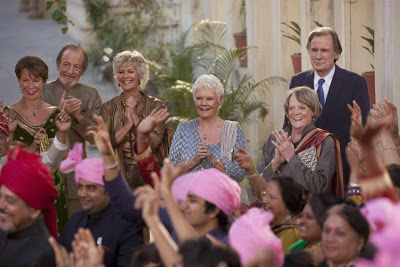
The first film was a sleeper hit, thanks to its stellar British cast (Maggie Smith, Bill Nighy, Judi Dench), the exotic Indian setting and its amusing blend of expatriate adventure and cheeky septuagenarian sexuality.

It never added up to much, but it went down easily, especially with the gray-haired crowd that rarely gets to see itself portrayed with any sort of dignity on the big screen.

But though this follow-up was made by the same people — director John Madden, screenwriter Ol Parker and the returning players — all the charm seems to have evaporated. It’s a paint-by-numbers effort.

The screenplay gives each of the retiree residents of the Marigold Hotel [added:] in Jaipur a crisis to overcome — usually a romantic one. Contrasting against those late-life liaisons are the impending nuptials of young hotel operator Sonny Kapoor (Dev Patel) and his beloved Sunaina (Tina Desai).

Fortune hunter Madge (Celia Imrie) has two well-heeled Indian gentlemen on tap but can’t decide which one to marry. Nighy’s Douglas is smitten with Dench’s Evelyn, but he’s too shy to jump and she won’t commit.

Bon vivant Norman (Ronald Pickup) fears that he has inadvertently put out a mob hit on his girlfriend, Carol (Diana Hardcastle).

Muriel (Maggie Smith) grumpily lectures Americans on how to make tea and quietly nurses her concerns when a medical checkup doesn’t go as planned.

These subplots circle a larger story.

Continue Reading »


Neils Arestrup and Andre Dusollier...arguing for the future of Paris

Neils Arestrup and Andre Dusollier…arguing for the future of Paris

“DIPLOMACY” My rating: B

82 minutes | No MPAA rating

In August of 1944, with Allied troops on the outskirts of the city and the Resistance amping up its activities, the Germans were preparing to abandon Paris — and leave behind a smoking ruin.

Bitter over the pounding German cities were taking, Hitler had ordered the destruction of most of Paris’ famed monuments — from the General Assembly to the Eiffel Tower to the train stations and museums.  Explosive charges placed along the Seine would lead to massive flooding. A million or more people could become fatalities.

Clearly, Der Fuehrer’s plan was not implemented. But it was a close call.

The circumstances surrounding the Nazi retreat from Paris were examined in  “Is Paris Burning?” That 1966 release was one of those cast-of-thousands Hollywood efforts featuring big stars from a half-dozen countries. Behind the camera was the great French director Rene Clair.

But for a far more intimate — if less factual — retelling, check out “Diplomacy” from director Volker Schlondorff (“The Tin Drum,” “The Handmaid’s Tale”).

Basically a two-character production (it was adapted from Cyril Gely’s stage play), this terrifically-written and performed drama centers on two real-life figures.

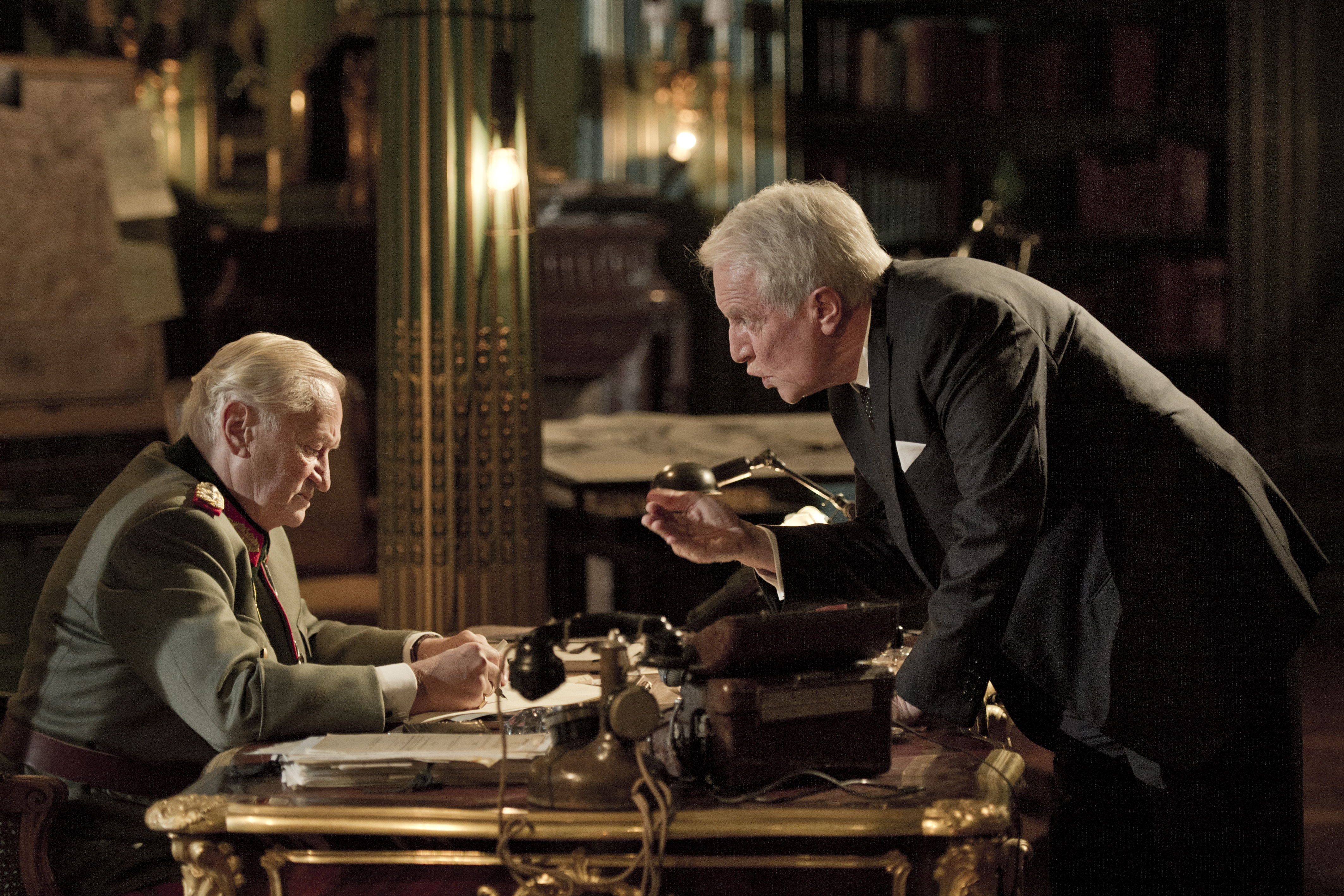
General von Choltitz (Niels Arestrup) is the Nazi military governor of Paris. A weary but dedicated soldier, he has followed orders he finds morally repugnant (like the mass slaughter of Soviet Jews). Now he has overseen the mining of the French capital with tons of explosives. All that’s necessary to get the ball rolling is his order.

Enter Raoul Norlding (Andre Dussollier), the Swedish ambassador to France. Nordling appears as if by magic in von Choltitz’s private office in the Meurice Hotel.  He admits that he gained entrance through a secret passageway once used by Napoleon III to visit his mistress.  In fact, in recent weeks Nordling from hiding has eavesdropped on von Choltiz’s planning.

(For the record, the secret passageway and this particular confrontation between the Swede and the German is pure fiction.)

Continue Reading »

Focus-2015-Movie“FOCUS”  My rating: C 

104 minutes | MPAA rating: R

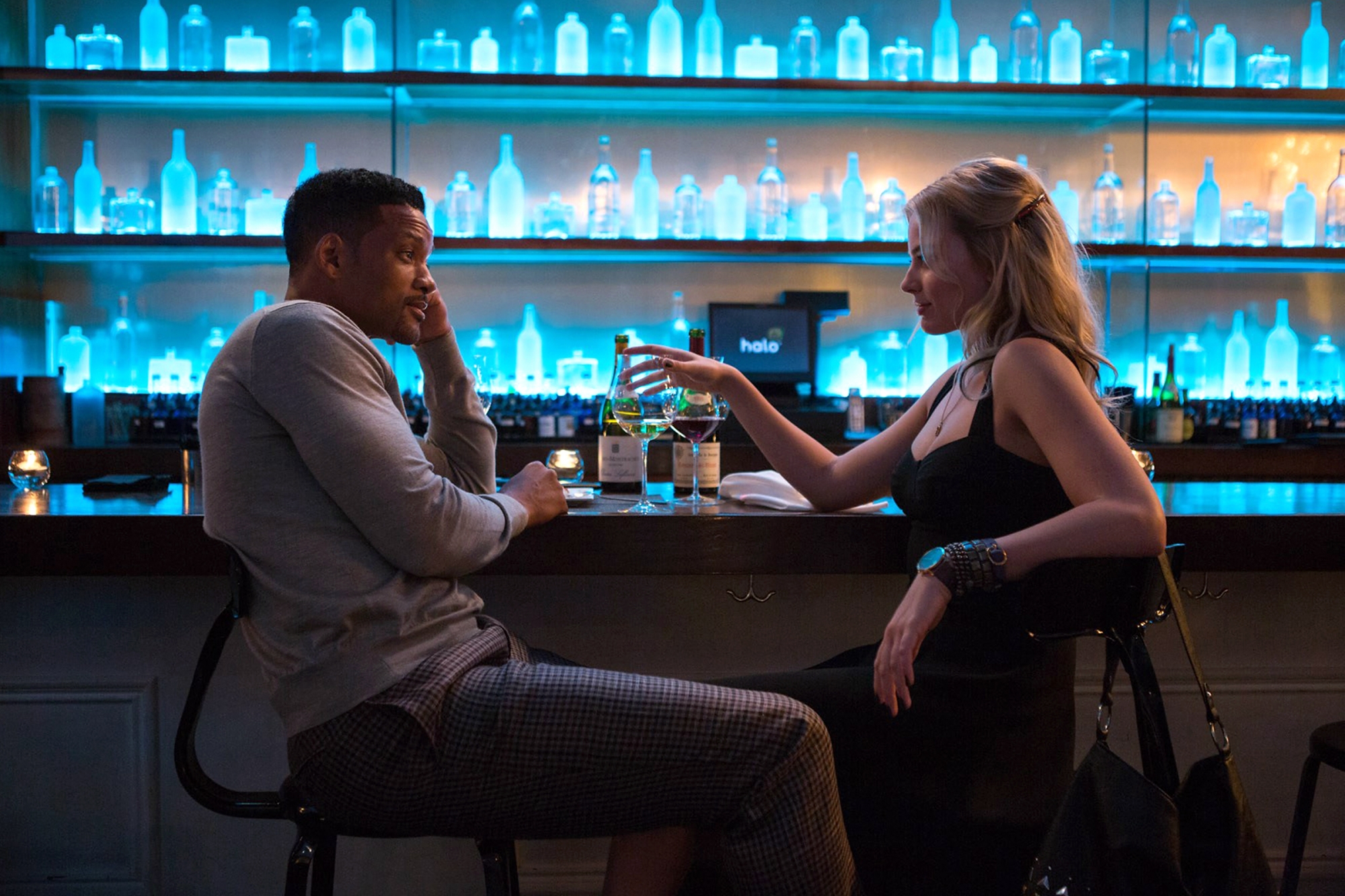
The key to pulling off a scam, according to master con artist Nicky, is to throw off your mark’s focus.

Tap the poor slob on his right shoulder while you remove the Rolex from his left wrist. Misdirect. Confuse.

The same can be said of long-con movies (think “The Sting”), which bluff the audience to deliver a big “Gotcha!!!” payoff.

That’s the goal anyway. The problem with “Focus” is that, well, it has no focus.

Not the characters. Not the fuzzy plotting. Not the halfhearted stab at romance.

Oh, there’s some diversion to be found in the high-roller settings: New Orleans when it hosts the Super Bowl,  Buenos Aires during a Formula One race.  It smacks of an old James Bond flick with a dash of “Thomas Crown Affair” slickness.

But this tepid “thriller” mostly coasts, offering a couple of minor diversions (it’s amusing to see how professional scammers go about their nefarious business) without ever delivering that “wow” moment.

Continue Reading »

leviathan“LEVIATHAN”  My rating: B+

 140 minutes  | MPAA rating: R

There’s a lot going on just in the title of “Leviathan,” Russia’s nominee for the Oscar for best foreign language film.

Leviathan is the Bible’s term for whales, the huge sea creatures that once provided sustenance for the now-abandoned fishing village that is the film’s primary setting. Their massive bones still litter the sand — along with dozens of beached, decaying boats.

Leviathan is also the title of Thomas Hobbes’ 1651 book about the relationship of the individual to government and society.

In “Paradise Lost,” Milton employs the word to describe Satan’s powers.

All of those references are fitting in the context of this exhausting film, which savagely picks apart the new world order of post-communist Russia.

In writer/director Andrey Zvyagintsev’s multi-character drama, the local government tries to seize the property of Kolya (Aleksey Serebryakov), who owns the last occupied house on a spit of land that once was home to a thriving fishing community. Now it is under the jurisdiction of the closest viable town.

Kolya lives with his second wife, Lilya (Elena Liadova), and his teenage son Roma (Sergey Pokhodaev). He runs a car repair business out of his shed. The place is a dump, but at least it’s his dump.

Moreover, Kolya has a long-standing feud with the mayor, Vadim (Roman Madianov), who is not only forcing him to give up his land but is paying only a fraction of its worth.

To help him fight City Hall, Kolya has employed the services of Dimitri (Vladimir Vdovichenkov), an old army buddy who is now a hotshot Moscow lawyer. Dimitri has assembled a fat dossier of the Mayor’s crimes and abuses; perhaps a blackmail threat will make the city back off.

Against this legal battle Zvyaginstev and co-writer Oleg Negin explore several personal relationships as well as their view that corrupt Communism has been replaced by crony capitalism and the theocratic dictatorship of the Russian Orthodox Church.

Continue Reading »

Julianne Moore

Julianne Moore

“MAP TO THE STARS” My rating: C

111 minutes | MPAA rating: R

There have been plenty of great movies about Hollywood.

“Sunset Boulevard.”

“The Bad and the Beautiful.”

“The Player.”

David Cronenberg’s “Map to the Stars” is not one of them.

It’s got a terrific cast (including recent Oscar winner Julianne Moore) and offers many observations about the pathetically fragile egos of those caught up in the celebrity/career cycle, and of the moral vacuum in which the entertainment industry operates.

What it hasn’t got is one character — just one — who isn’t either homicidal, mental, or otherwise set apart from the rest of us average folk. Now this may be a perfectly accurate reflection of life in LaLa Land,  but it makes for an uninvolving movie experience.

The screenplay by Bruce Wagner (“Scenes from the Class Struggle in Beverly Hills”) follows the template of a classic Robert Altman film.  Take an evocative setting (Hollywood, Nashville, a wedding, a health food convention) and toss into it a dozen or so characters whose trajectories intersect at various points.

It begins with the arrival in L.A. of Agatha (Mia Wasikowska), a fresh face from Middle America seeking her future and fortune in the city of angels. Did I say she had a fresh face? Not pecisely. Agatha has a huge scar on her left cheek and wears old-fashioned over-the-elbow lady’s gloves to hide what she says are burn marks.

She hires a limousine driver (Robert Pattinson, late of the “Twilight” franchise) to give her a tour of the sights and of celebrity residences. He’s actually an actor, he says, and is contemplating Scientology. “I was thinking about converting. Be a good career move.”

Continue Reading »

***...misbehaving

Taika Waititi…misbehaving

“WHAT WE DO IN THE SHADOWS”  My rating: B-

86 minutes | No MPAA rating 

After several lifetime’s worth of experiences, you’d think vampires would get it right.

But, no, the bloodsuckers starring in the faux documentary “What We Do in the Shadows” are a singularly inept bunch whose existence argues against the notion that with age comes wisdom.

Written and directed by Jemaine Clement (half of the comedy/musical duo Flight of the Conchords) and Taika Waititi, “What We Do…” purports to be footage shot by a New Zealand  documentary crew that’s been granted permission to film the nightly activities of a group of vampires living together in a creaky old house.

Usually front and center is Viago (Waititi), an affable and childlike fellow in the Andy Kauffman mold who still wears the Byronic fashions of his human life and looks upon the film crew as an opportunity to dispel many of the misconceptions about  his vampire brethren.  (“We get a really bad rap.”)

Vladislav (Clement) has a taste for torture that reflects his flesh-and-blood life in the late Middle Ages. Think Vlad the Impaler.

Deacon (Jonathan Brugh) is basically a frat boy.  A former Nazi, he now is a dedicated slacker and is often criticized by his housemates for not pulling his weight: “You have not done the dishes for five years.”

Finally there’s Petyr (Ben Fransham), who lives in the cellar and is a dead ringer for the bald, rat-clawed vampire in the classic silent film “Nosferatu.”  Petyr is the “father” of the others, but at age 8,000 he doesn’t exert any more energy than is absolutely necessary.

Continue Reading »