Feeds:
Posts
Comments
Liam Neeson, Olivia Wilde

Liam Neeson, Olivia Wilde

“THIRD PERSON”  My rating: C  (Opens July 11 at the Glenwood at Red Bridge and the Leawood)

137 minutes | MPAA rating: R


There are those who would argue that Paul Haggis’ “Crash” was a bucket of heavy-handed melodrama and that it only received the 2004 Oscar for best picture because the Academy was too cowardly or homophobic to give the award to “Brokeback Mountain.”

To those people I can only say this:  You haven’t seen heavy handed until you’ve sat through all two hours of Haggis’ latest, the artsy fartsy “Third Person.”

Taking the template of “Crash” — several intersecting stories centering on the same theme — Haggis has fashioned an emotionally remote, narratively confused yarn that goes through all the motions without ever delivering a payoff.

In Paris, novelist Michael (Liam Neeson) reunites with the fellow writer Anna (Olivia Wilde), with whom he is having a torrid if idiosyncratic affair (their relationship seems to be as much about baiting as boffing). Every now and then Michael gets a call from the wife he left behind (Kim Basinger, looking beaten down by life).

In New York City, perpetually woebegone Julia (Mila Kunis) is in the midst of a custody case.  Her ex (James Franco) won’t let her see their young son…because the last time Julia took care of him the kid almost suffocated in a plastic drycleaning bag. The penniless, luckless Julia is one of those people who can’t get anything right — not even showing up on time for meetings with her busy lawyer (Maria Bello). Mostly she mopes.

Continue Reading »

Jason Clarke and (beneath the CGI) Andy Serkis

Jason Clarke and (beneath the CGI) Andy Serkis

“DAWN OF THE PLANET OF THE APES”  My rating: B (Opening wide on July 11)

130n minutes | MPAA rating: PG-13

Despite the overwhelming evidence, there is no rule that big summer blockbuster films have to be insufferably dumb.

“Dawn of the Planet of the Apes” is actually pretty smart.

Oh, not in its plotting, which is all too familiar. Or in the acting from the “human” cast, which is perfunctory.

But in creating a  world 10 years after the great ape revolution depicted in “Rise of the Planet of the Apes,”  director Matt Reeves (“Let Me In,” “Cloverfield”) and his huge team (the closing credits feel as long as the rest of the movie) have given us a vision that is part Eden, part sci-fi dystopia and populated with monkeys who at their best generate real emotions.

The film begins with a thrilling deer hunt by ape leader Caesar (Andy Serkis) and his followers through the primordial greenery of Muir Woods.  Screenwriters Rick Jaffa, Amanda Silver, and Mark Bomback envision the apes as a sort of undiscovered South American tribe living in a sprawling Ewok-ish town of massive “nests.”

These apes eschew the technology of the humans who once persecuted them, but they do make their own weapons of wood and stone.  Most communicate through sign language (we get subtitles), though Caesar and a few other chimps have learned to speak. They create their own versions of totem poles (assemblages of sticks and animal bones) and some of the females even wear rudimentary jewelry.

Most striking of all, the apes have a school, taught by an orangutan who understands human writing. (In the previous film we learned how the simians gained human-like intelligence as subjects in a military experiment.)

Continue Reading »

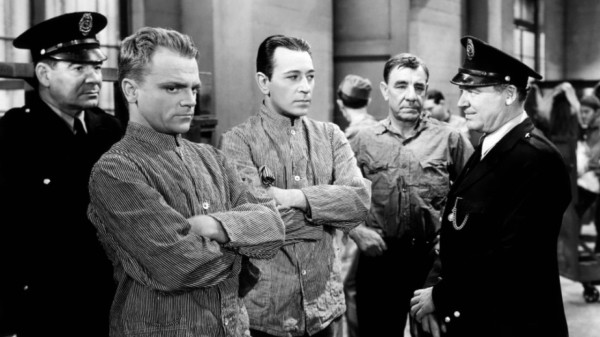
James Cagney and George Raft in "Each Dawn I Die"

James Cagney and George Raft in “Each Dawn I Die”

“Each Dawn I Die” screens at 1:30 p.m. Saturday, July 12, 2014 in the Durwood Film Vault of the Kansas City Central Library, 14W. 10th St.  Admission is free. It’s part of the year-long film series Hollywood’s Greatest Year, featuring movies released in 1939.


Warner Brothers was the home of tough guys.

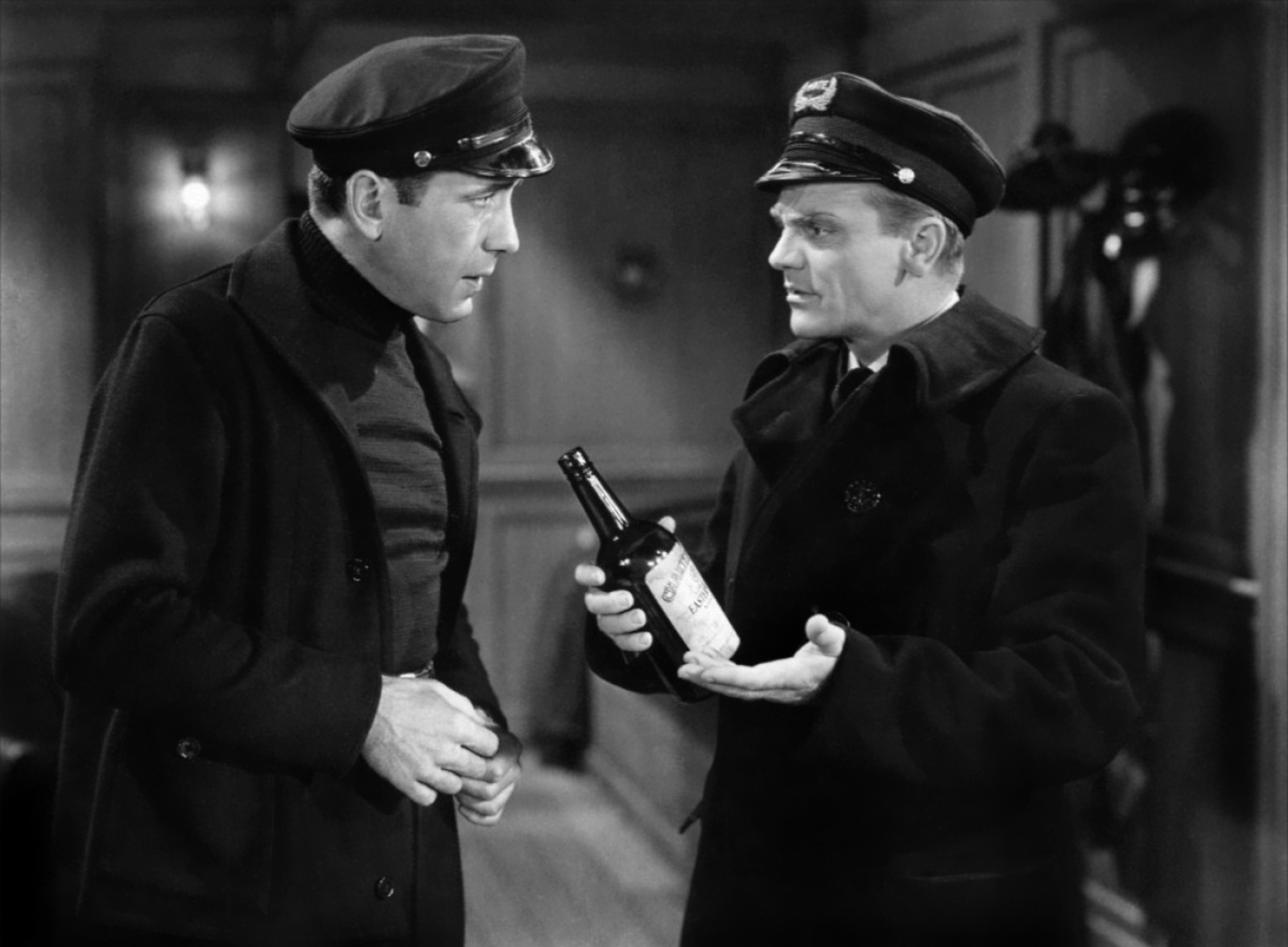
The studio was noted for its emphasis on films that dealt with social problems – including crime – and it kept under contract some of the manliest mugs in Hollywood. Going into 1939 Warners already had James Cagney (“Angels with Dirty Faces,” “‘G’ Men”), Humphrey Bogart (“The Petrified Forest,” “Bullets or Ballots”), and Edward G. Robinson (“Little Caesar”) on its roster of stars.

To that lineup it added a new tough guy: George Raft.

Born in Hell’s Kitchen, New York City, Raft got his start in show biz not with the gangster roles for which he became famous but for his dancing. He was a Broadway and nightclub hoofer whom Fred Astaire claimed did “the fastest Charleston I ever saw.”

Moving to Hollywood in 1929, Raft got his first meaningful role as a competitor in a dance contest (he was knocked down by one of the other contestants, played by James Cagney). In 1932 he played a coin-flipping hood opposite Paul Muni in Scarface.

Though he was widely known as a true gentleman, Raft grew up knowing plenty of real-life tough guys. He was on a first-name basis with Bugsy Siegel and Meyer Lansky, and was a lifelong friend of mobster Owney Madden, who he frequently visited while Madden was doing time in Sing Sing.

Raft undoubtedly drew on his intimate knowledge of these underworld characters when he played gangsters in the movies.  But who could have predicted that the tough guys themselves would become Raft’s biggest fans?  They relished his entertaining and romantic depictions of their lives, his sense of style, and the smart/strong attitude he exuded from the screen.

The ink on Raft’s contract with Warners was barely dry when he began making “Each Dawn I Die,” a prison picture that paired him with Cagney.  For the studio it was a match made in heaven. Cagney’s red-headed, freckled Irishman and Raft’s darkly exotic heavy (people thought he was Italian but both of his parents were German Jews) provided an attractive contrast.

Cagney plays a newspaper reporter who is on the verge of revealing a major scandal in the DA’s office. He’s framed for manslaughter and finds himself in a hellish prison where he slowly makes the friendship of Raft’s seasoned crook.  Among the film’s highlights are a scene in which Cagney’s character, after months in solitary, breaks down piteously before the parole board and begs for his freedom. Critics called it the best work of his career to date.

Meanwhile Raft’s hood, having broken out of prison, starts collecting evidence that will free his friend. In the end he allows himself to be recaptured so that he can continue his work from inside prison walls.

Continue Reading »

Jesse Eisenberg and...Jesse Eisenberg in "Double"

Jesse Eisenberg and…Jesse Eisenberg in “The Double”

“THE DOUBLE” My rating: C+ (Opening July 4 at the Screenland Crown Center)

93 minutes | MPAA rating: R)


Though it is based on a novel by Fyodor Dostoevsky, one could be forgiven for thinking “The Double” is an adaptation of Franz Kafka.

Richard Ayoade’s film gives us a hapless protagonist trapped in a web of illogical but rigid social and political rules. This poor schlub finds himself living in a nightmare from which he cannot awaken.

The problem is that for me dramatizations of Kafka never really work.  They may be well acted, imaginatively mounted, and they may deal with important human issues. But what seems subversive and insightful on the printed page always comes off as a bit silly and, worse, boring when brought to the screen. Kafka-ish yarns are always about an Everyman…and Everymen aren’t all that interesting.

Once in a blue moon a director takes a Kafkaesque situation and makes it both funny and compelling — Terry Gilliam’s “Brazil,” for example.

“The Double” works about half the time, thanks to its depiction of a glum alternative world and a bravura double performance from Jesse Eisenberg. But it can’t quite make it over the hump.

Eisenberg is best known for playing dweebs in films like “Zombieland” and “Wonderland” and — let’s face it — “The Social Network.” Here gets to play not only a disaffected dweeb but also his lookalike tormentor. Two characters that are polar opposites.

And, yes, the kid can act. He’s so good here I wish I liked the movie more.

Simon (Eisenberg) lives in a grungy, ill-lit metropolis in which technology seems to have peaked around 1935.  He’s employed by some sort of government agency ruled by the Colonel (James Fox), a paternalistic Big Brotherish figure in a white uniform. Exactly what this agency does is never made clear, but it must be important since it has a high degree of security. When he leaves his ID at home, Simon has a hard time convincing anyone at work that he’s been coming there for years.  He’s that forgettable.

Our man yearns for success but is totally lacking in the qualities that might bring it. He’s got no self-assurance, creativity, or charisma.

Continue Reading »

Kiera Knightley, Mark Ruffalo in "Begin Again"

Keira Knightley, Mark Ruffalo in “Begin Again”

“BEGIN AGAIN” My rating: B (Opening July 2 at the Glenwood Arts)

104 minutes | MPAA rating: R

“Begin Again” is only half the movie that “Once” is.

But it should still be enough to jump start the career of filmmaker John Carney.

“Once,” of course, was Carney’s 2006 art house hit about a tentative romance between a Dublin street busker and a Polish immigrant. This mini-budget wonder, largely improvised and featuring an astounding soundtrack written by the two “stars” (Glenn Hansard, Marketa Irglova), introduced the Oscar-winning song “Falling Slowly.” It was a new kind of intimate musical, and a bittersweet romance of epic proportions. (It has gone on to become a hit on Broadway).

But the ensuing years have not been kind to writer/director Carney, who used his newfound fame to make two instantly forgettable features: the clumsy visitor-from-another-planet comedy “Zonad” (2008), which was released in the US only on home video, and the supernatural thriller “The Rafters” (2012), which as far as I can tell has been seen by practically no one.

Which brings us to “Begin Again,” an effort to recapture some of the magic of “Once.”

It’s about music. It’s about love.

And it’s actually not bad.

Continue Reading »

John Hurt, Chris Evans and Jamie Bell in "Snowpiercer"

John Hurt, Chris Evans and Jamie Bell in “Snowpiercer”

“SNOWPIERCER” My rating: B (Opens July 2 at the Tivoli, Screenland Armour and Leawood)

126 minutes | MPAA rating: R

Allegorical sci-fi doesn’t get much more headsmackingly ambitious than “Snowpiercer,” a claustrophobic epic from Korean director Joon-ho Bong.

Joon-ho got a toehold in the American market with “The Host,” a superlative monster movie that mixed genuine thrills with offbeat humor. He followed that up by going in exactly the opposite direction with “Mother,” which follows the trials of an unsophisticated Korean woman whose only son is accused of murder.

“Snowpiercer,” though, is his most ambitious movie to date, one filled with big-name actors (Octavia Spencer and Ed Harris, for instance, take small but pivotal roles) and overflowing with political and social satire. It’s as if “Das Boot” were mated with Terry Gilliam’s “Brazil.”

In the near future the world’s great powers try to deal with global warming by shooting into the atmosphere rockets filled with some newfangled chemical that’s supposed to lower Earth’s temperature.  It works all too well, plunging the planet into a new Ice Age that kills just about everything.

But 1,000 lucky — or maybe not so lucky — survivors have found shelter in an ultra high-tech, mile-long train that runs on nuclear energy and for the last 18 years has been roaring unceasingly on a non-stop circuit around the Earth.

We’re first introduced to this brave new world at the back end of the train, where the unwashed proletariat squirm in an existence only a dozen feet wide and hundreds of yards long. it’s like the world’s biggest submarine.

These poor bastards survive on gelatinous protein bars passed out by black-armored riot police who several times each day line everyone up for head counts. Now and then these thugs snatch young children and take them to the front of the train for purposes too unpleasant to contemplate.

Continue Reading »

Jenny Slate

Jenny Slate

“OBVIOUS CHILD” My rating: B (Now showing at the Tivoli and Leawood theaters)

84 minutes | MPAA rating: R

It’s about a young woman struggling to make it in the world of stand-up comedy.  The lead character is played by Jenny Slate, who is in fact an stand-up comic, as well as a past cast member of “Saturday Night Live.”

At this point you might jump to the conclusion that Gillian Robespierre’s “Obvious Child” is a comedy.

Well, it is, but not like any comedy we’ve seen lately. It has more in common with dramadies like the cable hits “Girls” and “Nurse Jackie” than your usual rom-com fare. The humor on display elicits as many gasps as guffaws. It’s not so much funny ha-ha as funny weird.

And in its final passages, “Obvious Child” (the title comes from the Paul Simon hit of the same name) achieves a bittersweet blend of hope and loss that is more moving than any plain comedy has a right to be.

Slate’s Donna Stern lives in Brooklyn, works in a fusty old bookstore that specializes in anti-imperialist and non-exploitative works (it actually says so in the store’s name), and spends her after hours at the local open mic night.

As the film begins she learns that her boyfriend has been sleeping with her best friend. The ballsy comic with the potty mouth melts into a weeping mess who spends much time burrowing into the familial warmth of her divorced parents (Richard Kind in absent-minded professor mode, Polly Draper as a college business professor — both excellent).

Continue Reading »

William Powell, Skippy/Asta, and Myrna Loy

William Powell, Skippy/Asta, and Myrna Loy

“Another Thin Man” screens at 1:30 p.m. Saturday, July 5, 2014 in the Durwood Film Vault of the Kansas City Central Library, 14W. 10th St.  Admission is free. It’s part of the year-long film series Hollywood’s Greatest Year, featuring movies released in 1939.


One of the first things you realize watching 1939’s “Another Thin Man” — the third of six popular film mysteries starring William Powell and Myrna Loy as crime-solving couple Nick and Nora Charles – is that the mystery hardly matters.

A domineering, rich old man (C. Aubrey Smith) has been getting death threats. Soon enough, he’s murdered. The list of possible killers is extensive – a Cuban gangster, the housekeeper, members of the man’s own family – and the plot so twisty you need a flow chart to keep up with it.

Don’t worry if it doesn’t track all that well. Watch the Thin Man films for their sophisticated humor and the superb banter between stars Powell and Loy.

The original “Thin Man” back in 1934, based on a Dashiell Hammett novel, was one of the year’s biggest successes, with Oscar nominations for best film, best director (W.S. VanDyke), best actor (Powell), and best adapted screenplay.

The M-G-M brass were happy to keep giving the public what it wanted. And what it wanted was more Nick and Nora.

Thanks to Nora’s family money, private eye Nick is free to take only those cases that interest him. He spends most of his time pouring and drinking cocktails, leading to some hilarious sight gags and memorable lines, such as Nora’s announcement that “We had had a lovely trip. Nick was sober in Kansas City.”

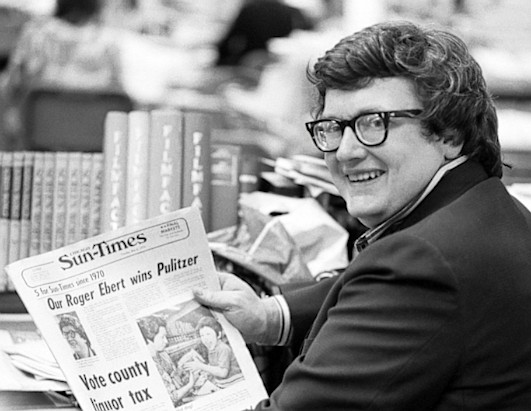
The thing is, the more Nick drinks, the more charming and perceptive he becomes. According to the late Roger Ebert, Powell “is to dialogue as Fred Astaire is to dance. His delivery is so droll and insinuating, so knowing and innocent at the same time, that it hardly matters what he’s saying.”

Continue Reading »

Brendon Gleeson, Taylor Kitsch

Brendon Gleeson, Taylor Kitsch

“THE GRAND SEDUCTION”  My rating: C+ (Opening June 27 at the Glenwood Arts)

113 minutes | MPAA rating: PG-13


We know exactly what the Canadian comedy “The Grand Seduction” is trying to do.

Only problem is that it’s been done so much better by movies like”Local Hero” and “Doc Hollywood” and the TV show “Northern Exposure.”

The premise has “quaint” and “quirky” scrawled all over it.  For a full generation, the residents of the tiny fishing village of Tickle Head on the coast of Newfoundland have watched their tiny burg deteriorate. The once-busy harbor is now all but empty. Nowadays nobody fishes for a living.  Just about every adult  is on welfare.

There’s a slim chance that a petrochemical company may be enticed to set up a recycling plant there.  One of the requirements, though, is that Tickle Head have a full-time physician.

So the locals, led by the usually inactive Murray French (Brendan Gleeson) — whose totem animal should be a hibernating, grouchy bear — launch a massive deception to lure an M.D.  Their target is Dr. Paul Lewis (Taylor Kitsch), who after a run-in with the law is assigned to do a few weeks of public service in Tickle Head.

Murray and company use the Internet to find out everything they can about Paul. Learning that he’s a cricket fanatic, they create a team of former fishermen and outfit them with makeshift uniforms and equipment (a sawed-off rowboat oar becomes a cricket bat). Even more galling, as long as the doc is in town the menfolk who gather to watch cable TV in the local bar must eschew the hockey championship while pretending to be enthusiastic about reruns of famous cricket matches.

Continue Reading »

968full-andy-hardy-gets-spring-fever-poster“Andy Hardy Gets Spring Fever” screens at 1:30 p.m. Saturday, June 28, 2014 in the Durwood Film Vault of the Kansas City Central Library, 14 W. 10th St.  Admission is free. It’s part of the year-long film series Hollywood’s Greatest Year, featuring movies released in 1939.


It’s difficult for modern viewers to appreciate the immense popularity of MGM’s Andy Hardy films of the late 1930s and early ‘40s.

Take “Andy Hardy Gets Spring Fever,” the seventh release in the 18-film series that began in 1937 and didn’t wrap up until 1958.

The movie finds Andy (Mickey Rooney) stewing over the dalliance of next-door-neighbor Polly (Ann Rutherford) with a dashing military officer. Feeling rejected, our high school hero is vulnerable to the charms of his substitute drama teacher, Miss Meredith (Helen Gilbert), for whom he falls hard. To impress her, Andy writes a play, an adaptation of Romeo and Juliet set in the South Seas.

(Not to worry — it’s all very innocent. This was way before Mary Kay Letourneau.)

Meanwhile Judge Hardy (Lewis Stone), usually a paragon of Midwestern reserve, is giddy over the possibility of overnight riches when a couple of entrepreneurs (or are they scam artists?) reveal that acreage he owns is thick with aluminum ore.

Not terribly scintillating stuff — just some amusing/touching moments from a boy’s life. This is the sort of thing modern TV watchers have been able to get from any number of sitcoms. (“The Wonder Years.” “Malcolm in the Middle.”)

Which, in a way, is the whole point. The Andy Hardy movies served pre-television audiences in the same way that today’s network series do – by providing likeable characters with whom we identify and who we’re happy to follow over the course of many years/seasons.

Russian-born MGM mogul Louis B. Mayer saw the Hardys and their neighbors as representative of his adopted country at its best – generous, religious, patriotic, and tolerant. Turned out that Americans liked seeing themselves depicted in that way.

Continue Reading »