Feeds:
Posts
Comments

Kristen Vaganos, Carmen Anello

“I AM LISA”  My rating: C+

92 minutes | No MPAA rating

Horror fans — who seem to be perennially on the prowl for new twists on old tropes — will find fresh meat to chew on in “I Am Lisa,” the latest from Lawrence-based creepmeister Patrick Rea.

Working from a screenplay by first-timer Eric Winkler (full disclosure: Eric and I were for years colleagues at the Kansas City Star), “…Lisa” offers a mashup of two genres — the female revenge melodrama (“I Spit on Your Grave,” etc.) and the werewolf picture.

Moreover, it’s a female centric yarn — the cast is mostly women.

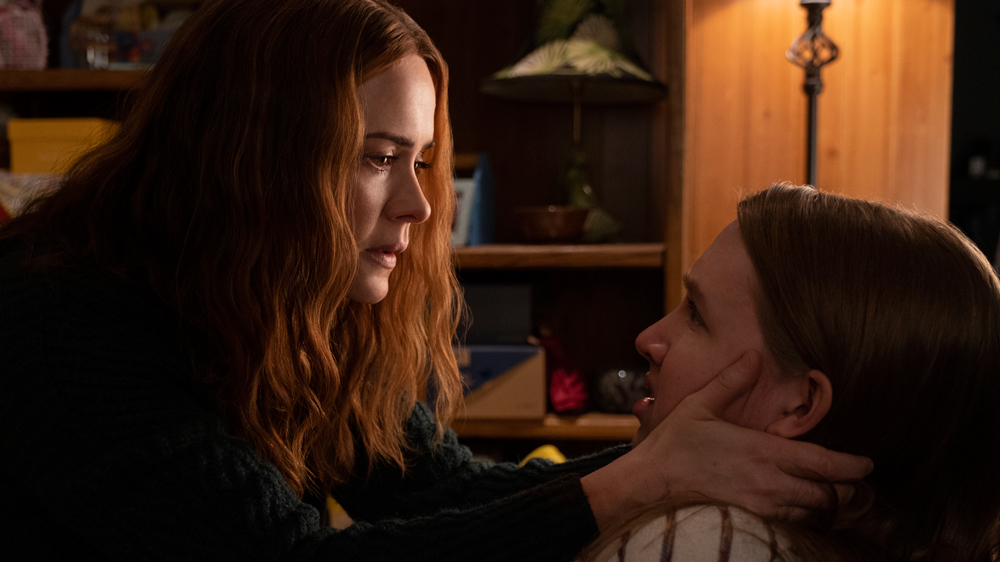
The Lisa of the title (Kristen Vaganos) operates a small-town bookstore.  She’s got scholarly glasses and hides beneath a stocking cap (think Dustin Hoffman in “Straw Dogs”) and  is easy prey for a posse of bad girls who seem to run things in the little burg.

Their sneering, manipulative leader is Jessica (Carmen Anello), who makes off with an expensive first edition.  Lisa seeks relief from the local sheriff, Deb Huckins (Manon Halliburton).

Big mistake.  Sheriff Huckins is Jessica’s mom (uh…how did this escape Lisa?) and the head of a crime family that runs everything from drugs to prostitution.  Her thick son Nick (Crhis Bylsma) is her deputy.

For her troubles Lisa will be kicked nearly to death, raped and, at one point, crucified.  Left to expire in the woods, she’s bitten by a wolf and wakes up in the rural home of an eccentric occultist (Cinnamon Schultz) who nurses her back to health.  This doesn’t take as long as you’d expect…all of a sudden Lisa is exhibiting remarkable recuperative properties.

Hiding out with her best bud Sam (Jennifer Seward), who will function as a last-act maiden-in-distress, Lisa realizes that she’s becoming a powerful beast capable of snapping a neck or tearing out a throat.

Mean girls had best look out. Continue Reading »

Sidse Babett Knudsen, Pilou Asbaek

“BORGEN”

If like me you are inclined to view contemporary American politics as a terrifying shitstorm, there’s some comfort to be had in the excellent Danish series “Borgen,” a sort of “West Wing” for a multi-party society.

Take comfort in the knowledge that things could be even crazier.

The central character of this 2010-2013 series (its two seasons are now streaming on Netflix; a third reportedly is on the way)  is Birgitte Nyborg (Sidse Babett Knudsen…she played “Westworld’s” top exec in that series’ first season).

Birgitte is a forty something politician, wife and mother whose centrist party grabs enough parliamentary seats in an election to form a new government. That means she is poised to become her country’s first female prime minister.

Thing is, Denmark (like most European nations) relies on coalition governments made up of representatives of two or more parties.  Whereas Americans have only to choose between Democrats and Republicans, Danish voters have a slew of ideologies to select from.

If you’re going to rule in Denmark, you’ll spend much of your time compromising with smaller fringe parties — like the Greens —  in exchange for their support. This is achieved by handing out plum assignments in the various ministries.

And while performing these in-house acrobatics, a leader like Birgitte must fend off the advances  of far right-wing parties currently out of favor.

Complicated? Yeah, but show runner Adam Price and his writers are so good at setting up the lay of the land that it’s easy to pick up on the subtleties of Danish politics.

Just as important, “Borgen” (that roughly translates as “the Castle,” the Danes’ nickname for the building in Copenhagen holding the country’s executive, legislative and judicial branches) is packed with terrific characters to whom we get mightily attached.

Knusden’s Birgitte is a fantastically compelling figure, a whip-smart politician struggling — not always successfully — to balance her duties at the Castle with her family life. Not to mention the near-constant pressure to stuff her ideals and act out of sheer convenience.

Cracks soon appear in her seemingly rock-solid marriage to Phillip, a professor of economics (Michael Birkkjaer). Equally frustrating is the toll her job is taking on the couple’s children, a teenage daughter (Freja Riemann) who slips into depression and an angelic tweener son (Emil Poulsen) who inexplicably begins bed wetting.

Essentially “Borgen” asks if it is possible to hold positions of great power without compromising one’s principles or doing irreparable damage to those you love.

Continue Reading »

Jim Parsons, Matt Bomer

“THE BOYS IN THE BAND” My rating: B

121 minutes | MPAA rating: R

Gotta be honest…the first half hour or so of Netflix’s “The Boys in the Band” is not terribly promising.

Based on Mart Crowley’s ground-breaking 1968 play (it was first filmed in 1970), this new version pretty much sticks to the original script.

In doing so Joe Mantello’s film clumsily displays its theatrical roots, not just in its claustrophobic single setting but also in the dialogue-heavy way it tells us (rather than shows us) what its characters and their predicament are all about. Especially in the early going the talk seems forced and artificial in its efforts to set up the situation.

But once it kicks in, once all the celebrants to a gay man’s birthday party in late-60s NYC show up and start interacting, “Boys…” finds its voice and its power.

What’s really driven home here is the realization that while the conditions under which gay people live have improved over the last 50 years, the human condition pretty much remains the same.

Here’s the setup: Michael (Jim Parsons), a witty and somewhat dictatorial fellow, has invited several of his closest friends to his apartment (Greenwich Village?) for a birthday celebration. Over the course of an increasingly drunken evening they will thrash out relationships, hopes, dreams and fears.

The birthday boy is Harold (Zacharay Quinto), pock-marked, cynical and carrying a substantial load of self-loathing.

Larry (Andrew Rannells) and Hank (Tuc Watkins) are a couple…at least for now. Randy Larry has a wandering eye (and other body parts), while staid Hank — who has an ex-wife and a couple of kids — takes comfort in monogamy.

Bernard (Michael Benjamin Washington) is a black man who, before the evening is over, will erupt over Michael’s barely-disguised race baiting. Continue Reading »

Sarah Megan Thomas

“A CALL TO SPY” My rating: B-

123 minutes | MPAA rating: PG-13

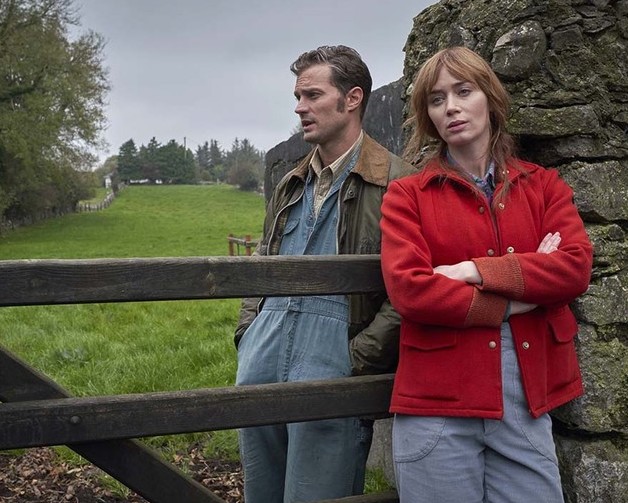
An overlooked landmark in the history of World War II — not to mention in the annals of feminism — gets a  dusting off in “A Call to Spy,” the fact based story of the role women played behind enemy lines in Nazi-occupied France.

Lydia Dean Pilcher’s drama (the screenplay is by Sarah Megan Thomas, who also takes a leading role) begins many months before America was pulled into the conflict. The British are reeling and desperate for information of what’s going on in occupied Europe.

But as spymaster Maurcie Buckmaster (Linus Roache) admits to his second, Vera Atkins (Stana Katic), the English are amateurs at this stuff. Their agents are being quickly swept up and eliminated by the Gestapo.

Atkins has an idea.  The Germans are expecting male infiltrators. Why not women?

Her search quickly brings her to the U.S. Embassy and Virginia Hall (Thomas), a fiercely capable individual (despite having one prosthetic leg) whose dreams of joining America’s diplomatic corps are being crushed by nearsighted male chauvinism.

Being both fluent in French and an American (remember, the Yanks are still neutral), she will be able to move more or less unimpeded throughout Vichy.  Especially when she’s given a cover as a foreign correspondent for an American newspaper.

Another recruit is Noor Inayat Khan (Radhika Apte), a Sufi Muslim working as a radio operator under Buckmaster.  She is so fast with Morse Code that she’s sent to set up a wireless station in France through which British spies can channel their findings. Though a pacifist, Noor believes her spying can save lives.

Continue Reading »

Julianne Moore

“THE GLORIAS” My rating: B 

139 minutes | MPAA rating: R

Julie Taymor’s “The Glorias” isn’t your conventional biopic.  Often it seems to be less about Gloria Steinem the person than about the Women’s Movement as seen from Steinem’s perspective.

The results are hugely informative (and required viewing for all young women) but, for most of the film’s long running time, emotionally remote. Only in the  final inspiring moments (featuring footage of the real Steinem addressing the “Pink Pussy” women’s march on Washington early in the Trump presidency) does the enormity of Steinem’s contributions hit home.

Based on Steinem’s autobiography My Life on the Road,  the film is nevertheless classic Julie Taymor.  The story is told with a shuffled chronology with four actresses (Lulu Wilson, Ryan Kiera Armstrong, Alicia Vikander and Julianne Moore) portraying Steihem at various stages of life.  Occasionally the older Gloria will share the screen with her younger selves in a series of interior dialogues.

There are animated sequences and lots of cinematic sleight of hand; the images shift from black-and-white to color (and sometimes just a splash of color in an otherwise b&w palette).

As is usually the case with Taymor, these inventions are arresting, sometimes shockingly dramatic, and provide sly commentary on the action.  Yet I can’t help but wonder if in the end they tend to push us away from her subject; “The Glorias” may be too busy for its own good.

But we do learn a lot about Steinem.  Like her childhood of near constant travel with a father (Timothy Hutton) who was a sort of benign con man (“If you don’t know what happens tomorrow, it could be wonderful”) and, later, her adolescence as caregiver to her emotionally fragile mother (Enid Graham).

There’s her lifelong love of tap dancing, presented here as a musical number unfolding in a black barber shop in the 1950s.

We see her post-college sabbatical in India, where young Gloria (now played by Vikander) is sensitized to the harsh lot of women.

Her writing career flourishes despite the myopic outlooks of her male editors. She becomes a household name for donning a Bunny suit to report on the lives of women working in the Playboy Club; thereafter she must endure being cast as the movement’s resident sex object. In fact, she fights for most of her life not to be viewed as the movement’s voice. Ironically, in the early days she was terrified of public speaking.

Continue Reading »

Keira Knightley, Gugu Mbatha-Raw

“MISBEHAVIOUR” My rating: B-

106 minutes | No MPAA rating

It’s got a killer cast and a stirring inspired-by-headlines story to tell.

Yet Philippa Lowthorpe’s “Misbehaviour” only really kicks in during the closing credits, when through archival photos we get the stories of what happened to its real-life characters “after” the movie ends.

The subject here is the Miss World beauty pageant of 1970, when a staid institution was knocked on its ear by a rising tide of feminism and Third World influences.

Rebecca Frayne’s screenplay begins with Sally Alexander (Keira Knightley), a British mother and graduate student, being sucked into the world of “radical” feminism through her unexpected friendship with Jo Robinson (Jessie Buckley), a gleeful vandal who specializes in spray-paint sloganeering.

Despite her initial misgivings, her traditionalist mother (“Downton Abbey’s” Phyllis Logan) and her own responsibilities as a mom, Sally becomes a convert to the cause.  It helps that she’s had humiliating  run-ins with male-centric academia. Before long the other women are regarding her as a leader.

Sally, Jo and their comrades decide to disrupt the Miss World competition, a London-based event much beloved by the British public.

One of “Misbehaviour’s” many plot threads (“Mis-Behaviour” as in “Miss World”…get it?) centers on the married couple Eric and Julia Morley (Rhys Ifans and Keeley Hawes), operators of the pageant.  He’s a guy who dispassionately analyzes a young woman’s physical attributes like a health inspector examining a side of beef; she’s a bit more attuned to the needs of modern women, but still committed to the family business.

Another plot involves the famous Hollywood  comedian Bob Hope (Greg Kinnear with convincing fake nose and a not-very-convincing impersonation), who is hired as this year’s emcee.  He is accompanied to his country of birth by his wife Dolores (Lesley Manville), who wearily tolerates his rampant philandering.

And then there are the contestants.  1970 was a memorable year for the pageant, and not only because of the feminist shenanigans that turned the live TV broadcast into a chaotic fiasco.

Continue Reading »

Milie  Bobby Brown, Helena Bonham Carter

“ENOLA HOLMES” My rating: B

123 minutes | MPAA rating: PG-13

Netflix’s “Enola Holmes” would be a welcome diversion at any time.

That it also confirms young Millie Bobby Brown (you know…the bald one from “Stranger Things”) as a major star is but frosting on the scone.

The premise of Harry Bradbeer’s film (Jack Thorne adopted from Nancy Springer’s YA novel) is that the great detective Sherlock Holmes had, in addition to his brother Mycroft, a little sister named Enola.

Raised by her mother Eudoria (Helena Bonham Carter) to be an independent, inquisitive, self-asserting young woman (instead of crocheting and piano 16-year-old Enola was trained in archery and karate), this youngest Holmes is shattered when one morning her dear Mama vanishes.

Big brother Mycroft (Sam Claflin), a pompous and unyieldingly chauvinistic government bigwig, is Enola’s legal guardian — though he hasn’t seen her for a decade. Now Mycroft arranges for her to be shipped off to the smothering finishing school run by the fascistic Miss Harrison (a gloriously scenery-chewing Fiona Shaw).

In the meantime, sibling Sherlock (Henry Cavill) will try to sleuth out what happened to their mother.

But Enola has a head start.  Cannily picking up on clues Eudoria deliberately left behind, Enola disguises herself as a boy and hits the road. Along the way she befriends a runaway adolescent nobleman, Tewkesbury (Louis Partridge), who is being stalked by a bowler-hatted assassin (Burn Gorman).  Upshot: Violent confrontations and a teen crush.

She also discovers that her mother and her fellow suffragettes may have been involved in a bomb-making plot. And she runs afoul of Scotland Yard’s Inspector Lestrade (Adeel Akhtar), hot on the trail both of Enola and Tewkesbury.

Continue Reading »

Carrie Coon, Jude Law

“THE NEST” My rating: B

107 minutes | MPAA rating: R

The opening scene of “The Nest” contrasts images of moneyed American domesticity — Dad playing soccer with his kids, Mom training horses — against a menacing musical score right out of a horror film.

“The Nest” isn’t a horror entry per se, but over the  course of a downwardly-spiraling 107 minutes it does reveal the horrors lurking just below the surface of what looks like an ideal household. It’s a great topic for writer/director Sean Durkin’s followup to his dark 2011 thriller “Martha Marcy May Marlene.”

And it provides an acting tour de force from Jude Law and Carrie Coon.

Early on the British-born Rory (Law) informs wife Allison (Coon) that he’s been approached by a former boss to return to the U.K. for a prestigious position in acquisitions and mergers. Allison is at first reluctant to leave the States (she’s a Yank), but gradually gives in to the promise of more money and a change of scenery.

When she and the kids — Samantha (Oona Roche), her teenage daughter by a previous marriage, and 10-year-old Ben (Charlie Shotwell) — arrive in London they are driven out into the burbs to a huge Georgian mansion Rory has rented for them. Despite the home’s storied history (apparently members of Led Zepplin lived there for a spell), its full-size soccer field for Ben and space in which to build a stable for their horses, Allison is turned off by the place.  It’s too big, too dark, too pretentious.

Rory, though, is on a hubristic roll, full of plans to get rich. To prove his newfound status, he presents Allison with a full-length fur coat.  Though she makes snide remarks about Rory’s sharkish fellow employees and their posh, social-climbing wives, she still finds excuses to pull on that expensive wrap.

It doesn’t take long for cracks to appear.

Continue Reading »

“MY OCTOPUS TEACHER” My rating: A- (Netflix)

85 minutes | No MPAA rating

No nature documentary you’ve ever seen will quite prepare you for “My Octopus Teacher,” a heart-gripping tale of a friendship (one might even call it a romance) between a human and a mollusk.

This film is a transcendent experience.

Craig Foster is a South African maker of nature docs who several years ago underwent an unspecified professional and personal crisis and retreated to the oceanside vacation home in which he had spent his boyhood summers nearly three decades earlier.

Craig Foster

He found himself drawn to an offshore kelp forest and its aquatic denizens. Despite the chilly water Foster declined to wear a wet suit in his explorations as it interfered with his sensory connection with this watery world; for the same reason he eschewed heavy scuba gear in favor of a simple snorkel, which required him to resurface regularly to take a fresh breath.

It was on one of his casual floats through this environment that Foster came across an octopus. He was initially drawn to this creature because it had used its eight tentacles to collect and grasp an assortment of empty shells, thus camouflaging itself either for protection from predators or because it hid her (the animal was female, though the film never tells us how you sex an cephalopod) from her intended prey.

In any case, Foster was intrigued enough by this sophisticated behavior (a mollusk employing tools?) to seek out the octopus on subsequent dives. He found her den beneath a rock shelf and decided to return every day to study this magnificent alien creature.

Just as important, he was moved to pick up his underwater camera and record these adventures.

Other documentarists have obsessed over the astonishing properties of octopi…for instance, their ability to instantaneously change the color and texture of their skin to blend in with their environment, or to compress their bodies to slip through tiny cracks. Or their multiple brains (a couple in the head, others in the arms).

But for Foster, who recalls his experiences in an awed whisper that suggests some sort of religious conversion, this becomes much more than a case of detached scientific observation.  At one point the octopus — he never gives it a name, thank God — becomes so accustomed to Foster’s presence that it sends out a slender tentacle to wrap around his finger, eventually clutching/stroking his limbs in a case of exploration that soon evolves into, well, a friendship.

Continue Reading »

“ALONE” My rating: B

96 minutes | No MPAA rating

The woman-in-peril plot has been so overdone that we’re due for an industry-wide embargo.

Before that happens, though, I’m happy to have seen “Alone,” John Hyams’ superior thriller that with a minimum of fuss leaves the nerves tingling.

We meet Jessica (Jules Willcox) packing up her belongings in a U-Haul trailer. She’s leaving Portland; her destination isn’t disclosed, not even to her parents who dun her with phone calls. Basically she heads northeast, into the wilderness.

The first hint that things might not go well comes on the first day when she is nearly run off the road by a jerk in a Jeep.  (Echoes of Spielberg’s “Duel.”)

Next morning, as she’s preparing to pull out from the motel where she spent the night, Jessica is approached by a stranger (Marc Menchacha) who announced he wants to apologize.

This doofus-looking dude (sandy Fu-Manchu ‘stache, oversized aviator glasses) tries to start up a friendly conversation but Jessica wisely isn’t having any of it. She’s suspicious even of the sling in which he keeps one of  his arms.

But getting rid of the guy is a problem. In the wee hours he shows up at a highway rest stop where she’s taking a break; when she gets back on the road she discovers that one of her tires has been slashed.

Nervous yet?

All this has been pulled off by director Hyams and screenwriter Mattias Olsson with a minimum of dialogue. In fact, with the exception of a few voices on the telephone this is a two-person movie.

Continue Reading »