Feeds:
Posts
Comments

“FLOW” My rating: B+  (Apple TV +)

85 minutes | MPAA rating: PG

There is not one word of dialogue in the  Czech animation feature “Flow,” which is up for Oscars in both the Animated Film and International Feature categories.

Which means a viewer has to pay attention.  No looking out the window and expecting the soundtrack to carry you along.

Happily, concentrating on “Flow” is no problem, since creator Gints Zilbalodis packs his feature with so much intoxicating visual information and so many interesting characters and situations that our attention never wanders.

The film unfolds in a vaguely Asian landscape.  There are bamboo huts and Ankor Wat-style temples and even an exotic city.  These speak of human habitation, but we never do see an example of homo sapiens.

Instead we find ourselves on a grand adventure with a cat who initially survives a tsunami that floods the jungle, then hitches a ride on a drifting boat to be carried wherever the current takes him (or her).

Our feline protagonist is accompanied by a small menagerie of other animals seeking refuge from the waters. Among them a shuffling capybara (think large groundhog), a pack of dogs who put aside their cat-hunting proclivities for the sake of mutual survival, a magisterial crane, and a lemur obsessed with collecting items (he becomes frantic upon discovering one of his precious finds is missing…I call him Gollum).

We get to know them not from what they say (again, no dialogue) but by their actions, which have been brilliantly envisioned to be both sentient and animal.

“Flow” has no plot. It’s a series of episodes. There’s  no explanation of the disaster that befalls the characters, no clue as to where all the people have gone.  The movie doesn’t so much end as drift away.

So if you’re looking for a tidy package wrapped up with a bow, you’ll be frustrated.

If, however, you’re ready for something you’ve never seen before, dive into this brave new world.

Miles Teller, Anya Taylor-Joy

“THE GORGE” My rating: C+ (Apple TV +)

127 minutes | MPAA rating: PG-13)

“The Gorge” has a nifty premise and a really solid opening 40 minutes. 

After that it’s a bit of a mess.

Sniper Levi (Miles Teller) is tormented by the many people he has killed, both as a Marine and more recently as a paid mercenary.  Looking for a change, he’s intrigued by a offer proffered by an obviously high-ranking government mover and shaker (Sigourney Weaver).

How would Levi like to spend a year in isolation, getting his head together while employing  his skills as a marksman?  

It’s all very mysterious, and after a long plane ride during which he was drugged Levi ends up in a concrete sentry tower overlooking a vast fog-filled chasm.  His job is to use the resources he’s been given — long-range rifles,  explosive mines dangled over the precipice, automated machine guns — to keep whatever is making eerie noises down there from getting out.

Oh…and about a mile away on the other side of the canyon is another sentry tower, this one occupied by Drasa (Anya Taylor-Joy), who like Levi has enjoyed a career of long-distance assassinations…albeit her employers were Eastern Bloc types.

Despite orders not to fraternize, the two snipers begin communicating via binoculars and messages written on big sheets of paper.   It’s kind of a chaste courtship…at least until Levi uses a bazooka and metal cable to string a zip line above the roiling clouds.

So far so good.   But the meet-cute romance that develops doesn’t convince (these two are too hard core to get their kicks dancing to ‘80s pop) and the mystery of just what is happening down below is a whole lot of nothing.

We’re talking about a long-ago government experiment that went south, creating an environment filled with mutant creatures (kinda reminds of the Skull Island sequence in “King Kong”).

Teller and Taylor-Joy are both fine performers, but Zach Dean’s script and Scott Derrickson’s direction give them little to work with.

Production  values are solid, but “The Gorge” suffers from the great gaping hole that afflicts so many sci-fi/horror entries — a great buildup to a mediocre reveal.

| Robert W. Butler

Demi Moore

“THE SUBSTANCE” My rating: B (On Demand)

141 minutes | MPAA rating: R

Demi Moore’s much-deserved Oscar-nominated performance in “The Substance” is the film’s main selling point, but let’s not overlook the stunning (well, mostly) contribution from Coralie Fargeat, who has taken home noms in both the directing and original screenplay categories.

For its first hour, at least, “The Substance” is riveting stuff, a mashup of social commentary, a vicious satire of showbiz duplicity, an angry examination of feminine angst and a staggering truckload of Cronenberg-level body horror.

The premise is vaguely sci-fi — an aging actress (Moore) takes a new (and presumably illegal) drug that will allow her to “give birth” to a younger and more  beautiful version of herself.

Moore’s career-stymied character is Elisabeth; her drop-dead alter ego, whom she calls Sue, is played by Margaret Qualley.

Margaret Qualley

The “science” behind all this is hard to grasp…basically we have two female bodies, one old and one young.  Elisabeth can occupy Sue’s lithe body for seven days, then she must spend a week in her older form.  While one body is active, the other lies in a coma, feeding intravenously on liquid nourishment provided by The Substance’s unseen creators/distributors.

Despite the admonition “Remember, You Are One,” Sue is all about herself; she extends her active cycle beyond seven days.  Turns out abusing The Substance has grave (and alarmingly gross) consequences.

If “The Substance” relies on the familiar theme of a cure that isn’t all it seems (“Flowers for Algernon,” “Seconds,” “Awakenings”) it at least presents itself as a stylistic tour de force.  Fargeat effortlessly juggles the script’s various elements —  there’s horror, yes, but also some laugh-out-loud moments provided by Dennis Quaid as the most soulless producer in Hollywood.

The film’s look (though set in L.A. it was filmed in France and the U.K.) is dominated by chilly interiors, long claustrophobic corridors and Elizabeth’s white-tiled bathroom, which is the size of a small house.

“The Substance” demands considerable nudity from its two leading ladies, but there’s not a hint of eroticism.  Elisabeth apparently has no sex life, while Sue takes pleasure not from the act itself but from being an object of desire. As the Substance does its sinister body-warping work, you’ll find yourself hoping that the women keep their clothes on.

The downside is a running time of nearly 2 1/2 hours. The film scores most of its points early and then descends into a nightmare of ghastly visceral visuals. This might not matter if we actually cared about Elisabeth/Sue, but the film is as chilly as that white bathroom, observing with almost clinical detachment the older woman’s travails while never establishing her as a character worth caring about.

Sebastian Stan, Renate Reinsve and Adam Pearson

“A DIFFERENT MAN” My rating: B- (Max)

112 minutes | MPAA rating: R

A distaff version of “The Substance” is “A Different Man,” in which a deformed fellow is given a drug that dissolves his tumors and leaves him looking like a movie star…namely Sebastian Stan.

Stan’s character, Edward, suffers  from a Quasimodo/Elephant Man-level facial disfiguration. (The makeup is alarmingly convincing.) His condition has left him a social outcast who can only dream about befriending his new neighbor, the aspiring playwright Ingrid (Renate Reinsve).

Edward undergoes a new therapy that transforms him into a hunk. But his new situation also dramatically alters his personality; he changes his identity and dives into the happy (i.e. utterly selfish) life he has always dreamed of.

Writer/director Aaron Schimberg presents Edward’s story as a black comedy…although the laughs are few.  Irony is the dominant emotion.

After Edward’s disappearance, Ingrid writes a play about her misshapen neighbor. Now Edward (she doesn’t recognize him) lands the leading role, which requires him to don face-hiding prosthetics on stage.

Like I said…ironic.

Enter Oswald, a debonair, utterly charming Brit who has precisely the facial deformation the role requires. Oswald is portrayed by Adam Pearson, an actor who really has the character’s condition (he had a brief but memorable turn as one of the alien’s victims in “Under the Skin”).  

Before long the good-looking Edward is out, and his role taken over by Oswald. Is this just fate, or has Oswald been conniving to replace his fellow actor? Not just on stage, but in Ingrid’s bed as well?

The chilliness that kept me from wholeheartedly committing to “The Substance” affects “A Different Man” as well. Most films about misshapen outcasts ask us to empathize with those characters. Schimberg’s film suggests that Edward wasn’t a particularly likable individual before his transformation, and even less so after.

But you might very well consider going home with Oswald.

| Robert W. Butler

Bridget Everett, Jeff Hiller

“SOMEBODY SOMEWHERE” (Max):

Fans of humanistic comedy (i.e. “Ted Lasso,” “Shrinking”) should make a beeline for all three seasons of “Somebody Somewhere,” an endearing and rudely hilarious series about life’s losers.

Or are they?

Bridget Everett, famed (and infamous) for her raunchy cabaret act, stars as Samantha, a fortysomething single woman with a voracious appetite for beer and unhealthy food whose bawdy/blowsy persona masks personal hurts and deep longings.

(Is there a better title than “Somebody Somewhere” to describe romantic yearning?)

Samantha gets through life with a little bit of help from her friends…and what a collection of distinct personalities! 

Her sister Tricia (Mary Catherine Garrison) is the most conventional of the lot, dealing with the end of her marriage by opening a gift shop full of homey items embroidered with profane exclamations.

Best bud Joel (Jeff Hiller) is a gay man whose initial weirdness (who the hell cuts his hair?) is quickly eclipsed by his soulful decency.

Then there’s transexual Fred (Murray Hill), a university professor who seems to be an expert in just about everything.

“Somebody Somewhere” takes place in Manhattan KS, and while most of the series is shot in Illinois (aside from a few establishing shots of Kansas landmarks) there are enough references to K-State, K.U. and Kansas City to make Midwesterners feel right at home.

Laughter through tears.  My favorite emotion.

Preston Mota, Taylor Kitsch

“AMERICAN PRIMEVAL” (Netflix):

The Western, once a staple of American entertainment, has been saved from extinction by the rise of streaming services.

The latest to hit the small screen is “American Primeval,” an astonishingly bloody miniseries that stomps on plenty of toes.

The essential plot is far from novel.  A solitary and sulky mountain man (Taylor Kitsch) reluctantly finds himself guiding a woman from the East (Betty Gilpin) and her tweener son (Preston Mota) across the West for a rendezvous with the husband she hasn’t seen in many years.

Turns out the lady is more than she seems.  Back in civilization she’s wanted for  murder, and their journey is complicated by pursuing bounty hunters.

That’s just one aspect of the yarn cooked up by writer/creator Mark L. Smith (“The Revenant”) and director Peter Berg.

 As a background to all this there’s the  1857 Mormon War and the infamous Mountain Meadow Massacre in which an LDS militia — fueled by religious hysteria and political paranoia — disguised themselves as Native Americans to wipe out an entire wagon train whose leaders made the mistake crossing Utah on their way to Oregon.

The militia officers are painted with a painfully heavy brush…basically they are conscienceless psychos.  We also meet LDS prophet Brigham Young, played by Kim Coates, who has traded in his motorcycle from “Sons of Anarchy” for a horse and an eye-rolling display of duplicitous villainy. 

Needless to say, 21st century Mormons will take umbrage.  Historian have long wondered just how much Young had to do with the massacre, but Smith’s script actually shows the Mormon leader ordering the butchery.

There’s yet another plot, this time centering on a Mormon man (Dane DeHann) who loses both his scalp and his wife (Saura Lightfoot-Leon) to marauding Native Americans. He takes off after his missing spouse without bothering to wash his face of the blood that drips from his savaged hairline.

One of my favorites is the famous explorer and trapper Jim Bridger (Shea Whigham), who from his base in Wyoming’s Ft. Bridger interacts with most of the major characters. 

And there’s a U.S. army officer (Lucas Neff) whose diary entries, read as narration, help set the scene.

“American Primeval” has its share of historic incongruities (uh…there are no mountains outside St. Joseph MO). And while it shares with “Lonesome Dove” multiple characters and plot threads, its overall feel is more bleak and cynical than inspirational. Certainly there are no characters to enchant us in the way Gus and Woodrow did on their cattle drive.

Still,  this series has some kiiller scenery and the action is brutal and merciless.  Squeamish viewers will spend a fair bit of time staring down at their laps.

“SQUID GAME – Season 2” (Netflix)

Sometimes you can’t go home again.

So it is with Season 2 of “Squid Game,” the smash Korean series about a secret island where life’s unfortunates  play deadly games in the hope of walking away with a fortune.

Lee Jung-jae reprises his role as Song Gi-hun, who in the first season won the game (meaning he was the sole survivor). Tormented by what he experienced and determined to make the game’s organizers pay, he spends his fortune trying to find that mysterious isle.

Eventually he ends up back in the game, using his knowledge of the place to plan a takeover attempt.

This time around, though, something’s off. The characters are painfully  one-dimensional, less real people than symbols (trans woman, fugitive from North Korea, religious fanatic, etc.). 

In a new twist for this season, one of the players is a plant. Lee Byung-hun portrays one of the game’s organizers who befriends our hero and helps him foment rebellion — though why he does this is never explained.

It all ends with a cliffhanger and a wait of another two years for the third season.  I don’t think I’m up for it.

| Robert W. Butler
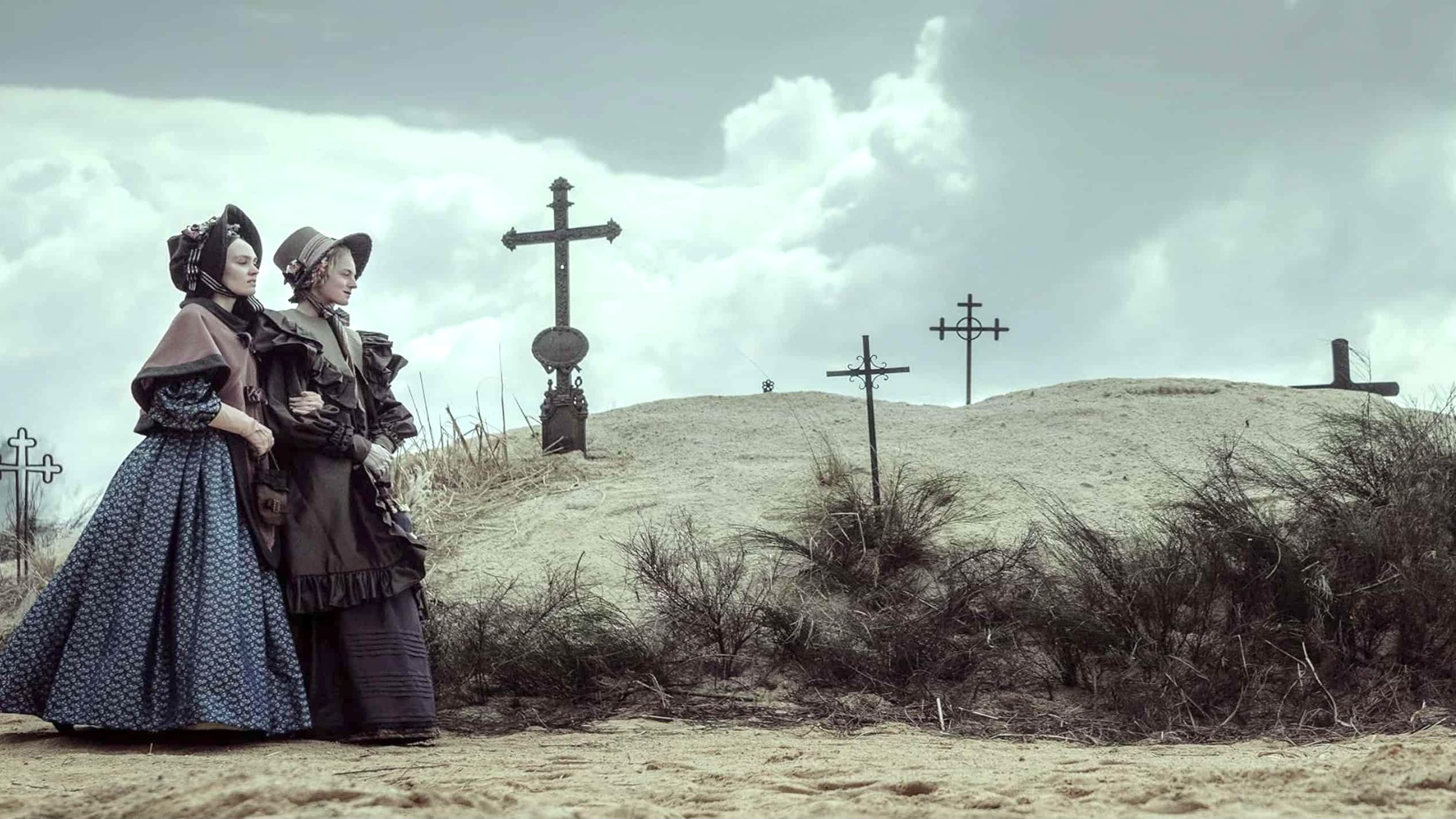
“NICKEL BOYS”  My rating: B ( In theaters)

140 minutes | MPAA rating: PG-13

That Colton Whitehead’s Pultizer-winning novel Nickel Boys is unfilmable is pretty much a given.  

The book, a first-person retelling of a young black man’s stay in a brutal reformatory in the early 1960s, has one of those “Sixth Sense:”-level “gotcha” endings that works on the printed page but defies visual representation.

(Sorry if I seem coy.  Those who have read the novel know what I’m talking about, and I don’t want to ruin the movie for those who haven’t.)

So I’m happy to report that first-time writer/director RaMell Ross has found a way to tell Colson’s story with the surprise intact.  The answer to the conundrum is the first-person camera.

First-person camera movies — in which the camera views the protagonist’s world  though his/her eyes — have a limited and not terribly successful track record. 

Back in 1946 Robert Montgomery directed the Raymond Chandler mystery “Lady in the Lake” using a first-person camera. Montgomery plays detective Phillip Marlowe, but we only see the actor when the character looks into a mirror.

A year later in “Dark Passage” Bogart played an escaped convict. We see the film through the character’s eyes until about halfway through, when he undergoes plastic surgery and emerges looking like, well, Humphrey Bogart.

Neither film works all that well.

Here writer/director Ross resurrects the technique and the results are simultaneously satisfying and unsettling.

The plot is fairly straightforward.  Elwood, a black teenager in Civil Rights-era Florida, is on his way to college when he hitches a ride in what turns out to be a stolen car.  He ends up sentenced to spend the next few years in the Nickel Institute.

Ethan Herisse, Brandon Wilson

Elwood’s early life — including the influence of his doting grandmother (Aunjanue Ellis-Taylor) — is depicted in a cataract of kaleidoscopic images.The effect is breathless yet lyrical, with editing (by Nicholas Monsour) that gives the entire film a sort of life-is-flashing-before-your eyes staccato sensation.

When the film began I assumed this creative but challenging approach would be retired after an opening sequence.  But  no…it’s there for the duration. 

“Nickel Boys” is  unique in that we almost never get a scene with a conventional beginning, middle and end. Rather we get snippets of scenes zapping by, and from these threads we have to assemble a tapestry.

If you can’t handle it (and many viewers won’t be able to) this movie will drive you nuts.

Teenage Elwood is played by Ethan Herisse, whose voice we hear but whom we rarely see (unless there’s a mirror in the room).

Since he’s black Elwood resides in a segregated wing of Nickel.  He and his fellow inmates must attend class, but the administration puts more emphasis on putting them to work, either on the grounds or hired out to local farmers and homeowners. (The parallels to slavery are unmistakeable.)

The bookish, utterly inoffensive Elwood also discovers that physical brutality — torture, in fact — is part of the curriculum.  One of the white teachers, Spencer (Hamish Linklater), is particularly fond of taking boys to the “white house,” a cottage on the edge of the property where their screams will not disturb the sleep of others.

Aunjanue Ellis-Taylor

Periodically a boy will vanish.  The teachers will claim he ran away, but there are little mounds of dirt on the grounds that look an awful lot like graves.

All this is filtered through Elwood’s relationship with another boy, Turner (Brandon Wilson).  Turner is as cocky as Elwood is retiring, but they watch each other’s backs.

When we first see Turner it is through Elwood’s eyes.  But a few minutes later Ross does something extraordinary.  He gives us a conversation between the two boys in which we’re in Elwood’s head.  And then he replays the whole scene, only this time we’re looking at Elwood through Turner’s eyes.

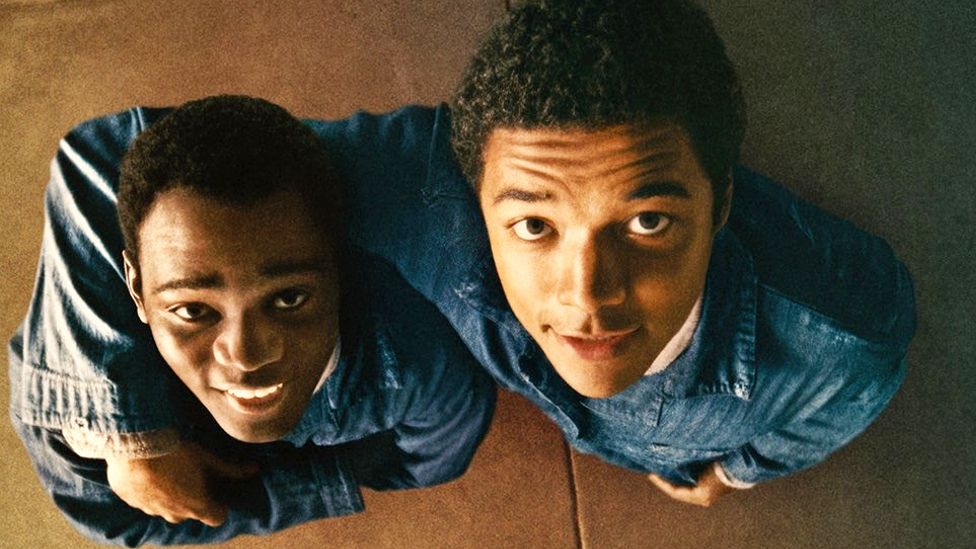
From that point on the film will shift points of view between the two youngsters.  The only time we see them together in the same frame is when they stand beneath a shop’s mirrored ceiling and look up at their reflections.

In the final third of the film we are introduced to Adult Elwood.  Thirty years have passed and Elwood lives in NYC and runs a moving business. He’s married and devotes his evenings to scouring the Internet for news about the now-defunct Nickel Institute, where investigators are sifting through dozens of unmarked graves.

Adult Elwood (as he’s listed in the credits) is played by Daveed Diggs of “Hamilton” fame, but we only see him from behind.  There’s a reason for this; readers of the book will understand.

Despite having to do most of his acting with his voice and the back of his head, Diggs has a marvelous scene where his character has a random encounter in a bar with another Nickel survivor. 

All of this leads up to the yarn’s head-smacking last-moment revelation, which comes as Adult Elwood recalls the night Elwood and Turner attempted to escape Nickel once and for all.

On many levels “Nickel Boys” is a brilliant piece of work.  So I feel somewhat churlish in stating that the thing that makes it work — the first-person camera — is also the thing that kept me at arm’s length emotionally.

I ended up admiring the film more for its ambience and message than for its dramatic palette.  

Even so, I cannot think of another movie quite like it.

| Robert W. Butler

Jesse Eisenberg, Kieran Culkin

“A REAL PAIN” My rating: B (Available on demand)

90 minutes | MPAA rating: R

Family. Neuroses. The Holocaust.

When it comes to his second film as a writer/director Jesse Eisenberg doesn’t shy from the big issues.

What’s amazing about  “A Real Pain” is the way he deftly balances the comedic and the dramatic (even the tragic).  It’s a nifty trick that has eluded even veteran filmmakers.

Moreover, Eisenberg also stars in the film…though he’s magnanimous enough to give the really showy material to co-star Kieran Culkin.

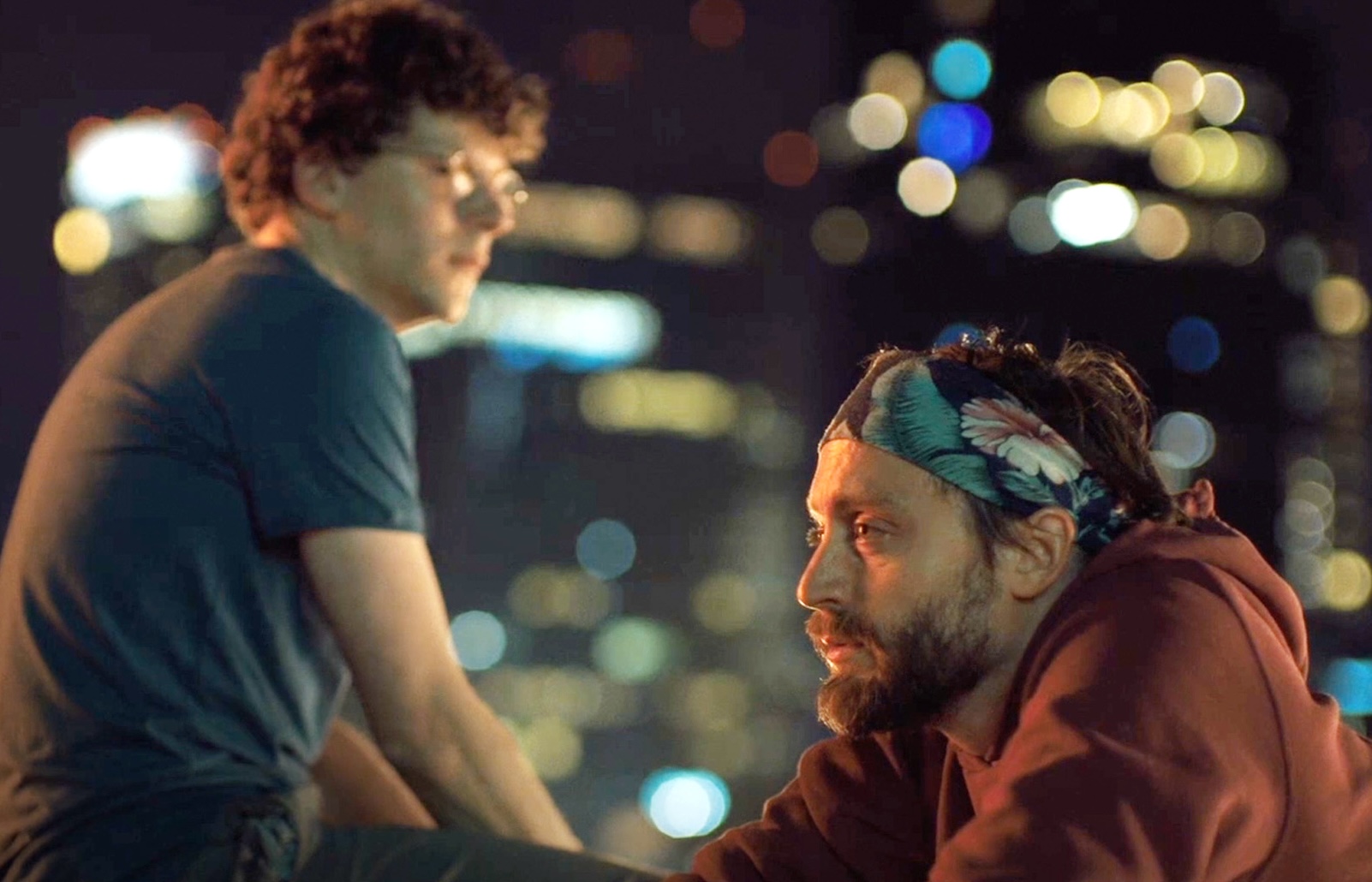
David (Eisenberg) is a New Yorker with a wife and young son who has invited his black sheep cousin Benji (Culkin) on a guided tour of Poland, the birthplace of their dearly beloved and recently departed grandmother.

It’ll be a chance for the boyhood buds to reconnect, not only with each other but with their family history.  

They’ve signed on for a Holocaust tour (their comrades on the journey will be American Jews);  at some point David plans to leave the tour so he and Benji can visit the house in which their grandmother lived.

From their first meeting in an American airport it’s obvious that they’re oil and water.  

David is uptight, OCD, emotionally muted. He has everything planned down to the minute.

Benji is an unkempt man child —garrulous, charming, spontaneous, He’s  the sort of guy unafraid to ask intensely personal questions of strangers, to nudge you out of your comfort zone. He has prepared for the trip by mailing a parcel  of marijuana to their Warsaw hotel.

Eisenberg’s script follows two tracks. First there’s the cousins’ experiences with the other members of the tour. 

Jennifer Gray has a nice turn as a middle-aged divorcee from LA; Kurt Egylawan plays an African convert to Judaism.  Will Sharpe has some good moments as the tour leader, whose running commentary of canned observations may be designed to mask the pain of regularly visiting sites where thousands of innocents were slaughtered.

Throughout, though, there’s a canny dissection of the young men’s relationship, the shared love often threatened by Benji’s barely-hidden manic depression. Still mourning his grandmother, Benji tries to mask his pain by playing a cocky hipster…but the facade is cracking.

I said Eisenberg gave the showy material to Culkin, and that’s true. But late in the proceedings David has a an absolutely wonderful monologue about family and responsibility that gives the film a transcendent moral core.

| Robert W. Butler

Lily-Rose Depp

“NOSFERATU” My rating: B(In theaters)

133 minutes | MPAA rating: R

Vampire movies are so ubiquitous that we’ve become inured to them. 

When was the last time a film about a bloodsucker actually scared you? 

 (For me it was seeing Bela Lugosi’s “Dracula” when I was 11. It happened again when I first viewed F.W. Murnau’s silent “Nosferatu” in my early 20s.  Since then it’s been mostly downhill.)

So how should we approach the new “Nosferatu” brought to us by writer/director Robert Eggers (“The Witch,” “The Lighthouse,” “The Northman”)?

It’s the third “Nosferatu,” after the 1922 silent German Expressionist classic and Werner Herzog’s  1979 remake. Though an obvious ripoff of Bram Stoker’s Dracula novel (Murnau renamed the characters in a vain attempt to avoid being sued for copyright infringement), “Nosferatu” introduced some interesting visual ideas which were picked up by Herzog and are now reamplified by Eggers.

Indeed, this “Nosferatu” works far better visually than it does dramatically.  

Much of the dialogue (the screenplay is by Eggers) has a flowery late Victorian melodramatic feel that borders on the laughable.  And the characters aren’t particularly compelling.

But the look of the piece is simply fantastic.  Eggars and cinematographer Karin Blaschke slide effortlessly between blue-tinged black and white and a pastel pallette not unlike an old-fashioned hand-colored postcard.

There are a couple of extended tracking shots that are mind boggling.

And Craig Lathrop’s production design — especially the fantastically rugged Carpathian mountains and forests and the vampire’s crumbling castle — is little short of spectacular.

Nicholas Hoult, Aaron Taylor-Johnson

The plot closely follows the original.  Estate agent Thomas Hutter (Nicholas Hoult) is sent to Romania on business, leaving behind his recent bride Ellen (Lily-Rose Depp…yes, Johnny’s daughter), who has long been plagued by “melancholia” and horrific dreams.

Thomas eventually finds himself in the weird castle of Count Orlok (Bill Skarsgard), who is…well, you know. He barely survives the encounter, then sets off in pursuit of Orlok, who is headed to Germany, drawn by an almost spiritual bond with the terrified/visionary Ellen.

Meanwhile Ellen’s mania is  throwing into turmoil the household of friends Friedrich and Anna (Aaron Taylor-Johnson, Emma Corbin). Their family physician (Ralph Ineson) suggests bringing in his old professor (Willem Dafoe) who has been thrown out of the university for his occult obsessions. This eccentric suspects that evil is on its way.

Well, duh.

In terms of plotting, then, this is standard-issue stuff.  But Eggers and company toss in some nifty variations.

For instance, there’s the look of Orlok.  The filmmakers have rigorously avoided letting any image of Skarsgard in costume reach the Internet…although they’ve posted some early makeup designs that were abandoned.

The Orkok of Murnau and Herzog was almost rat-like.  But this Orlok feels more, well,  human.  His bald head shows some patches of decay, and his face is dominated by a hooked nose and a droopy mustache.  Skarsgard delivers his lines in a sort of growl.

What’s surprising is the aura of inevitability as the vampire makes his way to his rendezvous with Ellen. The Count may be a monster, but he’s a surprisingly romantic monster, driven by forces even he cannot understand.

Depp’s performance is dominated by wide-eyed dread.  But she has a couple of scenes of demonic possession that are “Exorcist”-level freaky.  

And I haven’t even mentioned Simon McBurney as Knock, Thomas’ boss and this version’s equivalent of Renfield.  It’s a kick-out-the-jams performance  highlighted by the character’s devouring of a live pigeon.

There’s some grotesque blood-letting and brief nudity, and viewers with a rodent phobia are warned that there’s a supporting cast of several thousand rats.

At its best this “Nosferatu” suggests more than it shows. Particularly effective are scenes in which the Count appears only as a shadow. 

Now that’s creepy.

| Robert W. Butler
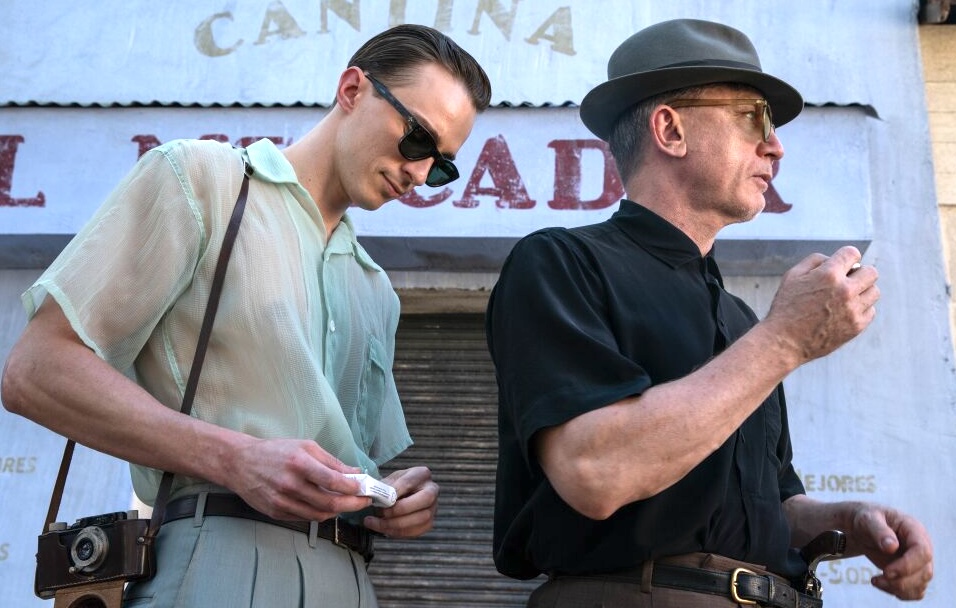
Harris Dickinson, Nicole Kidman

“BABYGIRL” My rating: B (In theaters)

114 minutes | MPAA rating: R

Films have for so long catered to male ideals of eroticism that“Babygirl” feels almost revolutionary.

Writer/director Halina Reijn’s examination of female frustration and desire offers a situation that we’ve seen many times before: A person in a position of authority gets sexually involved with a person in their employ.

Except this time around the individual in power is a woman and her lover a young man working as an intern at her robotics company.

When we first see Romy (Kidman) she’s having very noisy sex with her husband Jacob (Antonio Banderas). Looks like an ideal relationship — hot action in the bedroom, plenty of money, two teenage daughters, a posh NYC address.

As we’ll learn, Romy has been faking it.  She’s never had an orgasm, at least not one that wasn’t self-administered.

Enter Samuel (Harris Dickinson), an intern whose weird blend of assertive cockiness and laid back coolness Romy first finds maddening, then intriguing.  She reluctantly agrees to mentor Samuel during his stay at the firm…and things start to heat up.

Reijn pulls off the near impossible here by delivering a huge blast of eroticism while avoiding the whole male gaze thing. It’s the most overtly sexual performance of Kidman’s career, but it never veers into exploitation.

Samuel initially brings Romy to a noisy orgasm just with his hands (she’s lying on the floor, fully clothed); when he’s not playing the dominant lover he’s actually quite sweet and attentive.

The problem, of course, is that Romy’s infatuation — her growing recognition that she’s a sexual submissive — threatens her job (h.r. departments frown on this sort of thing) and her marriage.

And when another intern (Sophie Wilde) attempts to blackmail Romy over the affair, her life is turned upside down.

“Babygirl” (that’s Samuel’s nickname for his boss) ends on an upbeat note I’m not sure I buy.  And the film’s first 30 or so minutes felt brittle and off-putting.

 But eventually the plot, the performances and the aura of guilty pleasure click into focus.

Ryan Destiny, Brian Tyree Henry

“THE FIRE INSIDE” My rating: B- (In theaters)

109 minutes | MPAA rating: PG-13

“The Fire Inside” follows the usual arc of a sports movie, tracing the career of an athlete from childhood to triumph on the world stage.

But it throws a couple of changeups.

First, this is the true story of Claressa “T-Rex” Shields, the first woman to win an Olympic gold medal in boxing — at the tender age of 17.  Guys who want to fight are a dime a dozen, but a girl? And one that young?

Second, the film views the fights themselves as an afterthought.  They’re brief and not particularly violent; mostly they provide the background for a couple of solid character studies and for the emerging theme of female empowerment.

Claressa is played by Ryan Destiny, who nicely captures the drive and determination of a young woman determined to pull herself out of an oppressive domestic situation.

And she’s paired here with Brian Tyree Henry as Jason Crutchfield, the volunteer boxing coach who initially was reluctant to have a girl training in his Flint, Mich., gym, but went on to become Claressa’s mentor and de facto father. 

Henry can play just about anything (he was memorable as a oft-perplexed rapper in “Atlanta”), but his ace in the hole is his ability (we  saw it opposite Jennifer Lawrence in “Causeway”) to express  basic human decency without a trace of self-consciousness. A character like this one makes you want to be a better person.

“The Fire Inside” was written by Barry Jenkins (“Moonlight”) and directed by Rachel Morrison, and in addition to exploring a character’s physical and psychological development over several years, it also takes on the struggle of female athletes to achieve economic parity with their male counterparts.

Drew Starkey, Daniel Craig

“QUEER” My rating: B- (In theaters)

136 minutes | MPAA rating: R

The novels of William S. Burroughs have rarely been made into movies.  In part it’s the unapologetic subject matter. Also, there’s rarely anything like a conventional plot.

In tackling “Queer” director Luca Guadagnino (“Call Me By Your Name,” “Challengers,” “Bones and All” ) works hard to find a cinematic equivalent for Burroughs’ distinctive literary style.  And for the first hour or so he pulls it off.

The protagonist (and Burroughs’ alter ego) is William Lee, an American living in Mexico in the 1950s. Apparently Lee has family money. He doesn’t work. Mostly he cruises for young men.

Lee is portrayed by Daniel Craig, an unlikely choice since Craig is one of  the sexiest men in movies and William Lee is an embarrassingly transparent letch on the downside of desirability.  But Craig pulls it off, mining the pathetic yearning of an aging man for some sort of physical and emotional transcendence.

He finds it (he thinks) in Eugene Allerton (Drew Starkey), a  curiously non-committal American (is he gay? straight?) only recently discharged from the military. The guy oozes indifference, which only makes Lee’s clumsy attempts at seduction all the more wince-worthy.

But talk about creating an environment! As sumptuously photographed by Sayombhu Mukdeeprom, “Queer” is simultaneously dreamlike and grittily down to earth.  Moreover, it radiates “Under the Volcano”-level decadent dissolution.

There’s also an amazingly good supporting performance by Jason Schwartzman as Joe Guidry, a character clearly based on Alan Ginsberg. Overweight and astonishingly hairy, Schwartzman utterly loses himself. It’s some of his finest work.

The film’s second half finds Lee and Allerton trekking to South America to dabble in psychedelic plants. There they hang at the jungle research station of a renegade scientist (Lesley Manville, all but unrecognizable), getting ripped on ayahuasca. 

By this time the film’s lack of anything like a real plot becomes a drawback.  As does Starkey’s one-note performance. At well over two hours, “Queer” begs for some tightening.

Still, at various moments it’s a genuinely hallucinogenic experience.

| Robert W. Butler

Adrien Brody

“THE BRUTALIST” My rating: B+ (In theaters)

205 minutes | MPAA rating: R

Some filmmakers spend a lifetime to become merely competent at their craft.  With only his third feature Brady Corbet has delivered a masterwork.

We’re talking Orson Welles-level talent.

“The Brutalist” is the saga of a Holocaust survivor’s post-war life in the U.S.A. It features an indelible sense of time and place, two Oscar-worthy performances, a running time of more than 3 1/2  hours, and contains perhaps the fiercest indictment of capitalism ever proffered in an American film.

That Corbet and co-writer Mona Fastvold (they’re a couple) pull this off without resorting to strident polemics or soapbox  grandstanding is nothing short of miraculous.  The film doesn’t tell us. It shows us.

And it was shot in just 24 days on a budget that could hardly accommodate  a chamber piece, much less an epic.

Adrien Brody is Lazlo Toth, a Hungarian architect who survived the Nazi death camps and has now been sent to live with an Americanized cousin (Alessandro Nivola) who operates a Philadelphia furniture store.

Lazlo’s transition to his new home isn’t easy.  For starters, his wife Erzsebet (Felicity Jones) and niece Sofia (Rafael Cassidy), who were sent to a different camp,  are still in Europe, tangled up in red tape.  It will be several more years before they are reunited.

After an existence marked by imminent death,  Lazlo is uneasy in this land and of security and plenty. Surely something bad will happen. Not to mention that everything about him quietly shouts “alien”  and that in Eisenhower-era America his deeply-held esthetics are viewed as useless affectation.

His cousin’s wife (Emma Laird) is a Catholic uneasy with having a Jew under her roof.

And of course Lazlo is desperate to resume his architecture career, the one thing in which he is free to reveal his true essence.  

Once the preliminaries are out of the way, “The Brutalist” (the word, never spoken in the film, describes a school of monumental modern architecture  reliant on blocky forms and raw concrete construction) settles on its major theme, that of Lazlo’s relationship with an American millionaire who hires him to design a community center.

Guy Pearce gives the best performance of his career as industrialist Harrison Van Buren, a man so rich he has to work overtime not to come off as an entitled asshole. The film’s major theme is the minutely detailed power struggle between the man with the money and the man with a vision.

Guy Pearce

It’s an old saw that money corrupts (“Citizen Kane,” anyone?), but I’ve never seen a film — or a performance — that depicts that idea so succinctly or with such insight.  Van Buren tries desperately to present himself as open minded and progressive. He makes of show of treating Lazlo as a friend — an honored guest, in fact — but the imbalance in their relationship (and it goes deeper than just employer/employee) is ultimately ruinous. 

For starters, Van Buren is a mercurial character whose enthusiasm for the project waxes and wanes. He’s all too eager to make compromises on design and materials that violate the architect’s ambitions.

Brody’s Lazlo must walk a fine line between deference and assertiveness.  How much personal dignity and professional standards can he cede to achieve his dream of concrete and glass? 

The marvel of Brody’s work here is that we’re in Lazlo’s corner even when his actions are counterproductive and  self-destructive (early on he discovers the potential for escape in heroin). I know of few performances that so perfectly distills the fire of artistic ambition in all its pain and triumph.

The film’s big flaw (it’s what keeps me from giving the movie an A rating) is a plot development well into the third hour that struck me as contrived and wholly unexpected.  It involves a heinous act by Van Buren that feels totally out of whack with what we’ve seen up to that point.  It’s as if Corbet and Fastbold were desperate to wrap things up with a shocker and pulled this one out of thin air. 

(Yeah, I get it from a thematic point of view…the millionaire does to Lazlo literally what he does to the world figuratively on a daily basis…but it still feels like a weak Hail Mary effort.)

So “The Brutalist” isn’t perfect.  But the very fact that it got made is a miracle. The movie is in a class by itself…the only other films I can compare it to are those of Paul Thomas Anderson.

I cannot wait to see what Brady Corbet comes up with next.  But even if this is a one-shot deal, it will be regarded as a cinematic landmark.

| Robert W. Butler

Amy Adams

“NIGHTBITCH” My rating: B- (In theaters)

99 minutes | MPAA rating: R

Kafka meets “Diary of a Mad Housewife” in “Nightbitch,” with Amy Adams starring as a frustrated stay-at-home mom convinced she’s turning into a dog.

Writer/director Marielle Heller’s female empowerment  saga is half comedy, half serious.  

Adams’ Mother (we never get her name) once had a career as an artist. But she gave it up to get married to a nice guy (Scoot McNairy) who’s away on business four nights a week, leaving her to deal with their four-year-old son (played by twins Arleigh and Emmett Snowden, who are weirdly reminiscent of Cary Guffey in “Close Encounters…”).

She’s slowly going nuts. Weirder still, Mother starts growing a tail and multiple nipples.  Neighborhood pooches leave piles of dead wild animals on her front porch…evidently as tribute. She develops a taste for raw meat and sex in the, well, you know…doggie position. Eventually she becomes (or imagines she becomes) a beautiful red Huskie running freely through the night.

Adams is terrific as a burned out woman rapidly going to seed.  But “Nightbitch” feels less like a feature than a one-hour episode of “Twilight Zone” or some other dark fantasy. At 129 minutes it spends much of its time repeating itself.

Andrew Garfield, Florence Pugh

“WE LIVE IN TIME” My rating: B (Apple rental)

108 minutes |  MPAA rating: R

Given its subject matter, “We Live In Time” might easily have been a by-the-numbers romantic weeper, a standard-issue  Lifetime Original.

It transcends those limitations thanks to a couple of super lead performances from Andrew Garfield and Florence Pugh), sensitive direction from John Crowley (“Brooklyn”) and a screenplay by Nick Payne that embraces a time shifting narrative that keeps us invested and guessing.

The film follows the courtship and marriage of Tobias, (Garfield), who has a job in online marketing, and Almut (Pugh), a chef with her own London restaurant.  They will marry, have a child, and deal with Almut’s struggles with cancer.

But none of this is straightforward.   We’re always jumping jumps back and forth in time.  We eventually figure out where we are in the continuum through little tells.

For instance: Are Tobias and Almut living in the country or in the city? In any given scene are they dinks (double income, no kids), or has their precious bundle arrived? (This film offers the most unforgettable childbirth scene in movie history.) Almut’s hair is a big tell…is it long and flowing or cropped chemo-style?

Throughout Garfield and Pugh ignore the narrative sleight of hand and concentrate on giving deep, fully-rounded performances.  

“We Live in Time” could have been no more than a cinematic gimmick.  Give it a chance and it will move you.

“LOOK INTO MY EYES” My rating: B (Prime rental)

105 minutes | MPAA rating: R

Psychics.

Are they for real? Con artists?  Are they and their clientele awash in self-deception?

Those are the questions you’d expect of a documentary about a handful of NYC psychics plying their trade — questions Lana Wilson’s “Look Into My Eyes” utterly ignores.

This cinema verite effort (no exposition, no narration, no explanatory graphics) mostly records sessions between the psychics and their customers. 

 If there’s manipulation and flimflam going on here, it’s not obvious. The psychics are humble and empathetic (yeah, it could be a performance). Most have an uncanny knack for zeroing in on whatever loss or trauma the client hopes to address.

Sometimes there are obvious emotional connections with attendant moist-eyed moments.

Wilson’s camera also follows some of the psychics in their off-time. Curiously, most of them appear to be in some way damaged or struggling.  One fellow is an obvious hoarder (and hopeful musical theater performer); most seem to have come become psychics by accident. They simply realized that something extraordinary was happening to them.

:”Look into My Eyes” won’t convince anyone of anything.  But the film does suggest that psychic readings may provide emotional benefits for both parties, irregardless of any paranormal implications. 

Maybe we’re looking at it all wrong.  It’s therapy.

Daisy Ridley

“YOUNG WOMAN AND THE SEA” My rating: C (Disney+)

129 minutes | MPAA rating: PG

Despite its timely feminist message and impressive production values, “Young Woman and the Sea” is a very old-fashioned movie. It feels like one of those TV bio-pics produced by Disney in the ‘50s and ‘60s.

Narratively forced, psychologically shallow, aggressively inspirational.

Daisy Ridley stars as Trudy Ederle, who in the 1920s overcame rampant chauvinism in the sports world to become the first woman to swim the English Channel.  Think of it as “Nyad — Junior Division.”

Ridley is surrounded here by some solid “name” players.  Christopher Eccleston appears as her first coach, a creep who actively sabotages her first attempt.  The seemingly inescapable Stephen Graham (he’s been in six films or TV series this year) plays a bearded fellow channel swimmer who takes our girl on as a protege.

Kim Bodnia does as nice job as Trudy’s German-American father, who reluctantly gets sucked into her quest; Jeanette Hain is the Missus and Tilda Cobham-Hervey is Trudy’s ever-supportive sister.

The biggest issue here is Ridley’s performance.  Aside from a determination to succeed, there’s not a whole lot of interesting angles to Trudy’s personality. She’s essentially colorless — at least until she gets in the water.

| Robert W. Butler

Peter Sarsgaard as Rooney Arledge

“SEPTEMBER 5” My rating: A- (In theaters)

95 minutes | MPAA rating: R

After viewing D.W. Griffith’s silent classic “The Birth of a Nation,” President Woodrow Wilson was supposed to have called the experience “like writing history with lightning.”

I’ve always regarded that comment as hyperbolic and perhaps a bit naive (after 70 plus years of moviegoing I’m rarely left in awe),  but watching Tim Fehlbaum’s riveting docudrama “September 5” I  now understand what old Woodrow was feeling.

The subject is the terrorist attack on the 1972 Munich Olympics. But Fehlbaum and co-writers Moritz Binder and Alex Davis depict neither the Arab perpetrators nor the Israeli athletes who were their hostages.  We don’t witness any gunfire. We don’t see any bodies.

Instead the tale is told exclusively from the perspective of the crew from ABC Sports, whose broadcast studio was only a few hundred feet from the dormitories where the drama was playing out.  

These guys (and a few women) were there to cover the world’s biggest sporting event.  In a matter of a minutes they had to pivot from sports/entertainment  to a far more electrifying human drama. 

They acquitted themselves admirably…but not without facing some thorny ethical dilemmas along the way.

These games were the first time a sporting event could be seen live  around the world, thanks to a lone satellite that could pick up an audio/visual signal and distribute it globally.  

The first challenge facing ABC sports chief Roone Arledge (Peter Sarsgaard) was commandeering satellite air time.  That lone satellite was being shared by all the broadcast networks; each had staked out several hours each day in which to transmit their coverage.

Then, as it became clear just how dangerous the situation was, Arledge had to defy his bosses back in the States who wanted ABC News to take over.  Arledge’s argument: We’re journalists, too, and we’re only a stone’s throw away from the scene of the crime. How’s a talking head in New York supposed to do any better?

Fehlbaum and company make extensive use of the actual broadcast footage from that day.  On the studio monitors we see sports anchor Jim McKay providing commentary and interviewing various players in the unfolding tragedy. 

And there are mini-dramas playing out against the bigger story. Geoffrey Mason (John Magaro) was getting his first crack at directing Olympic coverage when he found himself in charge of images that were being seen in every corner of the globe. A real trial by fire.

Producer Marvin Bader (Ben Chaplin) raised moral questions.  For instance, the families of the hostages were undoubtedly watching ABC’s coverage. How should the ABC team handle the on-air murder of an Israeli athlete?  And what if the terrorists are watching the ABC broadcast in the dorm? 

“September 5’s” is also mesmerizing in its depiction of TV technology of the era.  ABC had no handheld video cameras.  To get images of the crowd milling outside the dormitory, they had to haul an incredibly heavy studio camera out a door and across a patch of grass.

TV graphics were dumbfoundingly low-tech.  To have the name of an interviewee appear at the bottom of the screen, a graphic artist had to spell out his name in white plastic letters (like a theater marquee), then superimpose that onto the broadcast feed

There are all sorts of head-smacking revelations.  The German hosts of the games were so worried about raising memories of their Nazi past that they banned the military from providing security.  Instead that job went to local police who were untrained and untested in terrorist situations.  They cops at the games weren’t even carrying firearms.

Language was an issue, too.  Incredibly, no one in ABC Sports spoke or understood German.  Once the crisis broke a local intern (Leonie Benesch) was tasked with translating all the German communications for her without-a-clue employers.

More craziness…while the hostages were being held, athletes continued to compete just a block or two away.

“September 5” plays out in a breathless 95 minutes, but it’s got enough going on to stand up to repeated viewings.

So, yeah, it’s like writing history with lightning.

| Robert W. Butler