Feeds:
Posts
Comments

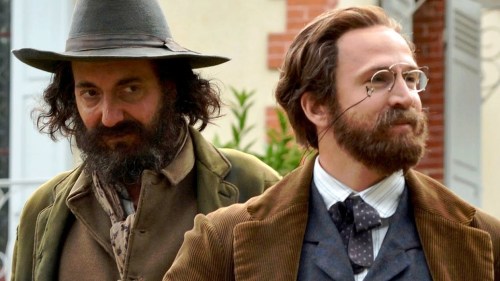
Pierre Niney, Paula Beers

“FRANTZ”  My rating: B

113 minutes | MPAA rating: PG-13

“Frantz” is a rewardingly old-fashioned affair, a love story (sort of) set in the immediate aftermath of World War I and told with a quiet, unhurried perceptiveness that reminds of Truffaut’s “Jules and Jim.”

This Cesar-nominated film from writer/director Francois Ozon (“Swimming Pool,” “Eight Women”) is steeped in love and loss.

Anna (a gently radiant Paula Beer) lives in a provincial German town with Doctor and Mrs. Hoffmiester (Ernst Stotzner, Marie Gruber), who would have been her in-laws had not their son, Frantz, been killed in the recent  hostilities. They’ve unofficially adopted Anna; it’s one way to deal with their overwhelming loss of their only child.

Each day Anna dutifully lays flowers on Frantz’s grave (actually his body is somewhere in France); she’s surprised to discover one morning that someone else has been doing the same.

That someone is Adrien (Pierre Niney), a young Frenchman who claims to have befriended Frantz during the latter’s pre-war visits to Paris.

Initially Anna and the Hoffmiesters are appalled. Like many of their neighbors they want nothing to do with their former enemies.

But Adrien’s soulful earnestness — and his obvious distress at the loss of Frantz — softens even unforgiving Teutonic hearts. Ere long the  Hoffmeisters embrace the stranger, happy to hear his tales of carousing with Frantz in the City of  Light.

Anna slowly opens up to this gentle stranger, who despite having been an enemy combatant still seems preferable to the middle-aged burgher who’s been wooing her…a fellow who practically has “future Nazi” stamped on his forehead.

All goes nicely until Adrien, wracked by guilt, confesses that he never knew Frantz before the war, that they only met briefly on a battlefield, and that something awful happened.

Continue Reading »

Kris Avedisian

“DONALD CRIED” My rating: B  

85 minutes | NoMPAA rating

Kris Avedisian’s “Donald Cried” is a comedy of discomfort.

The premise finds a reasonably normal individual being held a virtual captive by a socially inept, borderline delusional idiot whose behavior is alternately needy, manic and childlike.

But beneath the film’s high squirm factor some interesting cross currents are at work.  Avedisian’s screenplay is sneakily good at misdirection, and before it’s over our views of these characters will undergo a significant metamorphosis.

NYC investment banker Peter (Jesse Wakeman) has returned to his wintry New England home town to settle the estate of the grandma who raised him. He’s not happy to be back…in fact, he’s not set foot in the place since his high school graduation 20 years earler.

To make things worse, he lost his wallet — cash, credit cards, i.d. — on the bus ride from the city.  Desperate, he reluctantly turns to his neighbor and boyhood friend Donald (director Avedisian), a gawky manchild with a terminal case of arrested development.

Donald is a total geek who apparently cuts his own hair with manicure scissors. He still lives in his mother’s house and works a part time in a bowling alley. He does a lot of pot and blow. His hobby is attending adult entertainment conventions. (“Do you still masturbate?” is one of his first questions to his long-lost friend.)

Continue Reading »

Nicole Kidman

“QUEEN OF THE DESERT”  My rating: C+

129 minutes | MPAA rating PG-13

“Queen of the Desert” is quite possibly the oddest film of director Warner Herzog’s wildly idiosyncratic  career.

A mash-up of woman’s picture, real-life biography and sweeping  “Lawrence of Arabia” images, it stars Nicole Kidman as Gertrude Bell, a British adventuress, diplomat, archaeologist and feminist who became an expert on the Middle East in the years before World War I.

We first encounter our heroine in 1888. The daughter of a steel magnate, she’s being groomed for a fitting marriage.

“You will not scare the young men with your intelligence,” her mother warns, but Gertrude is having none of it. She’s too independent, too strong willed to endure simpering aristocratic society.

(Kidman, now 49, plays Bell from age 21 to 40. Remarkably, she pulls off the youthful Gertrude, thanks to great makeup and God-given bone structure.)

Her exasperated father finally agrees to let her join the British embassy in Teheran where she soon finds herself falling for Henry  Cadogan (James Franco, struggling to maintain a Brit accent), a low-ranking staff member assigned as her escort. Henry’s prospects aren’t promising, but like Gertrude he loves the desert. And he’s not afraid of her independent streak.

Daddy, however, nixes this liaison, and a heartbroken Gertrude turns her back on romance, devoting herself to travels in the Middle East, crossing vast deserts with a handful of faithful local guides.

During her travels she runs across a young T.E. Lawrence (Robert Pattinson), working on an archaeological dig at Petra in Jordan. Years away from his exploits among the Arab tribes in the Great War, Lawrence already wears the native costume that will become his trademark.  He and Gertrude flirt innocently, but neither is looking for a relationship.

Over years Gertrude is befriended by the Bedouin. She also finds a lover — platonic — in married British statesman Charles Doughty-Wylie (Damien Lewis).

Eventually Gertrude is recognized by her government and with Lawrence is part of the commission that divides up the Middle East in the wake of the war.


Continue Reading »

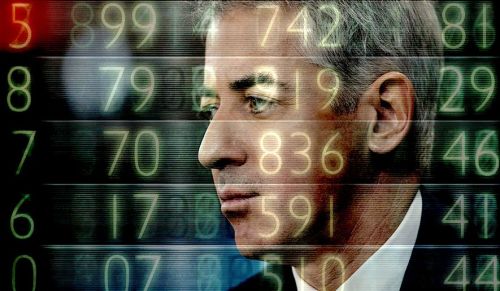
Bill Ackman

“BETTING ON ZERO” My rating: B

99 minutes | No MPAA rating

Capitalism is a system designed to produce a few big winners and many more losers. Hopefully the majority will find themselves holding their own somewhere in the middle.

As an illustration of that principle in action, we have “Betting on Zero,” Ted Braun’s documentary about Herbalife, the international health food/vitamin supplement company.

The real business of Herbalife, the doc makes clear, is less selling goods and services — which are not available through conventional retail outlets –than recruiting new participants who pony up thousands of dollars to start their own Herbalite distribution operations. That money, and any they earn from selling products, flows upward to the person who recruited them, and then to that person’s recruiter, and so on.

The only way for a late arrival to the system to flourish is to recruit dozens more participants from a shrinking pool of possibilities.

It is, one economist says in the film, a textbook definition of a pyramid scheme.

Several years ago hedge fund whiz Bill Ackman concluded that the Herbalite system was due to collapse as fewer and fewer people were recruited into its ranks. So he took a short position on Herbalite stock, making a billion-dollar bet that the company’s stock would go belly up.

If that happened, Ackman would make a huge killing.  At the same time he attempted to seize the high moral ground, saying that only a couple of times has he come across a company doing so much harm that taking it down is a public service.

He will learn that the high moral ground and high finance operate in mutually independent worlds.

Braun’s film alternates between Ackman’s high-profile campaign and the stories of individuals who lost nearly everything by getting involved with Herbalife. Many of them are recent immigrants who saw the company’s slick sales approach as a gateway to riches in America.  Even after concluding they were being ripped off, most declined to take their case to court — many were in the country illegally and weren’t about to draw unwanted attention by turning to the courts for redress.


Continue Reading »

Jessica Chastain

“THE ZOOKEEPER’S WIFE”  My rating: C (Opens wide on March 28)

124 minutes | MPAA rating: PG-13

“The Zookeeper’s wife” — destined to be recalled as the-movie-where-Jessica-Chastain-hugs-all-the-cute-baby-animals — is based on a marvelous true story of heroism.

So why does it feel so flat-footed and indifferent, so drained of blood and emotion? How come almost nothing clicks?

Maybe it’s a case of going to the well one too many times.  We’ve seen enough Holocaust-themed movies in recent years that it takes something really special to get our attention.  And this  adaptation of Diane Ackerman’s non-fiction bestseller from screenwriter Angela Workman and director Niki Caro is almost unbearably conventional.

In pre-war Warsaw, Antonina Zabinski (Chastain) and her husband Jan (Johan Heldenbergh) operate the local zoo.  It’s a pretty idyllic life…every morning Antonina hops on her bicycle and pedals around the grounds, calling out good mornings to the various animals. She’s followed by a gangly young camel that views her as an adoptive mother.

But war comes to Poland and parts of the zoo are flattened by Nazi bombs. Pretty soon the place is overrun with Germans, including zoologist Lutz Heck (Daniel Bruhl), who operates the Berlin Zoo and offers to take the Zabinskis’ prime breeding stock to a safe place. Oh, yeah…Heck has a crush on Antonina. That will create problems down the road.

The Zabinskis and their young son watch in dismay as Warsaw’s Jews — including some of their friends — are rounded up and confined to an overcrowded, filthy ghetto. They come up with a daring plan.

They offer to turn the zoo into a breeding center for pigs.  The German army needs fresh meat, right?

At the same time, Antonina and Jan will allow their home to serve as a way station for Jews on the run.  The Germans will never think to look for the fugitives right under their noses.

Continue Reading »

Kristen Stewart

“PERSONAL SHOPPER”  My rating: B+ (Opens March 31 at the Tivoli and Glenwood Arts)

105 minutes | MPAA rating: R

The problem with most ghost stories is that they’re bent 0n explaining.

The unexplainable is far creepier.

Which brings us to Olivier Assayas’ “Personal Shopper,” his second collaboration with actress Kristen Stewart (after the evocative if somewhat off-putting “Clouds of Sils Maria”) and one of the eeriest ghost stories in recent memory.

Stewart plays Maureen, a young American woman whose life is split along a rather dramatic fault line.

Professionally, she’s a personal shopper.  Her boss, Kyra, is a rich (and spoiled) Paris-based jet-setting celebrity who always needs a new outfit for this photo session or that charity event.  Kyra trusts her Girl Friday to buy or borrow just the right outfit for any occasion, which means that Maureen is always zooming around Paris on her moped, hitting the boutiques and fashion design studios on behalf of her employer.

But there’s a darker side to Maureen.  Months earlier she lost her twin brother, Lewis, to a congenital heart condition — a condition that afflicts her as well (she’s been told to avoid physical and emotional heavy lifting).

Both Maureen and Lewis were psychics, and for years they had a pact that whoever died first would find a way to contact  his/her sibling from the Great Beyond.

As the film begins Maureen is spending a night in the now-empty house Lewis shared with his wife, listening to every creak and groan as a possible missive from the hereafter.

While nothing happens on this particular evening, a few days later she will repeat the experiment with what can only be described as bone-chilling results. Assayas has staged a big reveal that will leave audiences breathless and covered in goosebumps.

Simultaneously, Maureen begins receiving anonymous texts from an individual (or is it a disembodied spirit?) who seems to know her exact whereabouts at any given moment. This mystery person encourages Maureen to break Kyra’s rules by trying on the impossibly expensive clothing she has collected. After all, what’s the point of being surrounded by all this luxury if you can’t partake?

Late in the proceedings, “Personal Shopper” takes a detour into 19th-century seances (apparently author Victor Hugo was big on the spirit world) and then, quite unexpectedly, into murder.

Continue Reading »

Sergeant Rasmussen (Roland Moller) inspects his troops

“LAND OF MINE” My rating: B  (Opens March 31 at the Glenwood Arts)

100  minutes | MPAA rating:R

Despite a punny title that smacks of cheap humor, “Land of Mine” emerges as a quiet heartbreaker, a fact-based drama about war and youth and shared humanity.

Writer/director Martin Zandvliet based his screenplay on a real bit of Danish history:  At the end of World War II Denmark’s beaches were peppered with more than 2 million landmines, placed by the occupying Nazis in anticipation of an  invasion that never came (the Allies hit Normandy instead).

With the end of hostilities the Danes faced a monumental and tremendously dangerous cleanup effort.  Their solution was to delay the repatriation of German POWs, putting the prisoners to work defusing the mines.  If some of them got blown sky-high, so what?  The Nazis put them there in the first place.

Zandvliet’s film concentrates on one of these beach-clearing crews.  Fourteen Germans — they’re mere teens — are assigned to work under the direction of Sergeant Rasmussen (Roland Moller), a spit-and-polish Danish paratrooper whose hatred of the Krauts still burns fiercely.  In the film’s first scene Rasmussen physically attacks Germans  POWs wearily marching down a muddy road.

Once they’ve undergone rudimentary training in bomb disposal, these youngsters face a beach packed with several thousand land mines. They will spend their days probing for buried explosives, and their nights locked in a shack.

It soon becomes apparent that the Danish high command cares not one bit about the fate of these kids.  For days they are denied food; finally grumpy Sergeant Rasmussen appropriates bread and potatoes from a military supply depot.  Men too weak to walk to the beach aren’t going to defuse many bombs.

Continue Reading »

Amanda Seyfried, Shirley MacLaine, AnnJewel Lee Dixon

“THE LAST WORD”  My rating: C+ (Opens March 24 at the Glenwood Arts, Cinemark Palace and AMC Barrywoods)

108 minutes | MPAA rating: R

Any film that sends you out to your car humming The Kinks’ “Waterloo Sunset”cannot be dismissed out of hand.

Still, an aura of uneasy familiarity clings to “The Last Word,”a dramedy  that plays like a second-class “A Man Called Ove” from a female perspective.

Shirley MacLaine portrays 81-year-old Harriet, a grouchy, judgmental woman who radiates disdain for the lesser mortals around her.

Harriet is, of course,  a variation on the character MacLaine has played so often (“Guarding Tess” and “Bernie,” for starters) that she could do it in her sleep.

Sensitive about both her mortality and her legacy, Harriet pulls strings to have the local newspaper’s obituary writer, Anne (Amanda Seyfried), write her death notice in advance.  She even provides a list of acquaintances Anne should interview.

Problem is, not one of these individuals has anything good to say about Harriet.  According to Anne,  the old lady “puts the bitch in obituary.”

At this point Stuart Ross Fink’s screenplay starts turning squishy.  To restore her image, and so that Anne will have something positive to put in the obit, Harriet becomes mentor to the foul-mouthed Brenda (AnnJewel Lee Dixon), an at-risk African American child who is so precocious and self-possessed that she hardly seems at risk at all.

Harriet also volunteers to work as a deejay at a local community radio station, snowing the station manager (Thomas Sadoski) with her knowledge of obscure ’60s pop and even orchestrating a romance between the fellow and obit-writer Anne.

Late in the proceedings she takes Anne and Brenda on a road trip for a long-delayed reunion with her grown daughter (Anne Heche).

None of this is in the least bit original — though it’s been carefully calculated to squeeze the tear ducts for a bathetic sendoff.

The good news is that MacLaine keeps finding new angles on what long ago became one of her stock characters.

That and the strong supporting cast assembled by director Mark Pellington (Philip Baker Hall, Tom Everett Scott, Gedde Watanabe, Sarah Baker), who find ways to make more of the material than it deserves.

| Robert W. Butler

Charlotte Rampling, Jim Broadbent

“THE SENSE OF AN ENDING” My rating: B

108 minutes | MPAA rating: PG-13

Most of us struggle with some aspect of our pasts.

A relationship that ended badly.  Behavior we regret. Guilt. Loss.

“The Sense of an Ending” is about one man’s attempts to reconcile his present with what came before, and the rationalizations and self-delusions that allow him to finally come to terms.

Ritesh Batra’s film, adapted from Julian Barnes’ award-winning novel by Nick Payne (author of the trippy stage drama “Constellations”), unfolds simultaneously both in the present and nearly a half century earlier.

In the here and now Tony Webster (Jim Broadbent) operates a hole-in-the-wall camera shop specializing in antique Leicas. He’s a semi-curmudgeonly divorced man, but he has a civil if mildly confrontational relationship with his ex, Margaret (Harriet Walter), and with their daughter, Susie (Michelle Dockery), a single mother-to-be (Tony accompanies her to birthing classes).

His rather dull life is enlivened by a mystery from his past. Tony receives legal notice that he’s been named a beneficiary in the will of a woman he hasn’t seen in 50 years.

In flashbacks we see how young Tony (Billy Howle) fell for rich girl Veronica (Freya Mavor) and was treated to a long weekend at the home of her family. There he met Veronica’s rather flamboyant (and possibly predatory) mother, Sarah (Emily Mortimer).

Anyway, Tony broke up with Veronica, who rebounded by starting up with Tony’s friend and classmate Adrian (Joe Alwyn).  Not long into that relationship the sensitive Adrian mysteriously killed himself.

It is Adrian’s diary which the late Sarah has bequeathed to Tony.  Why did she cling for decades to the journal of her daughter’s dead boyfriend?

And why is her daughter Veronica (played as an adult by the sublime Charlotte Rampling) unwilling to turn over Adrian’s diary despite the threat of legal action?

Goodness. What bombshells might reside on its pages? Continue Reading »


Dan Stevens (beneath the CGI) and Emma Watson

“BEAUTY AND THE BEAST” My rating: B (Opens wide on Nov. 17)

129 minutes | MPAA rating: PG

Is Disney’s live-action version of “Beauty and the Beast” as good as the old-style, hand-drawn 1991 original?

Nope. But it’ll do.

After a slow middle section, the film delivers the emotional goods. And along the way, it establishes Emma Watson, late of the Harry Potter franchise, as a name-above-the-title star.

This remake is the latest in Disney’s recycling of its classic animation library — see last year’s “The Jungle Book” and “Cinderella” the year before. The film, from director Bill Condon (“Dreamgirls,” “Chicago”), hits favorite familiar notes while introducing some new (and mildly controversial) elements.

Its strongest component remains Alan Menken and the late Howard Ashman’s score from the first film, a collection of hummers that immediately please the ear and quickly take up residence in the head. Small wonder a stage version became a Broadway smash. (I found the the three new tunes written for the film by Menken and the late Tim Rice to be forgettable.)

The story is by now familiar to all. Belle (Watson) is too smart to fit into traditional girly categories, setting off suspicions among her provincial fellow villagers in 18th-century France.

When her father (Kevin Kline) is imprisoned in the enchanted castle of the Beast (Dan Stevens) — a vain and cruel prince working off a curse — Belle trades places with the old man. Over time she wins over the Beast’s staff, domestics who have taken the form of household objects and eventually gains the love of her grumpy host.

Meanwhile the villagers are being stirred up by Gaston (Luke Evans), the preening he-man who wants Belle for himself.

Following the nifty production number “Belle,” which introduces us to our heroine and her circumstances, “Beauty and the Beast” slows to a crawl, only to pick up an hour later when the Belle/Beast relationship starts to assert its romantic pull.

The problem is one of size. The cartoon “Beauty,” nominated for a best picture Oscar, ran for 84 minutes. It was taut and wasted nothing. Continue Reading »