Feeds:
Posts
Comments
Amy Adams

Amy Adams

“ARRIVAL” My rating: B+

116 minutes | MPAA rating: PG-13

In “Arrival,” space aliens — as they have so often in our cinematic past — come to Earth with questionable intentions.

Only this time their reception is less Ridley Scott than Stanley Kubrick.

“Arrival” may be the most thought-provoking science fiction film since “2001: A Space Odyssey.”

Like Kubrick’s cryptic classic, it will leave some viewers puzzled and perhaps dissatisfied. In lieu of ray guns and souped-up space jalopies, director Denis Villeneuve (“Incendies,” “Prisoners,” “Sicario”) depicts massive societal and personal dislocation and ruminates about the very nature of time.

Happily, “Arrival” does all this with a final emotional jolt that will linger in the viewer’s mind for … well, maybe forever. Great movies can do that.

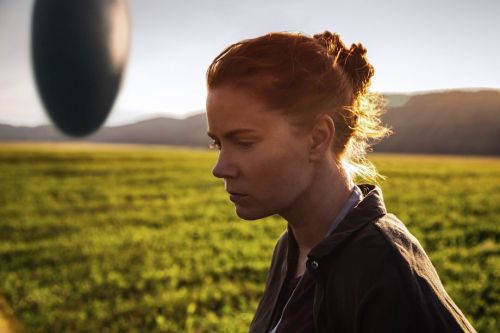
The adventure begins with a dreamy, time-leaping sequence of a mother (Amy Adams) interacting with her daughter from infancy to adolescence. On the soundtrack this woman, Louise, talks about beginnings.

Then we’re taken to the present day where Louise, a world famous linguist, arrives in her college lecture hall to find that practically nobody has come to hear her talk about the Portuguese language. The absences are soon explained — 12 magnificent spaceships (they resemble gigantic elongated eggs, or maybe black mango seeds) are now hovering at various points around the globe.

In just a couple of brilliantly conceived and edited minutes Villeneuve evokes the shock and widespread disruption caused by the realization that we are not alone.

Populations panic. Stock markets tumble. There are runs on bottled water and batteries. Looting and rioting.

Yes. This is exactly what would happen.

For Louise it gets personal when a military bigwig (Forest Whitaker) arrives at her doorstep to announce that her country needs her. Mankind must figure out how to converse with the newcomers. Continue Reading »

Rebecca Hall as reporter Christine Chubbuck

Rebecca Hall as reporter Christine Chubbuck

“CHRISTINE” My rating: B

115 minutes | MPAA rating: R

An almost unbearably sad story well told, “Christine” hovers on the nexus of individual mental illness and societal insanity.

But however painful this yarn may be, it offers an acting showcase for Rebecca Hall, the Brit actress who here dowdies herself down to portray real-life TV reporter  Christine Chubbuck with a quiet anguish and growing desperation that can make your skin crawl.

Set in the early ’70s in a TV station in Sarasota, FLA, Antonio Campos’ film (the screenplay is by Craig Shilowich) follows
Christine’s personal and professional meltdown as she is beset both by inner  demons and what she sees as an unconscionable deterioration in local TV news.

She’s a workaholic…perhaps not by choice. Christine has  no personal life to speak of.  She lives with her mother (J. Smith-Cameron) and hasn’t had a proper date in years — though she has a clumsy case of the unrequited hots for the station’s preening anchorman (Michael C. Hall).

When she has a spare moment she puts on hand puppet shows for elementary school kids — shows that are a lot heavier on moral instruction than entertainment value.

And that’s Christine’s dilemma at work as well.

She is forever battling her news director (Tracy Letts), whose mandate is to beef up the station’s pitiful ratings. That means minimizing the thoughtful reports in which Christine specializes and leaning heavily on “juicy” topics: crime, violence and the outrageous.

“If it bleeds,  it leads,” he advises the staff.

Continue Reading »

20s

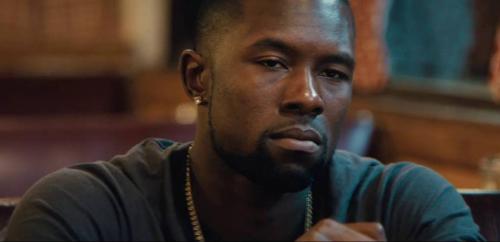
Trevante Rhodes as the twenty something Chiron

“MOONLIGHT” My rating: B+ 

110 minutes | MPAA rating: R

Think of  Barry Jenkins’ “Moonlight” as an African-American variation on Richard Linklater’s “Boyhood.” It is an epic chronicle of childhood giving way to adolescence, and adolescence becoming a lonely adulthood.

The difference is that “Boyhood” was pretty much straightforward storytelling, while “Moonlight” is pure poetry. It is, in short, a genuine black art film, filled with beauty and horror, small comforts and big challenges.

Through the character of Chiron, a young Floridian played by three actors of different ages, writer/director Bennett gives us a deeply personal story which, without belaboring the point, can stand for the experiences of hundreds of thousands of young black men.

It’s not about drugs or poverty or gang life per se, and there’s no obviously political agenda (in fact white people are almost never seen), but “Moonlight” cannot help folding those socially relevant topics into its narrative.

At the same time the movie is less about facts (it’s filled with unanswered questions) than about feelings. It’s about a few seconds of blessed respite during a suffocatingly tense day, about water and sand and tropical heat, about activity fearfully captured out of the corner of one’s eye.

In one sense it’s practically documentary without the usual big dramatic speeches (the film’s protagonist is incapable of verbal grandstanding), but captured in a swirling riot of camera movement, color and conflicting sounds.

When we first meet Chiron (Alex Hibbert), or Little as he’s called by just about everyone, he’s hiding in an abandoned apartment building, having been pursued by schoolyard bullies. As his name suggests, Little is small. Also shy, withdrawn, mistrustful and uncommunicative.

He’s rescued by Juan (Mahershala Ali), the neighborhood drug lord, who provides safe escort and takes the boy to his apartment and his nurturing girlfriend Teresa (KCK native Janelle Monae, making a seemingly effortless transition from pop stardom to film acting).

Over the course of weeks and months the cocaine slinger and his woman will become Little’s surrogate parents, providing food, shelter and — as weird as it may sound — examples of more-or-less responsible adulthood…something painfully lacking in Little’s relationship with his  increasingly drug dependent mother (Naomie Harris).

Ali (sure to be honored as a supporting actor Oscar nominee) makes of Juan a deeply complex figure. He’s a criminal, but his relationship with Little is one of selfless nurturing.  Countless films have prepared us for Ali to use the kid as part of his drug business, but that never happens.

Instead he takes the boy to the beach and gently coaxes him into learning to float on the rocking waves. When Little asks, “Am I a faggot?” Juan answers with profound sincerity that Little may be gay, but he’s no faggot.

Other life lessons follow.  “No place in this world ain’t got black people,” Juan declares.  “We were the first people here.”

And especially:  “At some point you gotta decide for yoursdrelf who you gonna be.” Continue Reading »

Benedict Cumberbatch

Benedict Cumberbatch

“DOCTOR STRANGE” My rating: B-

115 minutes |MPAA rating: PG-13

At this stage of the game Marvel movies have fallen into a predictable pattern, especially the third-act city-leveling smackdown (it’s like it’s guaranteed in the Constitution or something).

About two years ago I decided I was over the whole superhero thing. Unless, of course, you can show me something new.

“Dr. Strange” takes me halfway there, giving us a spell-casting protagonist who has more in common with Harry Potter than your usual Spandexed bicep bulger.

It’s got a solid first hour in which our ego-driven hero (see “Iron Man”) recognizes  the errors of his ways and gets his head turned around.

And a second hour in which a lot of shit gets blown up.

The wild card here is Benedict Cumberbatch, PBS’s current Sherlock and an actor of such range and integrity that I’m willing to give a chance to just about any project to which he lends his name.

Dr. Stephen Strange (Cumberbatch) is a ground-breaking neurosurgeon. Even among his self-aggrandizing colleagues he’s noted as a self-serving asshole who peers down his aquiline nose at lesser mortals and lives the life of a solitary genius.  In the past he had a fling with surgeon Christine Palmer (Rachel McAdams), but his most enduring relationships are with his fancy sports car, plush apartment and his own self.

A highway accident leaves Strange with crushed paws. Unable to hold a scalpel, he sees  his life dripping away and goes on an international hunt for some sort of treatment that can reverse his physical infirmities.

Which is how he ends up in Katmandu in an esoteric school run by the Ancient One (Tilda Swinton, bald and looking like a visiting space alien).  The Ancient One and her lieutenant Mordo (Chiwetel Ejiofor) put our hero through a physical and mental marathon, breaking down his sense of self, opening him up to life on the astral plane, and filling his head — and the screenplay — with enough metaphysical mumbo jumbo to make Scientology seem a viable option.


Continue Reading »

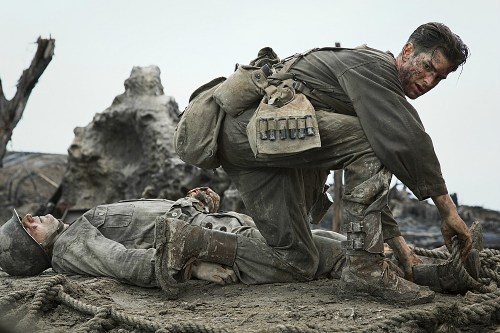
Andrew Garfield

Andrew Garfield as Desmond Doss

“HACKSAW RIDGE” My rating: B+

131 minutes | MPAA rating: R

“Old fashioned” in the best possible sense, “Hacksaw Ridge” is a real-life World War II combat drama that has it both ways.

It may be the most violent film ever released by a major studio, being horrifyingly realistic in its depiction of combat in the South Pacific.

At the same time it is soul-shakingly inspiring.

Brutality and spirituality are unlikely bedfellows, which makes the ultimate triumph of “Hacksaw Ridge” all the more remarkable.

In fact, the film instantly elevates director Mel Gibson back to his one-time status as a major filmmaker. Say what you will about Gibson’s misbehavior and misplaced beliefs, the guy has got the stuff.

Like “Sergeant York,” the reality-inspired classic about the World War I hero, “Hacksaw Ridge” centers on a conscientious objector who ends up winning the Congressional Medal of Honor. It even follows that earlier film’s basic narrative, dividing its running time between our hero’s life Stateside and his grueling combat experiences.

The difference is that unlike Sgt. Alvin York — who finally put aside his C.O. status and became a one-man juggernaut, killing at least 28 German soldiers and capturing 132 others — Desmond Doss practiced non-violence even in the midst of the most ghastly carnage imaginable.

With bullets whizzing around him — quite literally up to his knees in blood and guts — this Army medic singlemindedly went about his business of saving his fellow soldiers.

We meet young Desmond (Andrew Garfield) in the Blue Ridge Mountains of Virginia. Dad (Hugo Weaving) is an unshaved alcoholic still tormented by the sight of his friends being blown to bits during the Great War. Mom (Rachel Griffiths) is often on the fist end of her husband’s anguish.

As a boy Desmond is traumatized after losing his temper and striking his brother  with a rock. Swearing to never again harm another human, he joins the the Seventh-day Adventist Church, whose pacifist doctrines prohibit its members from carrying weapons.

Continue Reading »

Iggy and the Stooges

Iggy and the Stooges

“GIMME DANGER” My rating: B

108 minutes | MPAA rating: R

More people have heard of Iggy and the Stooges than have actually heard Iggy and the Stooges.

“Gimme Danger” isn’t going to change that.

Jim Jarmusch’s documentary about “the greatest rock’n’roll band ever” is basically a missive from one fan to other fans.

No scholarly analyses. No pontificating critics. Not much historic perspective.

It’s not encyclopedic, it’s not a primer. Jarmusch assumes that if you’re watching it’s because you’re already one of the converted.

Still, “Gimme Shelter” has lots of performance footage which, as much as 50 years after the fact, still has the power to amaze.

A lot of music fans (this writer among them) will tell you that on record the Stooges were…primal, anarchistic and sometimes unlistenable.

But in concert they were fueled by the hypnotizing antics of Iggy (aka Jim Osterberg), the wirey, muscled lead singer who pranced shirtless through every performance, undulating like a cobra, diving head-first into the audience. Think a naked Mick Jagger on speedballs.

Continue Reading »

trumpland3-master768“MICHAEL MOORE IN TRUMPLAND” My rating: B+

67 minutes | MPAA rating:  R

Who’d have guessed that one of the sanest evaluations of this crazy political season would come from lefty satirist Michael Moore?

“Michael Moore in Trumpland” is a record of a one-man comedy show Moore recently gave in Trump-leaning Wilmington, Ohio. It has elements of his old TV show — a couple of faux news reports and pre-taped skits (the least effective part of the experience) — but for the most part it’s Moore pacing the stage of a grand old theater and talking to an audience of local voters.

Moore says he wanted to reach out to Trump supporters  (you can tell who they are in the audience…mostly men who sit with their arms folded while everyone else is laughing); to make conservatives more comfortable he has seated all Mexican and Muslim audience members in the balcony.  The Mexicans are surrounded by a large cardboard wall; the Muslims watch the show while being monitored by a hovering drone.

But mostly Moore delivers the most rational, low-keyed apologia for Hillary Clinton I’ve ever seen.

At one point he asks audience members to call out things they don’t like about Clinton…and then quietly demolishes all of them. He appears to genuinely admire Hillary…though he can hardly be accused of wearing rose-colored glasses.  She’s got baggage and he knows it.

Moore can often be snarky when dealing with the rich and powerful, but his analysis of Trump’s core supporters is insightful, incisive and weirdly sympathetic.

They are, he says, “people who are hurting, and it’s why every beaten down, nameless, forgotten working stiff who used to be part of what was called the middle-class loves Trump. He is the human Molotov cocktail that they’ve been waiting for.”

 “Trump’s election,” Moore says, “is going to be the biggest ‘fuck you’ ever recorded in human history—and it will feel good.  It will feel good…for a day. You know, maybe a week. Possibly a month.
“Because you used the ballot as an anger management tool and now you’re fucked.”
For all his talk about reaching out to Trumppies, Moore’s obvious target are the undecided (Christ, after all this how can anyone be undecided?!?!?!) and especially Millennials who might opt to (1) vote for a third party candidate or (2) not vote at all.
He makes a convincing case. Now let’s see if anyone’s listening.
| Robert W. Butler
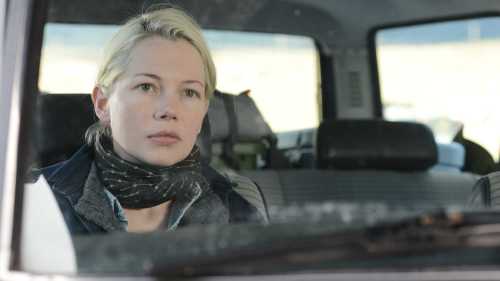
Michelle Williams

Michelle Williams

“CERTAIN WOMEN” My rating: B-

107 minutes | MPAA rating: R

The cinematic minimalism practiced by writer/director Kelly Reichardt can be deceiving. Films like “Old Joy” and “Wendy and Lucy” creep up on you slowly…sometimes a bit of time has to pass before they set up shop inside a viewer’s head and a movie’s little moments coalesce into an overall feeling.

“Certain Women” is based on three Maile Meloy short stories, all set in a small burg in the Pacific Northwest and each concentrating on a woman struggling for a degree of independence and recognition. The stories  stand alone, but characters from one might pop up in a cameo role in another.

In the first a lawyer (Laura Dern) is called to help negotiate with a client (Jared Harris) whose workman’s compensation case is going nowhere. Now the poor schlub has taken extreme measures. He’s armed himself and invaded the offices of his former employer, taking a security guard hostage. The local sheriff wants the lawyer to get him to surrender.

In the second story a wife and mother (Michelle Williams) is pushing her foot-dragging husband (James Le Gros) to build a new family home on a few acres out in the woods. Much of the running time is devoted to her negotiations with a crusty old local (Rene Auberjonois) to acquire a pile of sandst0ne rocks that have been sitting in his rural front yard for at least 50 years.

In the third episode a loner stablehand (Lily Gladstone) becomes quietly obsessed with the new law school grad (Kristen Stewart) who weekly drives four hours each way to hold evening training sessions on education law for local public school teachers and administrators.

Continue Reading »

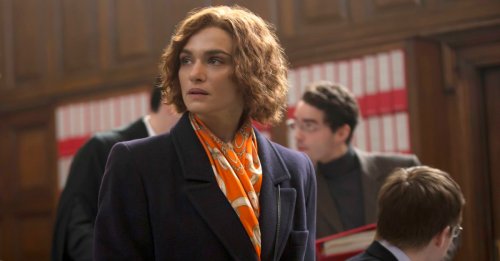
Rachel Weisz as historian Deborah Lipstadt

Rachel Weisz as historian Deborah Lipstadt

“DENIAL”  My rating: B

110 minutes | MPAA rating: PG-13

The arrival of “Denial” could hardly be more timely, given the increased white nationalism encouraged — or at least not denounced — by Donald Trump’s presidential campaign.

Based on historian’s Deborah Lipstadt’s 2005  memoir History on Trial: My Day in Court with a Holocaust Denier, Mick Jackson’s film  is a legal drama with repercussions far beyond the courtroom.

In 1997 Holocaust-denying historian David Irving  sued Lipstadt (of Emory University) and her publisher, Penguin Books,  for defaming him  and his theories in  her book Denying the Holocaust.

Irving opted to sue in a British court, choosing that venue rather than one in America at least in part because under British law persons accused of libel must prove their innocence  (in theU.S. it’s the plaintiff who must prove wrongdoing).

Timothy Spall

Timothy Spall

The resulting film is well acted, informative, and emotional for the quiet contempt it heaps upon anti-Semitism with a scholarly face.

Rachel Weisz portrays Lipstadt with a tightly-wound, steely exterior that periodically bursts into fierce flame.

She first encounters Irving (Timothy Spall) face to face when he shows up at her college lecture and waves $1000 which he’ll give anyone who can prove that any Jew was ever killed in a Nazi gas chamber.

The bulk of the film centers on Lipstadt’s interactions with her British solicitor (the lawyer who will prepare her case) and her barrister (who will argue it in court).  These figures of probity and quiet dignity are portrayed, respectively, by Anthony Scott (best known as Moriarty on the PBS “Sherlock”) and the ever-wonderful Tom Wilkinson.

Part of the team’s preparations involves a trip to Auschwitz (on a eerily beautiful foggy winter’s day), where Lipstadt is moved by the echoes of dead souls but also somewhat perplexed…before the war ended the Germans blew up the gas chambers in an effort to destroy evidence of their crimes.

Continue Reading »

Ethan Hawke and canine costar

Ethan Hawke and canine costar

“IN A VALLEY OF VIOLENCE” My rating: C

104 minutes | MPAA rating: R

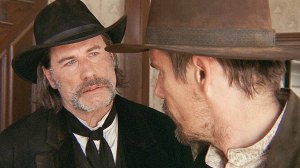
Notwithstanding the participation of two major stars — Ethan Hawke and John Travolta — Ti West’s “In a Valley of Violence” is a toss off,  an indifferent diversion at best.

It’s a mashup of Sergio Leone Spaghetti Western elements — an animated credit sequence that mimics that of “The Good, the Bad and the Ugly” and an ersatz Morricone soundtrack of tympani, Indian flutes and electric guitars — and oater cliches somewhat bent by eruptions of oddball humor.

Paul (Hawke) is a lone rider headed to Mexico in the company of his dog, an adorable mutt.  Everybody who sees the pooch wants to know if it does tricks. “She bites,”  is Paul’s sullen reply.

John Travolta, Ethan Hawke

John Travolta, Ethan Hawke

In an all-but-abandoned former mining town Paul slows down for a bath and a shopping spree in the general store.  But he runs afoul of Gilly (James Ransone), the pushy, trigger-happy deputy and son of the local marshal (Travolta).

After leaving the burg Paul is waylaid by Gilly and his fellow deputies, who do bad things to him and his dog.  Left for dead, Paul gets his shit together and heads back to town for revenge.

There are some small pleasures here.  Travolta’s Marshal is a loquacious sort out of a Tarantino film, and he at least has the decency to be embarrassed by his idiot offspring. Taiga Farming plays a teen-age hotel maid who becomes our hero’s confidant; Karen Gillan is her prettier spoiled sister.

The film looks good but, really, West’s “High Noon”-ish plot is way too familiar and the abrupt tonal changes — bloody sadism to goofy silliness — are less intriguing than irritating.

| Robert W. Butler