Feeds:
Posts
Comments
Dev Patel

Dev Patel as math genius Srinivasa Ramanujan

“THE MAN WHO KNEW INFINITY” My rating: B-

108 minutes | MPAA rating: R

Despite the title, “The Man Who Knew Infinity” is not a science fiction yarn…although its real-life hero was probably regarded by his contemporaries as an extraterrestrial or a visitor from the future.

Srinivasa Ramanujan (1887-1920) is, nearly a century after his death, still regarded as one of the most important mathematicians of all time. He appears to have been a natural — he never received any formal training.

Writer/director Matt Brown’s biopic follows Ramanujan (Dev Patel) from an impoverished childhood and early marriage in India to the heights of mathematical study at Trinity College, Cambridge. The bulk of the film takes place in pre-World War I England where the young savant becomes a protege of math great G.H. Hardy — although after a few weeks one could ask who exactly  is teaching whom.

Granted, few moviegoers regard math as a scintillating subject for dramatic exploration. Indeed, while “The Man Who Knew Infinity” (the title refers to Ramanujan’s ability to visualize numbers so large they put the rest of us into meltdown) cannot escape talk about primes, theta functions, divergent series and whatnot, the film’s dramatic core rests on more recognizable issues.

Like racism.  For all his genius, Ramanujan was regarded by many on the Cambridge faculty as a mere “wog.” The prevailing view was that as such he must have stolen his results from brighter (i.e.,  whiter) minds. Even Hardy begins their relationship with a rather patronizing attitude. At times the Indian guest faces physical violence.

Not to mention the isolation of being one of the few Indians on campus. A strict vegetarian, Ramanujan discovered to his dismay that in England even vegetables are cooked in lard; the combination of a poor diet and a miserable English winter probably contributed to his early death.

Continue Reading »

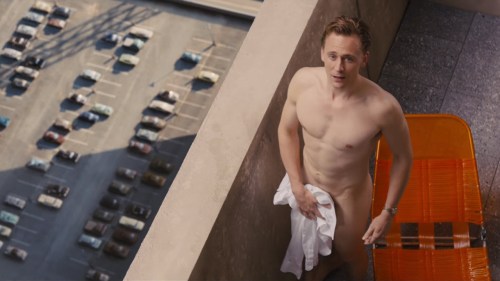
Tom Hiddleston

Tom Hiddleston

“HIGH-RISE” My rating: C+

119 minutes | MPAA rating: R

Duration is the enemy of allegory.

At 50 minutes Ben Wheatley’s “High-Rise” would have been a stunning achievement — a vicious, snarling, breathless satire of class warfare and social apocalypse.

At two hours, though, it’s a slog, one that very nearly wears out its welcome and ends up repeating itself like a 33-record with a track-skipping scratch.

Screenwriter Amy Jump’s adaptation of the 1975 novel by J.G. Ballard (Crash) bears more than a few  similarities to William Golding’s Lord of the Flies and especially to the the recent cult hit “Snowpiercer.”  Just replace the hermetically sealed high-speed train with an equally isolated high-rise apartment complex.

We are introduced to this modern Tower of Babel through the new tenant, Liang (Tom Hiddleston, who seems to be everywhere nowadays: “I Saw the Light,” TV’s “The Night Manager,” Marvel movies).  An unmarried M.D. with more money than he knows what to do with, Liang takes an apartment about halfway up the 30-plus story edifice.

The tower has all the amenities of a decent-sized town: health spa, swimming pool, school, a traditional English garden on the rooftop complete with livestock. There’s even a grocery store that sells only generic products (“Thank you for shopping on floor 15”). Alas, the place is chilly and sterile, all poured concrete and glass. Which is fine with Liang, who has no furniture and never gets around to unpacking his boxes.

It quickly dawns on the newcomer that the building has a social pecking order.  Towering over everyone else in his penthouse is the symbolically named Royal (Jeremy Irons), the architect who designed the building and is forever tinkering with improvements meant to validate his experiment in social engineering.

Just below Royal are the wealthy aristocrats embodied by the sneering, pompous Pangbourne (James Purfoy).

Then come the mid-level residents like Liang and Charlotte (Sienna Miller), the salacious single mom whose bright young son (Louis Suc) is building what looks like a homemade bomb.

Below Liang are residents like Wilder (“The Hobbit’s” Luke Evans), an aggressive and rabble-rousing documentary film maker, and his ever-pregnant wife Helen (Elisabeth Moss). Continue Reading »

sssssss

Ferdia Walsh-Peelo (center) and Sing Street

“SING STREET” My rating: B

106 minutes | MPAA rating: PG-13

Being a teenager sucks.  Good thing there’s rock ‘n’ roll to see you through.

“Sing Street,” the latest from Irish auteur John Carney (“Once,” “Begin Again”), nails the nexus of adolescence and pop music better than any movie since “The Commitments.”

This story of Dublin teens throwing together their own band — and of the beautiful but troubled girl who inspires it all — is goofy, tuneful and romantic.

And in its leading man, 16-year old Ferdia Walsh-Peelo (no, that’s not a typo), “Sing Street” may have the year’s most appealing newcomer.

The time is 1985 and Ireland is in the crapper.  There’s widespread unemployment and any young person hoping for a decent future is planning a move to England.

The economic realities are inescapable for young Conor (Walsh-Peelo). His fiercely bickering parents (“Orphan Black’s” Maria Doyle Kennedy and “Game of Thrones'” Aidan Gillen) are out of work. They’ve had to yank Conor from his upscale high school and transferred him to the much cheaper Synge Street School, a hotbed of juvenile delinquency run by sadistic clerics.

There’s but one bright spot in all this.  Each morning a gorgeous young woman sits on her stoop opposite the school, boredly puffing on a fag as the wind lifts her teased hair.

Her name is Raphina (Lucy Boynton), and she says she’s an aspiring model. Conor is immediately smitten.  Raphina seems impossibly sophisticated, sexually experienced, and wholly unattainable (in fact, she’s only 16, a year older than our protagonist). But Conor finds the courage to approach her and brazenly suggest that she appear in the music video his band is making.

Only problem is that he doesn’t have a band.

Continue Reading »

Francofonia_Reg“FRANCOFONIA” My rating: B  

88 minutes | No MPAA rating

Russian director Aleksandr Sokurov’s obsession with museums as repositories of our collective culture has already given us one near-masterpiece, “Russian Ark.” In that 2002 mind-blowing fantasia several centuries of history unfold on the grounds and in various galleries of St. Petersburg’s Hermitage Museum, all of it captured in a single impossible 2-hour-18-minute tracking shot.

In “Francofonia” Sokurov turns his attention to the Louvre in Paris.

The film is technically a documentary…but a doc of a singularly personal sort. We see filmmaker Sokurov (or, more accurately, the back of his head) sitting at his computer in a workroom.  From time to time he video chats with the captain of a freighter in the North Atlantic who is carrying a precious cargo of priceless art through a harrowing storm at sea. (Is this real footage or staged?)

The soundtrack consists mostly of Sokurov’s voiceover, a steady stream of consciousness that skips from century to century and topic to topic.

Through a treasure trove of old photos and newsreels he tells us the Louvre’s history. His camera often moves in close so that we’re nose to nose with the painted faces looking down from the gallery walls.  At other times his camera floats like a disembodied ghost through the corridors and treasure-filled rooms.

Continue Reading »

Salma Hayek and sea serpent

Salma Hayek and sea serpent

“TALE OF TALES”  My rating: C

133 minutes | No MPAA rating

From a technical perspective, “Tale of Tales” is one gorgeous films, a visual masterpiece of art design and cinematography.

It’s also dramatically stillborn. Sort of like the least engaging Terry Gilliam movie ever.

Directed by Matteo Garrone (who made a big splash a few years back with his lacerating Neapolitan crime drama “Gomorrah”) and adapted from the 17th century fairy tales of Giambattista Basile (the creator of “Cinderella”), this big production interweaves three of Basile’s stories. There’s an emphasis on sex and violence. The kiddies are not invited.

In one story the King and Queen of Longtrellis (John C. Reilly, Salma Hayek) are so desperate to produce an heir that they take advice from a mysterious sorcerer. The King must kill a sea monster (he dies in the quest), the Queen must eat the great beast’s heart.

It works. Her Highness has a high-speed pregnancy that lasts all of 24 hours and produces a son.  Weirdly, the cook who prepares the heart also gives birth overnight to a baby boy who is a dead ringer for the young Prince. (As adolescents the Prince and the Pauper — both albinos, by the way — are played by real-life twins Christian and Jonah Lees).

The boys have a spiritual connection which the Queen tries to break by sending the Pauper off to a foreign land. But the Prince runs away to find him.

Meanwhile the incredibly horny King of nearby Strongcliff (Vincent Cassel) has fallen for one of two sisters (Hayley Carmichael, Shirley Henderson) he has espied from afar. He doesn’t realize that the object of his lust is an old crone, and the sisters wisely conduct all the negotiations for the loss of sister Dora’s virginity through a closed door.

Continue Reading »

Jennifer Aniston

Jennifer Aniston

“MOTHER’S DAY”  My rating: C- 

118 minutes  | MPAA rating: PG-13

Like its predecessors — “Valentine’s Day,” “New Year’s Eve” and the inexplicably adored  “Love Actually”  — “Mother’s Day” is low-risk, high-profit drek.

From a film producer’s point of view it’s a no brainer.  Take a half dozen interlacing plots on a central theme, populate them with big names (none of whom have to work too hard, since each is on screen for only a few minutes), pave the way with lightweight comedy and wrap it all up with a saccharine coda.

Jason Sudiekis

Jason Sudeikis

Plus, it’s a lazy moviegoer’s dream come true. There’s no commitment required because the enterprise is pure dramatic shorthand. No character or narrative arc is sustained  long enough to be anything more than a blip, and the film delivers a sentimental rush without the viewer having to invest anything.

In other words, emotional porn.

The latest from director Garry Marshall and his team of writers (Tom Hines, Lily Hollander, Anya Kochoff, Matthew Walker) follows a group of Atlanta residents as they look forward to — what else? — Mother’s Day.

Divorcee Sandy (Jennifer Aniston) is all abother because her ex (Timothy Olyphant) has wed a trophy gal half his age…and now this new stepmom is a favorite of Sandy’s two young boys.

Sisters Jesse (Kate Hudson) and Gabi (Sarah Chalke) live next door to each other and are happily estranged from their domineering and hopelessly prejudiced mother. Jesse has married an East Indian M.D. (Asaif Mandvi), while Gabi is in a same-sex relationship.

Wouldn’t you know it?  Their covers are blown when unsuspecting Mom (the great Margo Martindale) and Dad (Robert Pine) come swooping down in their RV to share Mother’s Day with the girls. Continue Reading »

Rhiannon struts her stuff on the red carpet

Rihanna struts her stuff on the red carpet

“THE FIRST MONDAY IN MAY” My rating: B 

90 minutes | MPAA rating: PG-13

Very few of us have the connections or the cash to participate in the Costume Institute Gala, one of the major fundraisers of NYC’s Metropolitan Museum of Art.

Thanks to ‘s “The First Monday in May,” though, we can vicariously crash this celebrity-studded and glamor-heavy event.

For his latest documentary director Andrew Rossi (“Page One: Inside the New York Times”) delivers a grab bag of ideas and themes centering on fashion.

In part, the film is a history of the museum’s Costume Institute and the struggle to have fashion recognized as an art form worthy to stand alongside painting and sculpture.

It also looks back at the blockbuster show several years back featuring the bizarro fashion of the late Alexander McQueen, and efforts by Gala organizers to top that record-setting event.

Rossi’s camera centers on several individuals who are planning this massive undertaking, which for 2015 has been dubbed “China: Through the Looking Glass.” The massive production will illustrate how Western (and some Eastern) designers have drawn upon traditional Chinese art for inspiration.

Continue Reading »

Jesse Eisenberg, Devin Druid

Jesse Eisenberg, Devin Druid

“LOUDER THAN BOMBS” My rating: B+

109 minutes | MPAA rating: R

“Louder Than Bombs” is a sort of ghost story, though not of the white-sheet-bump-in-the-night variety.

The first American film from Norwegian auteur Joachim Trier is a quietly devastating study of a father and two sons cut adrift by the death — a suicide, it turns out — of their wife and mother, and how they are haunted by memories, doubts and uncertainties.

Isabelle (Isabelle Huppert, seen in flashbacks and dream sequences) was a photojournalist who specialized in war coverage, not so much of the fighting as of its human toll. Two years have passed since her late-night death in a car crash just miles from her suburban New York home.

Her husband, Gene (Gabriel Byrne), a former actor now a teacher, has tried to keep his boys on an even keel. The oldest, Jonah (Jesse Eisenberg) is a sociologist with his first university teaching appointment, a wife and a new baby girl.

The younger, Conrad (Devin Druid), is a brooding, uncommunicative loner who refuses to give his concerned father the time of day. It probably doesn’t help that Gene is on the faculty of Conrad’s high school, and thus always lurking just around the corner.

A gallery retrospective of Isabelle’s work is being planned by a journalist colleague  (David Strathairn), whose essay about his deceased friend specifically names her as a suicide.  While Jonah has long been aware of this, Conrad is still under the impression that her death was a random accident. Gene must find a way to tell him the truth.

There’s no shortage of pain in the screenplay by Trier and Eskil Vogt, but also a great deal of love. This achingly humanitarian work lacks a villain — in fact, all three men and the late Isabelle have their own flaws and frustrating facets. Continue Reading »

Giovanni Ribisi, Adrian Sparks

Giovanni Ribisi, Adrian Sparks

“PAPA HEMINGWAY IN CUBA”  My rating: C+

134 minutes | MPAA rating: R

“Papa Hemingway in Cuba” has a terrific back story.

In fact, how the film got made is considerably more interesting than the movie itself.

Director Bob Yari (up to now he’s had mostly producing credits), working from a semi-autobiographical screenplay from the late journalist Denne Bart Petitclerc, filmed his feature in Cuba despite the economic embargo imposed by the United States more than a half-century ago.  “Papa”  is the first American film shot in that island nation since Castro’s communist revolution in 1959.

Moreover, Petitclerc had an intimate relationship with the volatile author and his wife, Mary Hemingway, and his yarn drops a couple of bombshell revelations which feel like dramatic license but which Petitclerc’s widow claims are based on real events.

The picture begins with Petitclerc’s fictional alter ego, Ed Myers (Giovanni Ribisi), writing an unabashed fan letter to Hemingway. The Miami newspaperman is at first skeptical when he gets a telephone call from a man claiming to be Ernest Hemingway. But it’s the real deal, and “Papa” invites the young man to visit him in his Havana retreat.

The invitation leads to repeated visits to Cuba and a deepening relationship between Ed, Papa (Adrian Sparks) and Mary Hemingway (Joely Richardson). Ed is initially cowed by the couple’s bohemian lifestyle (skinny-dipping in the pool, all-night drinking sessions) but slowly fits in  with the Hemingways’ literary/political crowd.

As an insider Ed is privy to both the inspiring and the appalling sides of the Hemingway legend. Papa is a great literary mentor; he’s also an egoist, a  macho-infused drunk, and though only  in his late 50s, sexually impotent.

All this simmering upheaval takes place against a background of even greater unrest. Castro’s revolutionaries are a growing threat to the Batista regime, which responds with ever more repressive policies.

Continue Reading »

Don Cheadle as Miles Davis

Don Cheadle as Miles Davis

“MILES AHEAD”  My rating: B 

100 minutes | MPAA rating: R

You’ve got to give props to Don Cheadle.

As  the director, producer, co-writer and star of “Miles Ahead,” he shrugs off the trappings of your traditional musician biopic and attempts the cinematic version of  a jazz composition: repeated motifs, variations, codas, wild riffs, crazy improv.

It’s an approach guaranteed to scare off most audiences, but for those willing to stick around there are plenty of rewards.

The life of Miles Davis — as filled with personal upheaval as it was with musical genius — could be approached in a dozen different ways. Screenwriters Cheadle and Steven Baigelman have chosen a tack guaranteed to piss off many Davis fans by concentrating on perhaps the least productive and most demeaning period of the trumpeter’s career.

Set mostly  in late 1970s — almost three decades after his breakthrough as a “cool” jazz man and years since his last recording — the film does offer flashbacks of Miles’ wonder years, as well as his doomed romance with dancer Frances Taylor (Emayatzy Corinealdi), presented here as the lost love of his life.

But in the here and now  Miles is holed up in Howard Hughes-ish isolation in his New York townhouse, where he lounges about in expensive yet ridiculous disco fashions, snorting coke and slugging back expensive liquor. Sometimes he fools around with recorded sounds, but creativity has little room in a life awash with paranoia and self-pity.

As one observer comments, at this point Miles Davis is probably worth more dead than alive.

The plot kicks in with the arrival of David Brill (Ewan McGregor), who claims to be on an assignment from Rolling Stone.  As it turns out, the journalist becomes Miles’ wingman on a series of odd adventures, foremost among them the theft from Miles’ home of a tape recording an unscrupulous music producer thinks could be worth a fortune.

Armed to the teeth and fueled by drugs, Miles and the bewildered/fascinated David go off to seek justice.

Continue Reading »