Feeds:
Posts
Comments

Posts Tagged ‘Amy Ryan’

Harper Steele, Will Ferrell

“WILL & HARPER”  My rating: B+ (Netflix)

114 minutes | MPAA rating: R

“Will & Harper” is both a hugely emotional paen to friendship and a sobering/reassuring look at grassroots America.

It’ll have you sobbing one minute, furious the next.

The Will of the title is Will Ferrell, famous comic actor.  Harper is the former Andrew Steele, a long-time writer for “Saturday Night Live” who at age 61 decided to transition.

At the outset of Josh Greenbaum’s documentary, Ferrell recalls getting an email from Steele announcing her new status as a woman.  Farrell never saw it coming.

But Will Ferrell is a very good friend.  Knowing that as a man Harper had often driven across America, hanging out in seedy motels and nefarious watering holes, Ferrell suggested the two buds take a road trip. 

It would give them plenty of time to explore their new relationship while seeing how, if at all, Harper would be accepted  by the everyday folk being bombarded with anti-trans propaganda.

There’s good news and bad news. At an Oklahoma road house Harper is serenaded by a group of Native American men who employ a plastic tub as a tom tom to chant a welcoming song.  Awwww.

The next day, in Texas, the two travelers take center stage at a crowded highway restaurant.  Clearly, the local folk are impressed at having a celeb in their midst, but many fire off a slew of cruel anti-trans tweets aimed at the comic’s companion.

But perhaps the most devastating part of the journey is hearing Harper speak of the many years in which she fought against recognizing her true sexual identity. It’s sad and inspiring.

Which is not to say that “Will & Harper” is a downer.  Ferrell and Steele have earned their livings by making other people laugh, and their banter has plenty of drollery sprinkled among the truth nuggets.

I believe I’m a better person for having watched it.

Brad Pitt, George Clooney

“WOLFS” My rating: B (Apple+)

108 minutes | MPAA rating: R

It really doesn’t go anywhere, but you’ve gotta enjoy the ride provided by “Wolfs,” a lean, funny crime dramedy fueled by Tarantino-esque banter.

The premise of writer/director Jon Watts’ film:  Two mob cleaners (they are hired to discreetly remove evidence — like dead  bodies — after violent encounters) find themselves working on the same assignment.

It must be a mistake because these unnamed dudes (played by George Clooney and Brad Pitt) always work alone and are fiercely protective of their trade secrets. (They’re “lone wolfs.”)

Nevertheless, here they both are in an expensive hotel room to remove the body of a young man who, while cavorting with an older woman (Amy Ryan), bounced off the bed and into a glass coffee table.

These wolfs don’t play well with each other.  The older one (Clooney) is a brooding grump. The younger (Pitt) is a cocky wise ass.  

Oil and water.

And then there’s the vinegar. (Here comes a spoiler but I don’t know how to avoid it.)

That would be “the kid” (Austin Abrams), the supposedly dead body that returns to life mid-disposal.  He’s a goofy college student who got picked up by the cougar while running an errand for a friend…an errand that involves a backpack full of drugs.

Now the two fixers and the kid are trying to return the illegal pharmaceuticals to their criminal owners without getting killed.

But not before an awesome chase through NYC with the two wolfs pursuing the whacked-out kid, who is racing gazelle-like through a snowstorm in his tidy whities. 

Remember Nicolas Cage’s quest for baby diapers in “Raising Arizona”?  It’s that good.

The thorny plot twists of “Wolfs” may not stand up to close scrutiny, but viewer doubts probably won’t kick in until after the final credits.  For the most part the flick is just plain fun.

Natasha Lyonne, Elizabeth Olsen, Carrie Coon

“HIS THREE DAUGHTERS” My rating: B+ (Netflix)

101 minutes | MPAA rating: R

Getting married. Having a kid. Losing a parent.

These are three of the most impactful experiences in a human life. Azazel Jacobs’ “His Three Daughters” examines the third event through a pressure-cooker environment and three astonishing performances.

The daughters are Katie (Carrie Coon), Rachel (Natasha Lyonne) and Christina (Elizabeth Olsen). The siblings have gathered in the New York apartment of their father, who lies dying in his bedroom (we won’t actually see him until the final moments of the film).

Though all were raised by the same single dad, the women have radically different personalities.

Katie, the oldest, is a brittle, opinionated woman who tries to come off as helpful but actually is merely bossy. Katie has rarely visited her father in recent months but now wants to dictate how this whole business of dying will unfold. The problem, of course, is that death doesn’t operate on a convenient schedule.

Christina has a husband and young daughter back in Ohio. She’s painfully insecure, always sharing appallingly sappy phone calls with her kid and shying away from argument and controversy.

Rachel is the family bohemian. She’s been living with her father for years, taking care of him in his decline. She appears not to have a real job and frequently lets off steam with a joint or two, both life choices that infuriate the judgmental Katie.

“…Sisters” unfolds almost entirely in the living room and kitchen of the apartment, creating a claustrophobic intensity that magnifies the points of conflict among the women.

Every few hours a hospice worker (Rudy Galvan) checks in; at one point Rachel’s boyfriend (Jovan Adepo) shows up to give her a bit of moral support and to unload on Katie and Christina, whom he (rightly) believes have shirked their familial responsibilities while Rachel got stuck with the role of caregiver.

“His Three Daughters” could quite easily have been conceived as a stage play rather than a film. The dialogue is tight and polished and wastes little time in exposing the character’s conflicted essences. Sometimes it sounds a bit artificial and forced, but any misgivings are quiickly dispersed by the power and subtlety of the performances.

Most of the film is brutally realistic. But in the final moments, when we finally meet the women’s father (Jay O. Sanders), it becomes borderline metaphysical. I can’t say more without ruining the effect…let’s just say that despite often rubbing our noses in dysfunction, “His Three Daughters” leaves us with a whiff of hope.

| Robert W. Butler
Read Full Post »

Colin Farrell

“SUGAR”(Apple+):

The year’s biggest gotcha!!! moment arrives at the end of Episode 6 of “Sugar,” and it’ll leave you reeling.

And that’s all I’ll say about that.

But there’s plenty of other stuff to relish in creator Mark Protosevich’s smart, stylish and thought-provoking re-examination of classic private eye tropes.

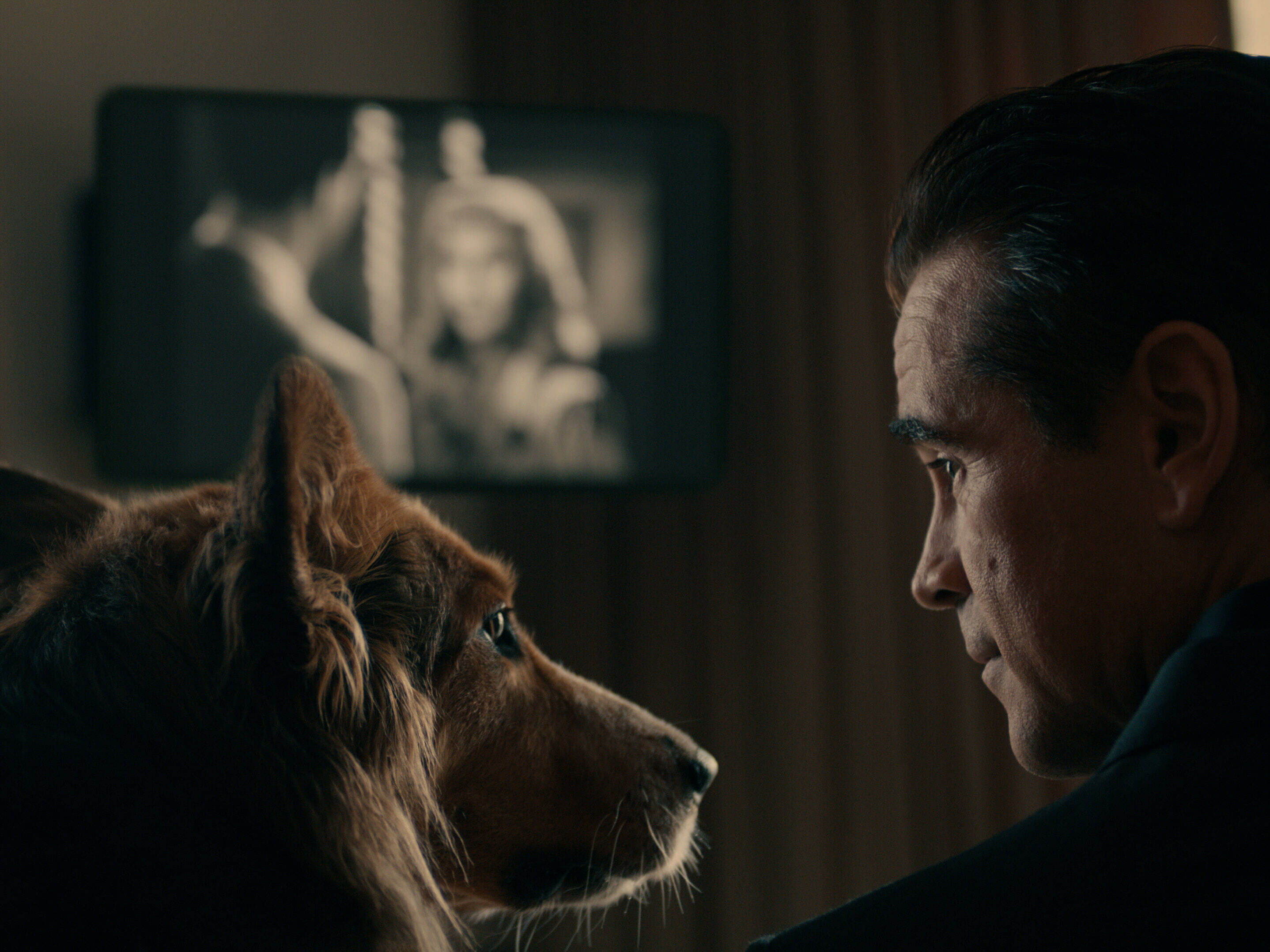
Colin Farrell is at his absolute best as John Sugar, a private investigator specializing in missing person cases.  

Noir usually requires a protagonist who is essentially honest but bummed out and bitter, a guy sickened by the corruption of the big city but driven to discover the truth.

Sugar, though, loves L.A.  For him it’s like a trip to Disneyland.  For one thing, he tools around town in a vintage Corvette convertible while sporting immaculately tailored suits. Even when facing down despicables he’s gentlemanly, more curious than judgmental.

Moreover, he loves working in the motion picture capital of the world. One  of the show’s cleverest conceits is that he’s always encountering characters and situations that remind him of classic films…and brief clips from those films are scattered reverentially throughout the series.

It’s been said that everything we need to know we learned in kindergarten.  John Sugar learned  it watching movies.

Sugar’s current case involves the disappearance of a young woman bred of Hollywood royalty.  Her grandfather (James Cromwell) is a financial titan; her father (Dennis Boutsikaris) is a ruthless producer, and her half-brother (Matt Corddry) is a former child star now wallowing in a drug-infused career burnout.

Sugar appears to have no close friends (an abandoned dog becomes his main bud), though he has a sort of Girl Friday (Kirby) who assigns cases to him and is always warning against getting too involved with the clients.

And in the course of the investigation Sugar finds himself spending time with the missing girl’s one-time stepmother (Amy Ryan), an actress and recovering alcoholic who finds herself attracted to this cooly empathetic white knight.  (Aside from the missing persons case, the series’ biggest mystery is whether these two will ever make a romantic connection.)

Now all this sounds intriguing enough, but it’s only a prelude to the mind-blowing reveal that comes halfway through.

“Sugar” is so good it’s worth subscribing to Apple+ just for this one series.

Ewan McGregor, Alexa Goodall

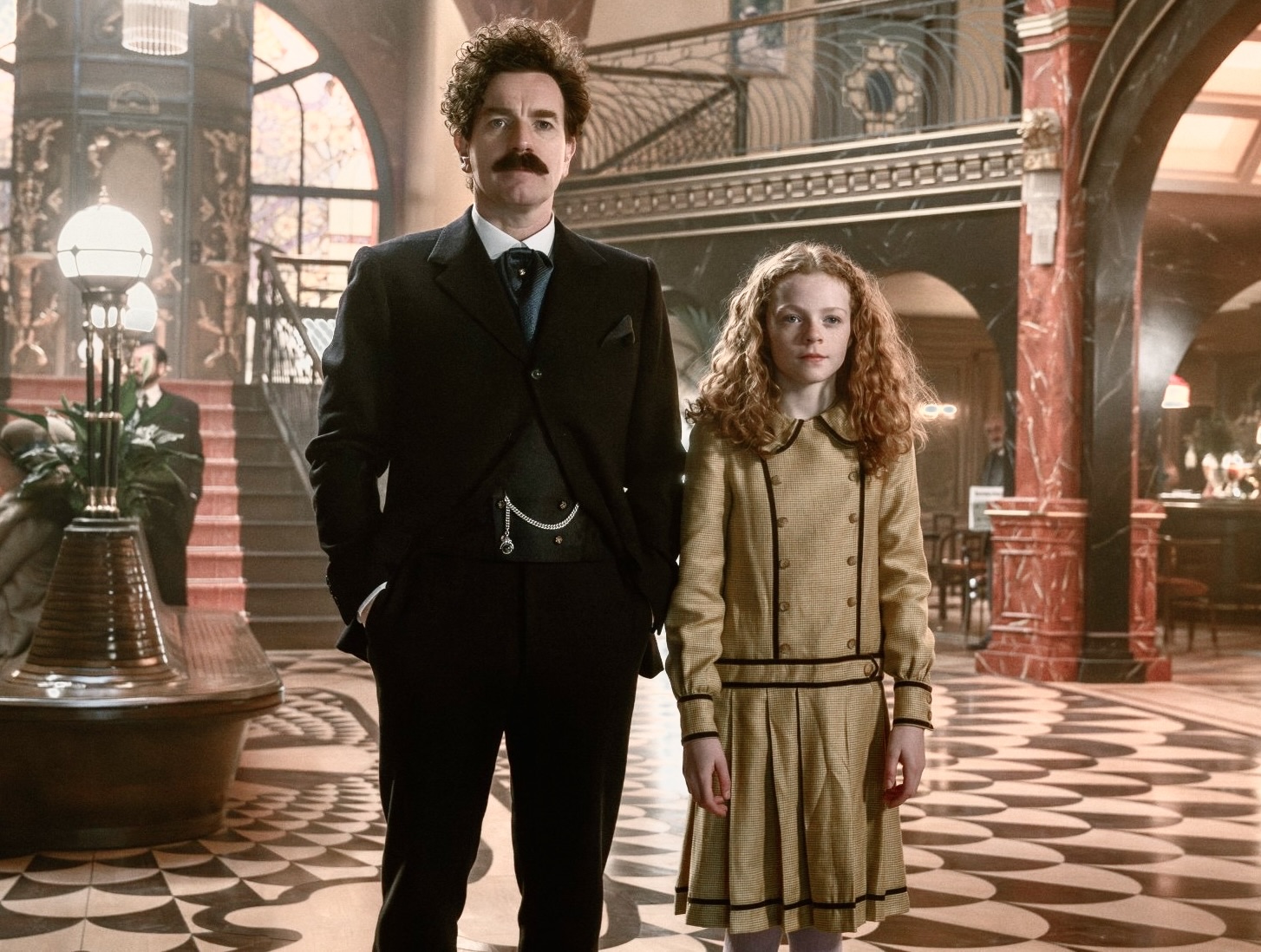
“A GENTLEMAN IN MOSCOW” (Paramount +):

Ewan McGregor gives what may be a career-high performance in “A Gentleman in Moscow.” 

He’s so good that one is willing to overlook some of the production’s flaws just to luxuriate in his presence.

Based on Amor Towles’ best-selling novel, “Gentleman…” over eight episodes follows the life of Alexander Rostov, a Russian count caught up in the Revolution.  

Being rich, cultured, erudite and well-educated, Alexander seems destined for a firing squad.  He’s saved when he is credited (erroneously) with composing a popular pro-Communist poem; instead of death he is sentenced to spend the rest of his life in Moscow’s Metropol Hotel.

Which is ironic, since the Metropol, an art nouveau masterpiece, is a last bastion of Western decadence in the economically devastated USSR. The Communist Party uses it as a showplace so foreign visitors can experience posh accommodations while the rest of the country starves.

 Alexander may be an impoverished prisoner sleeping in a frigid attic room, but he’s free to move about the building, to hobnob with guests and staff.  He becomes a waiter…and the in-house wine expert. And he even creates his own secret salon, a sort of throwback to his former life of luxury, this time furnished with pilfered items.

The heart of McGregor’s interpretation lies in Alexander’s mix of fatalism (the old world order is gone and isn’t coming back) and his innate humanism, which allows him to see the good in all people (though in the case of certain Party die-hards, it’s a rough go). And despite his view of himself as a loner, he becomes a father — twice.

There are four basic plot threads interwoven here.

Initially there is  Alexander’s relationship with Nina (Alexa Goodall), the daughter of a hotel guest who becomes his best friend and guide to the wonders of the hotel (the child  has somehow gotten her hands on a master key.) Years later, after the grown Nina and her husband become victims of a Stalinist purge, Alexander will care for their daughter Sofia (Billie Garson), who becomes a brilliant pianist.

Throughout his 30-year stay in the Metropol Alexander will carry on an affair with Anna Urbanova (Mary Elizabeth Winstead), a star of Soviet cinema who enjoys her decadent pastimes and especially the Count’s old-world charm. This is one of the series’ big flaws: I didn’t buy Winstead (in real life she is Mrs. Ewan McGregor) as a jaded European; there’s too much all-American girl about her. Sometimes it feels she’s playing dress-up in Mom’s closet.

Finally there’s Osip (Johnny Harris), Alexander’s bald, brutal KGB overseer. Osip is Red down to his toenails; he hates the nobility and is looking for any excuse to condemn Alexander.  But over the decades theirs becomes the series’ most intriguing relationship.  Initially Osip demands that Alexander spy on the hotel’s guests; eventually the thug finds himself relying on Alexander’s cultured past and obvious “people” skills to navigate the dark twists and turns of a Stalinist society. Weirdly enough, they almost become friends.

The physical production is sumptuous, with the Metropol Hotel presented as a sort of funhouse  wonderland.  We explore this castle from the cellar furnace room to the rooftop (as close as Alexander can get to the great outdoors), luxuriating now and then in the posh dining room and bar, and the luxurious suites…not to mention the back stairways, kitchens and offices.

Finally, there’s one aspect of the series that bugged me. Usually I’m all for non-traditional casting, but the makers of “Gentleman…” have taken it to extremes. Black actors here take roles that for historic accuracy should be portrayed by…well, people who look Russian. The Russian minister of arts is black, an American diplomat (in the 1940s and ‘50s) is black; even Alexander’s boyhood best friend (Fehinti Balogun) is black (and with braided dreadlocks, even). 

These instances took me out of the show and temporarily derailed my attention and enjoyment. 

But then I come back to McGregor’s display of unassuming decency.

Left to right: Alison Brie, Sam Neill, Annette Bening, Conor Kerrigan Turner, Essie Randles, Jake Lacey

“APPLES NEVER FALL” (Peacock):

First-rate players never get the payoff they deserve in “Apples Never Fall,” a murder mystery (sort of) about a hugely dysfunctional family that hints at becoming something dark and revealing before turning all soft and squishy.

The Delaney family of Palm Beach are local legends by virtue of running a tennis academy that has turned out the current world champion.

Mom Joy and dad Stan (Annette Bening, Sam Neill) are currently enjoying an uneasy retirement…he’s a bit of a boor who radiates possible violence, she’s a bored matron.

They’ve got four grown kids — played by Jake Lacy, Alison Brie, Conor Kerrigan Turner and Essie Randles — all of whom seem lost, professionally and/or personally.

Creator Melanie March mixes two genres here.  First there’s the arrival of Savannah (Georgia Flood), an abused woman (or so she claims) who washes up on Joy and Stan’s doorstep, is taken in my them, and slowly makes herself indispensable in ways their actual children won’t. Is Savannah a con artist? Dangerous?

Then there’s Joy’s disappearance, Stan’s stubborn refusal to cooperate with the cops, and lots of bloody evidence suggests she has been the victim of foul play.

“Apples Never Fall” dishes a ton of armchair psychology, a mess of subplots that do little more than pad the proceedings, and a jumbled time frame that makes it hard to figure out exactly where we are in the 7-episode story.

Finally, there’s a payoff that is more “meh” than “damn!”

| Robert W. Butler

Read Full Post »

Amy Ryan

“LOST GIRLS” My rating: B (Now on Netflix)

95 minutes | MPAA rating: R

Anger radiates from “Lost Girls” like steam from a boiling pot.  It swirls around us; we inhale it; we burn with it.

Liz Garbus’ film is about the decade-old (and still unsolved) case of the Long Island serial killer, believed responsible for the deaths of at least 10 young women.

But it’s not a police procedural. More like a study of official indifference and incompetence.

The victims, you see, were call girls. No big loss, right?

The point of view taken by the filmmakers (Michael Were adapted Robert Kolker’s non-fiction book) is not that of a dedicated cop finding answers but of a grieving mother, wracked with uncertainty and played with extraordinary fierceness by Amy Ryan.

Mari Gilbert (Ryan) lives in a small town in upstate New York.  She’s a single mother (no mention of any man in her life, past or present) making ends meet with blue-collar gigs (waitressing, driving heavy construction equipment) and struggling with domestic issues.

One daughter, Sherre (Thomasin McKenzie of “Jojo Rabbit” and “Leave No Trace”), has a bad case of late-teen resentfulness. The second, tweener Sarra (Oona Laurence), is bi-polar, jerked between phases of defiance and crushing melancholy.

There’s another daughter whom we never really get to meet. Shannan, we learn, hasn’t lived with her mother since  puberty; she was raised by the state in foster homes. Now she resides in New Jersey, returning home on rare occasions but regularly contributing money to support her mother and siblings.

Shannan is a prostitute who uses Craig’s List to troll for customers. Mari undoubtedly knows this; she just won’t say it out loud.

(more…)

Read Full Post »

Bryan Cranston

Bryan Cranston

“THE INFILTRATOR” My rating: B 

125 minutes | MPAA rating: R

Bryan Cranston became a household name on cable’s “Breaking Bad” by playing a decent family man seduced by the the money, violence and power of the drug trade.

In “The Infiltrator” he works an interesting variation on that setup. Here he’s a real-life lawman who goes deep undercover to undermine Pablo Escobar’s Columbian cocaine syndicate.

Director Brad Furman’s film (the screenplay is by his mother, Ellen Brown Furman) is a sort of police procedural enriched by intriguing psychological conflicts.

Set in the mid-1980s in Florida, “The Infiltrator” centers on Robert Mazur, a federal agent who comes to believe that seizing cocaine shipments is a losing strategy since there’s always more coming through the pipeline. A far more promising approach, Mazur believes, is to follow the money. The heads of the cartel can afford to lose drugs; they deeply resent losing their cash.

With the approval of his bosses (among them Amy Ryan and Jason Isaacs), Mazur creates an alter ego, shady businessman Bob Musella, who dresses well, lives big and has created a plan for laundering millions in the cartel’s ill-gotten gains. He begins by befriending the hard-drinking, whore-running street-level drug chieftains and rung by rung works his way up to the biggest movers in the Escobar cartel.

This is all very tricky, and Bob eventually finds it a challenge to separate the venal but charming Musella from his real life with a astonishingly understanding wife (Juliet Aubrey) and two kids. It must mess with your mind going from a coke-fuelled party in a topless joint to a cozy nest in the ‘burbs.

So that he won’t have to betray his wife by sleeping with a hooker (a gift from one of his new drug buddies), Bob claims to be engaged. A fellow agent, Kathy (Diane Kruger), must then step up to portray his trophy fiance. She’s a knockout, and you’ve got to wonder if under the pressure of their shared deception the two agents might not slip into a relationship of a more than professional nature.

(more…)

Read Full Post »

‘Bridge of Spies’ by DreamWorks Studios.

“BRIDGE OF SPIES” My rating: B+

142 minutes | MPAA rating: PG-13


Tom Hanks’ singular status as this century’s James Stewart pays off big time in “Bridge of Spies,” Steven Spielberg’s recreation of one of the Cold War’s lesser known stories.

As the real-life James Donovan, a New York insurance lawyer pulled into the world of espionage and international intrigue, Hanks is wry, moving, and astonishingly ethical. He practically oozes bedrock American decency.

Which was precisely what this movie needs.

The screenplay by the Coen Brothers and Matt Charman runs simultaneously on four tracks.

In the first Soviet spy Rudolf Abel (Mark Rylance) is arrested in NYC in 1957 by federal agents. As no lawyer wants to represent him, the Bar Association basically plays spin the bottle — and assigns the job to Donovan.

Jim Donovan believes that every accused person deserves the best defense possible. In fact, he alienates the judge, the feds, and the general public by standing up for his client’s rights and assuming that this is going to be a fair trial when everybody else wants just to go through the motions before sentencing Abel to death.

On a parallel track is the story of Francis Gary Powers (Austin Stowell), a military flyboy recruited for a top-secret project and trained to spy on the U.S.S.R. from a one-man U-2 reconnaissance aircraft.  Alas, on his very first mission in 1960 he’s shot down, fails in an attempt to commit suicide, and falls into the hands of the Commies.

Then there’s the arrest in 1961 of Frederic Pryor (Will Rogers), an American grad student studying economics who finds himself trapped on the wrong side of the newly constructed Berlin Wall and vanishes into the labyrinthine East German justice system.

All this comes to a head when Donovan, several years after Abel’s conviction, is dispatched to Berlin in an ex officio capacity to arrange a swap of the Soviet spy for Francis Gary Powers.  And if in the process he can somehow free Fred Pryor from a damp cell, so much the better.

The yarn is so big and dramatic that it seems improbable…yet it happened. (What’s more, a few years later Donovan was dispatched to Cuba to negotiate the release of anti-Communists captured in the disastrous Bay of Pigs invasion.)

(more…)

Read Full Post »