Feeds:
Posts
Comments

Posts Tagged ‘Colin Farrell’

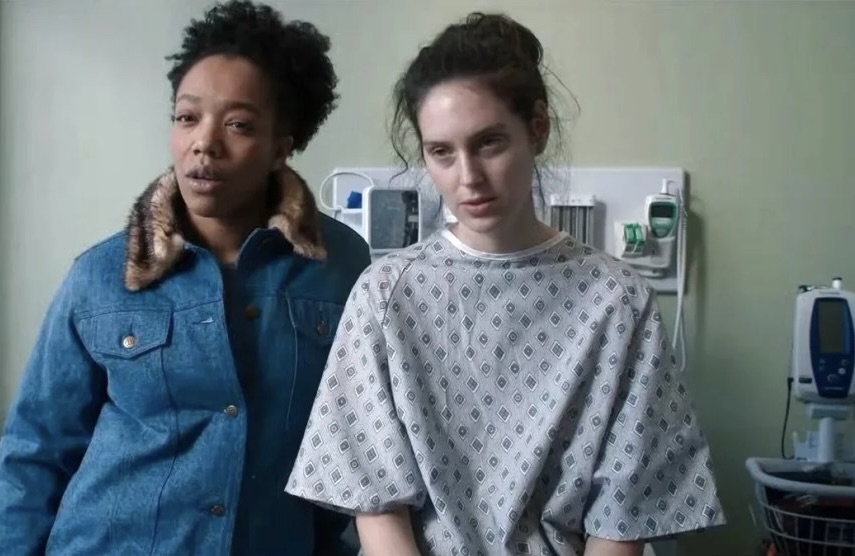
Naomi Ackie, Eva Victor

“SORRY, BABY”  My rating: A- (HBO Max)

103 minutes | MPAA rating: R

Every once in a while you encounter a film so achingly on target that you instinctively realize that it had to be torn from someone’s personal experience.

So it is with “Sorry, Baby,” Eva Victor’s hauntingly beautiful film about the aftermath of a sexual assault.

The words “sexual assault” will be enough to scare off many viewers.  But while Victor’s semi-autobiographical film (she wrote, directed and stars in it) addresses trauma, it’s more about the healing aftermath.

It starts unremarkably enough with our protagonist, Agnes (Victor), being visited by her old college roommate, Lydia (Naomi Ackie).  They’re several years out of school, but while Lydia has moved to the big city and settled down (she’s gay,  not that it’s a big deal) Agnes has hung around their New England college town.  In fact, she’s now a bigwig in the English Department.

These opening scenes radiate the easy familiarity of old friends reconnecting. But soon the talk drifts back to their senior year and an unpleasant incident. In a flashback we view Agnes’ interaction with Decker (Louis Cancelmi), one of her professors.  He seems like a standup guy…until he isn’t.

Victor wisely refrains from showing the assault.  Instead we get a long shot of the teacher’s home, where the two are meeting to discuss her thesis. Agnes goes inside, and the unmoving camera records the home’s facade as the sun dims, night falls, and lights go on inside. Apparently several hours have passed before Agnes stumbles out, walks to her car and drives away in a fog of humiliation and disbelief.

In a balancing act for the ages, Victor seasons this traumatic incident with satiric flashes.  When she meets with school officials to discuss the incident, she’s told that it’s not their problem.  Decker turned in his resignation just before the assault.  This news is delivered by a couple of women administrators whose clumsy efforts at sympathy are undermined by their panicked sense of institutional preservation.

“Sorry, Baby” rises and falls with Victor’s performance.  Her Agnes is tall, gawky and unremarkable (though, weirdly enough, by film’s end I saw her as beautiful).  She’s intellectually solid but emotionally tentative.  She often masks her feelings with oddball comments and an ironic aura.

Not that she doesn’t get some solid help from the other players.  Ackie is the best friend everyone wishes they had.  Lucas Hedges shines as the vaguely nerdy neighbor with whom the post-assault Agnes has a sweetly goofy love affair.  And veteran actor John Carroll Lynch nearly steals the film as a  sandwich shop operator who takes a grieving Agnes (whom he has never met before) under his caring wing.

The world can be cruel.  But simple decency  goes a long way.
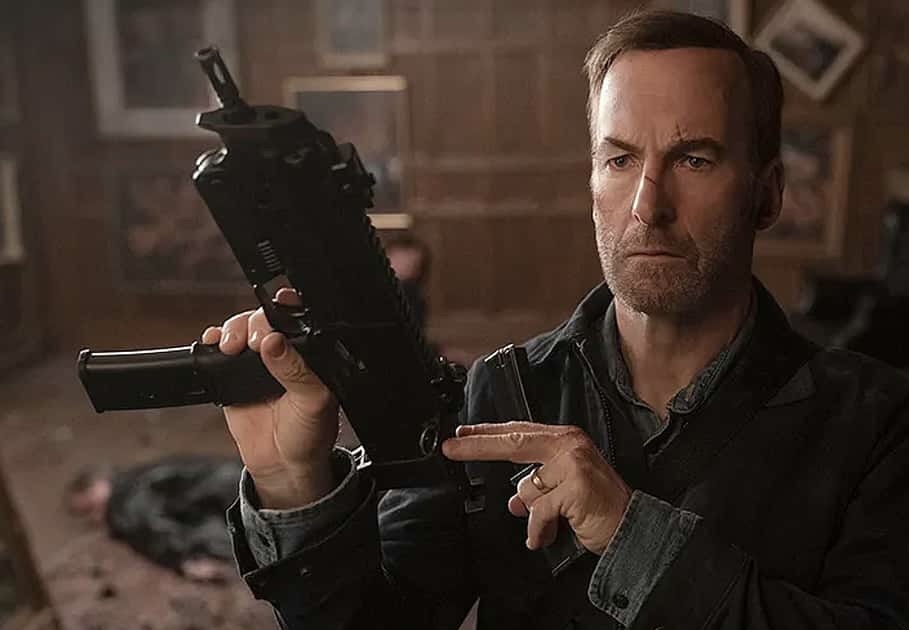
Bob Odenkirk

“NOBODY 2” My rating: C+(Peacock)

89 minutes | MPAA rating: R

“Nobody” (2021) was an unexpected sleeper, a hyperviolent, darkly funny yarn about a nondescript family man (Bob Odenkirk) whose secret job is that of assassin.

Now we’ve got a second installment and it’s pretty much the same thing all over again…minus the sense of discovery that made the first film so enjoyable.

Imagine “National Lampoon’s Vacation” mated with “Pulp Fiction.”  Odenkirk’s Hutch Mansell takes the family (Connie Nielsen is the Missus) to the cheesy amusement park he enjoyed as a boy.  

Except he finds the place now is a front for a drug operation run by a sociopathic grand dame (Sharon Stone) and administered by a corrupt local sheriff (John Ortiz).

Much mayhem ensues.  

Except this time the brew of comedy and over-the-top violence falls to the law of diminishing returns.  (Although I did enjoy the addition of Christopher Lloyd as Hutch’s father, himself a retired black ops type.)
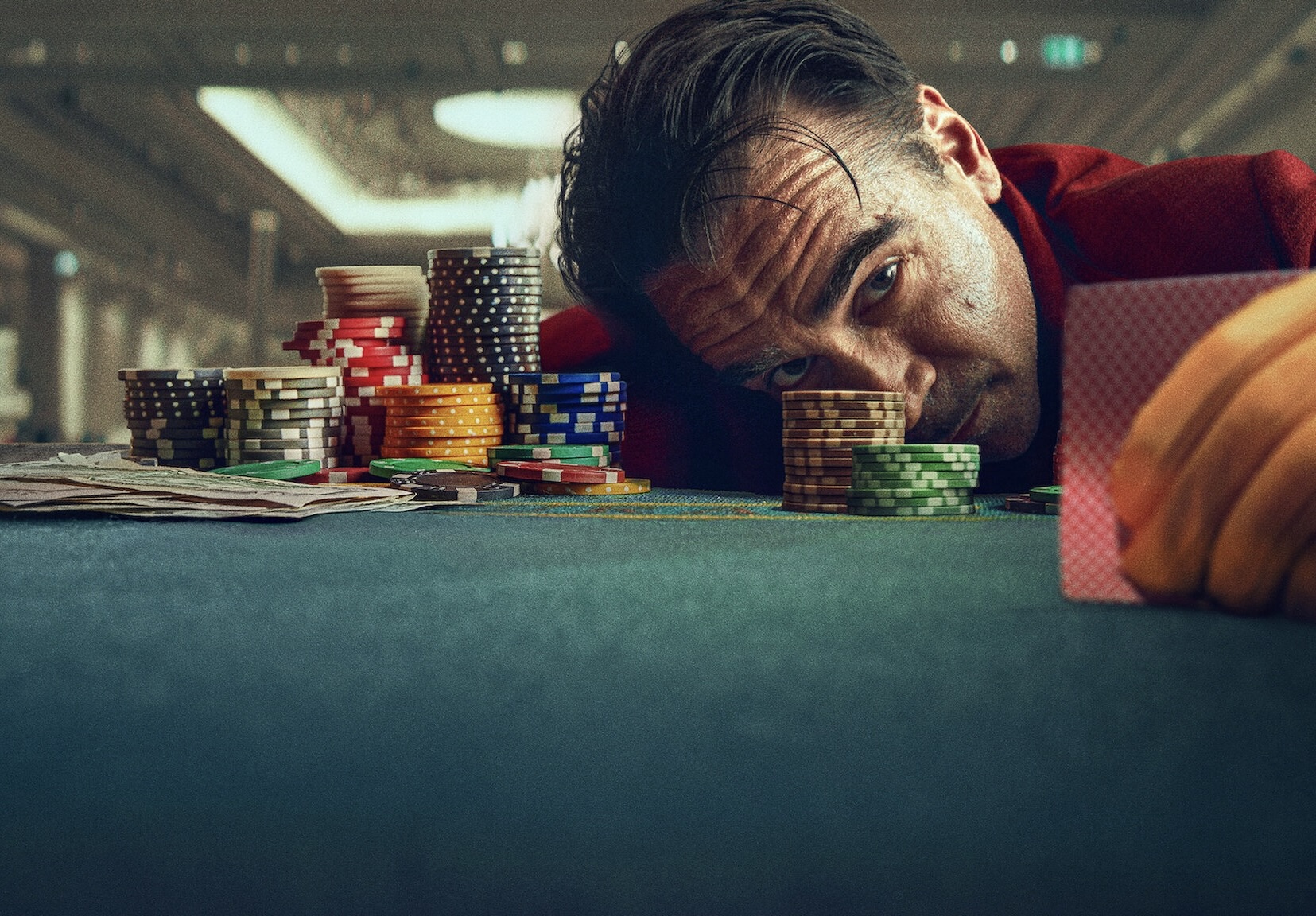
Colin Farrell

“BALLAD OF A SMALL PLAYER” My rating: B (Netflix)

101 minutes | MPAA rating 

“The Banshees of Inisherin.” “Sugar.” “The Penguin.”

Yeah, Colin Farrell has been on a roll. And it continues  (sort of) with “Ballad of a Small Player,” which works a bit too hard to breathe new life into the gambler-at-the-end-of-his-luck yarn.

Farrell is Lord Doyle, a polished gent who floats through the casinos of neon-lit Macau as if he owns the joints. He sophisticated, generous, impeccably dressed.

It’s all a sham.  In truth he’s a common hustler who’s developed an impressive fictional character. Lord Doyle (he’s not a lord and Doyle is not his actual name) is so good at role playing that he has credit at all the tables.

That is, until his losses get so big that they can no longer be ignored. 

Scripted by Rowan Joffe and Lawrence Osborne and directed by Edward Berger (“All Quiet on the Western Front,” “Conclave”), “Ballad…” attempts to make up for a lack of originality (really, it’s just another movie about a desperate gambling addict searching for a big score) with a heightened visual sense and an almost operatic sense of melodrama.

But it’s worth sticking with to watch Farrell navigate Lord Doyle’s existential dilemma. Toss in Tilda Swinton as a comically stuffy investigator hot on his trail and Fala Chen as the casino hostess who provides  a love interest, and you’ve got a good-looking if not terribly deep outing.

| Robert W. Butler

Read Full Post »

Cristin Milioti, Colin Farrell

“THE PENGUIN’  (Max+)

Earlier this year I opined that Colin Farrell might never again be as good as he is in “Sugar,” a mind-bending Netflix series that blends the usual private eye tropes with “The Man Who Fell to Earth” weirdness.

But I hadn’t anticipated the jaw-dropping wonder that is “The Penguin,” a spinoff of the “Batman” franchise featuring Farrell in one of the greatest performances the small screen has ever seen.

Here Farrell  takes his brief appearance as gangster Oswald Cobb (aka The Penguin) in 2022’s “The Batman” and fills it with Shakespearean depths.  

This epic crime drama (it’s a very different show from “The Godfather” but carries much of the same dramatic weight) allows a famous actor to absolutely get lost in a character.

Usually when actors — especially handsome ones — submit to a latex-and-prosthetics transformation there’s a whiff of look-at-me-Mom cheese wafting through the proceedings.

Not here.

If you didn’t know it was Colin Farrell beneath that makeup you’d never guess. Hell, you’d not guess that it was makeup. It’s a metamorphosis so complete that even after watching the entire first season I can’t wrap my brain around it.

But it’s more than paint and putty, more than the avian waddling gait (Oz wears a leg brace, the legacy of a childhood injury).  Farrell’s Penguin is an ugly duckling determined to be a king, a complex character who one moment can be a seemingly caring mentor to a young recruit to crime, and the next can immolate a mother and son.

This Oswald Cobb may be ugly, but he can be as charming as Iago. He’s a Machiavellian marvel, a self-serving plotter and killer, a liar on a  Trumpian scale who in middle age remains a Mama’s boy. Every time you think you’ve got his number, he pulls the rug out.

Here’s the thing…Farrell’s Penguin is only one of two great performances in the series.  The other belongs to Cristin Milioti, who plays Sofia Falcone, his sometimes ally, sometimes nemesis.

The heir to a criminal empire, Sofia was framed for serial murder by her conniving family and spent a decade in a madhouse for the criminally insane. Finally released, she has become an avenging angel — half ruthless killer, half broken child. 

The bulk of the first season of “The Penguin” finds Oz and Sofia jostling for control of Gotham’s drug trade. Both are reprehensible, but also scarily compelling. 

They’re backed by a deep cast of familiar faces, among them Theo Rossi, Clancy Brown, Michael Kelly, Shohreh Aghdashloo and, in a turn that has Tony written all over it, Deirdre O’Connell as Oz’s demanding, dementia-warped mother.

And where is the Batman in all this?  Nowhere.  There’s been absolutely no mention of the Caped Crusader in Season One…whether he exists in this timeline or will show up in later seasons I don’t know.  

But he’s not missed…there’s more than enough to chew on in this bat-free wonder.  At some point the series’ unrelenting darkness may start to wear thiin…but right now I’m nowhere near that point. 

Allison Janney, Rupert Sewell, Keri Russell

“THE DIPLOMAT’  (Netflix)

The new season of “The Diplomat” picks up with the car bomb explosion that ended Season One and never slows down.

For my money this Keri Russell starrer is a political thriller on the level of “The West Wing” (not only were both series directed by Alex Graves, but Alison Janney shows up late in Season Two to blow our minds).

This season finds Ambassador Kate Wyler (Russell) grappling with the aftermath of a London bombing that kills one of her staff.  Meanwhile she ’s trying to decide if a fatal attack on a British naval vessel was actually a black flag operation approved by the British P.M. (Roy Kinnear) looking to shore up his failing numbers with a manufactured national crisis.

“The Diplomat” will keep you guessing with narrative twists and turns (it’s got one of the greatest end-of-season revelations ever), but while the big story arc plays out, there are all sorts of terrific little dramas.

Ambassador Wyler and her sexy/mansplaining husband (Rufus Sewell) continue to navigate their marital difficulties, while Embassy staffer Stuart (Ato Essandoh) hits a stone wall in his affair with CIA hard-ass Eidra (Ali Aha).

And Celia Imrie has a delicious recurring role as a shadowy British mover and shaker who may be the key to the mystery.

Great pacing, scintillating dialogue, dead-on performances, subtle characterizations and a tongue-in-cheek approach that manages to find humor even in the grimmest circumstances…they all come together for a hugely-satisfying viewing experience.

| Robert W. Butler

Read Full Post »

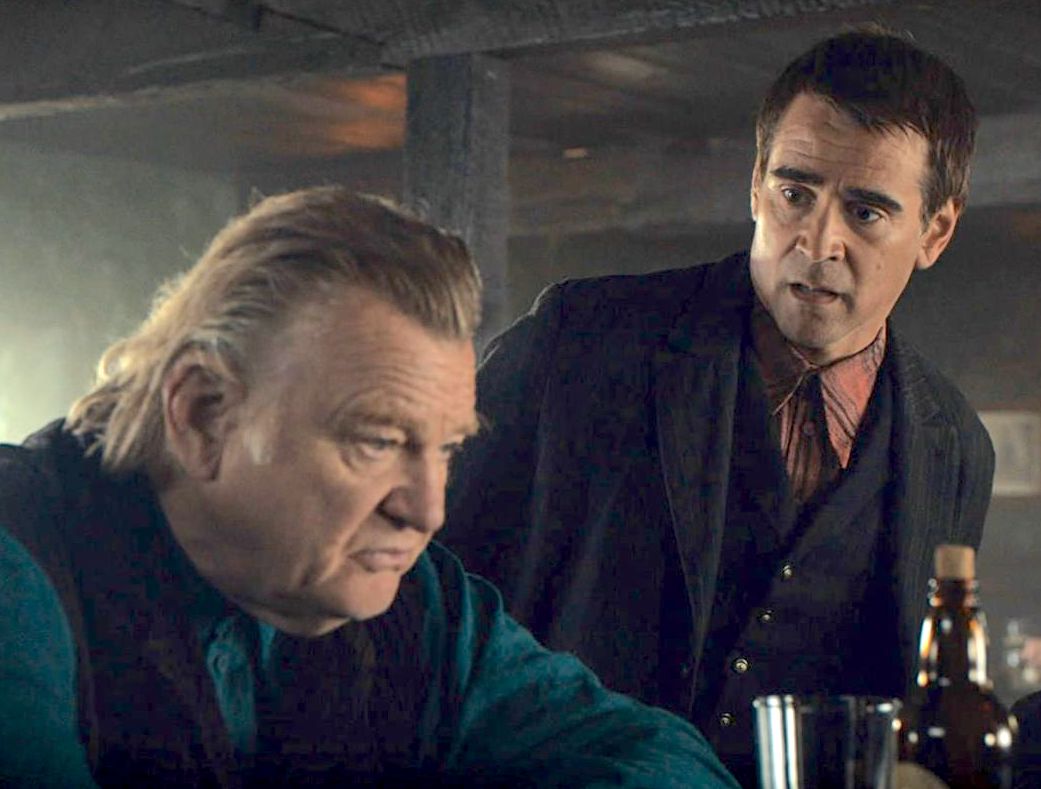
Brendan Gleeson, Colin Farrell

“THE BANSHEES OF INISHERIN” My rating: B (In theaters)

109 minutes | MPAA rating: R

Audiences are going to love Martin McDonagh’s “The Banshees of Inisherin”  — right up to the point where they start to hate it.

McDonagh is not the sort of filmmaker to chuck his audience under the chin and send us off with a pat on the head.  His protagonists  (like those played by Frances McDormand and Sam Rockwell in “Three Billboards Outside Ebbing, Missouri”) are often brittle/bitter or comically hateful, and he relishes nudging us in one direction only to see us ricochet off unforeseen developments.

The impeccably-acted “Banshees…” pushes that alienation to its utmost.

The film starts out feeling almost like a sequel to John Ford’s “The Quiet Man.”  This is a 1920s Ireland of horse-drawn carts and thatched roofs, a scape of land and sea so beautifully captured in Ben Davis’ cinematography as to exude postcard perfection.

There’s a plethora of Irish “types”: the chatty pub keeper, the omen-spouting old lady who looks like Death in “The Seventh Seal,” the small-town copper who sheathes his brutality in brisk protocol, the village idiot.

For its first hour or so, “Banshees…” plays like a melancholy comedy, a sort of Gaelic Chekhov punctuated by hilarious exchanges (not that the participants think of themselves as hilarious…that’s for the us to pick up).

And then after that alluring beginning the film becomes incrementally more dark and alarming until it finds itself in tragic mode.

Padraic (Colin Farrell) and Colm (Brendan Gleeson) are Mutt-and-Jeff best buds.  Technically they’re  farmers, but they don’t spend a lot of time working.  Most afternoons they can be found downing pints in the local pub.

Padraic — a childlike fellow followed everywhere by his miniature donkey — is mildly alarmed when one day Colm refuses to answer his door.  He’s in there, all right, smoking a cig in front of the fire. But he’s refusing to acknowledge his best friend.

Colm is immune to Padraic’s` increasingly desperate attempts to re-establish their normal routine.  Finally Colm reveals that he’s been depressed for ages, and fears that his attachment to Padraic is preventing him from achieving his life’s work — to write a tune for his fiddle that will outlive him.

It’s not that he hates Padraic…it’s just that the guy is insufferably dull, and that dullness is infectious.

A key to McDonagh’s screenplay is the way it contrasts the beauty of Inisherin Island against the smothering repetition of its social life. 

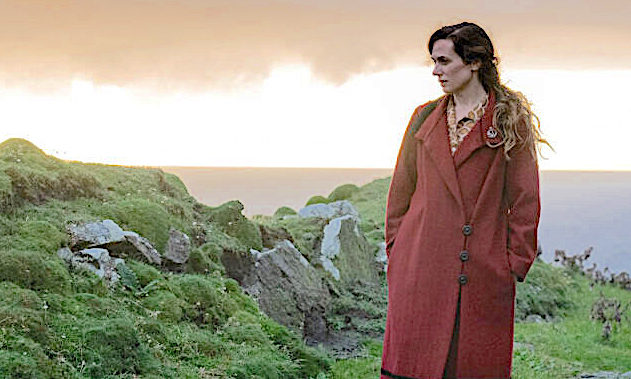
It’s not just Colm who’s going stir crazy here.  Padraic’s spinster sister  Siobhan (Kerry Condon) — also his cook and housekeeper — perplexes her proudly anti-intellectual neighbors with a passion for (gasp!) reading and dreams of moving to the mainland.

Never mind that the sounds of Ireland’s “troubles” — explosions and gunshots — are often can be heard from across the water.  Even civil war is better than wasting away in Inisherin.

And then there’s Dominic (Barry Keoghan), the oft-abused son of the local cop and regarded by most folks as an “idjit.” Well, Domiic certainly lacks even the most basic social skills; he might even be on the spectrum. But he’s far from stupid.  Listen to his vocabulary…he may just be the brightest bulb in this pack.


Kerry Condon

Despite the entreaties of his fellow islanders and the local priest to return to the status quo (the film contains possibly the funniest confessional scene in movies), Colm only digs in his heels. In fact, he threatens to cut off one of his fingers for every time Padraic approaches him.

Before it’s all over Padraic will come to dread the thud of severed digits being hurled at his door.

Yeah, dark.

It’s at this point that “The Banshees of Inisherin” (that’s also the title of the fiddle tune Colm is writing) dives so far into the black that a good chunk of the audience will be left stewing in puzzlement (if not outright disgust).

Clearly McDonogh’s sentiments align with Colm’s, whose farmhouse — packed with folk art objects —suggests a sensitive spirit trapped in a world of soul-killing banality that no amount of pretty scenery can relieve.

Farrell’s Paderaic, on the other hand, is an adolescent in a man’s body, friendly and open but apparently incapable of self-reflection. And like a child, he can take only so much hurt and rejection before lashing out,

“Banshees…” is ultimately a scathing takedown of the cliched quaintness of traditional Irish life, where creativity is smothered and self-mutilation becomes a substitute for  professional mental health care.

The big question is how many viewers will be able/willing to ride its glum message to the end.

| Robert W. Butler

Read Full Post »

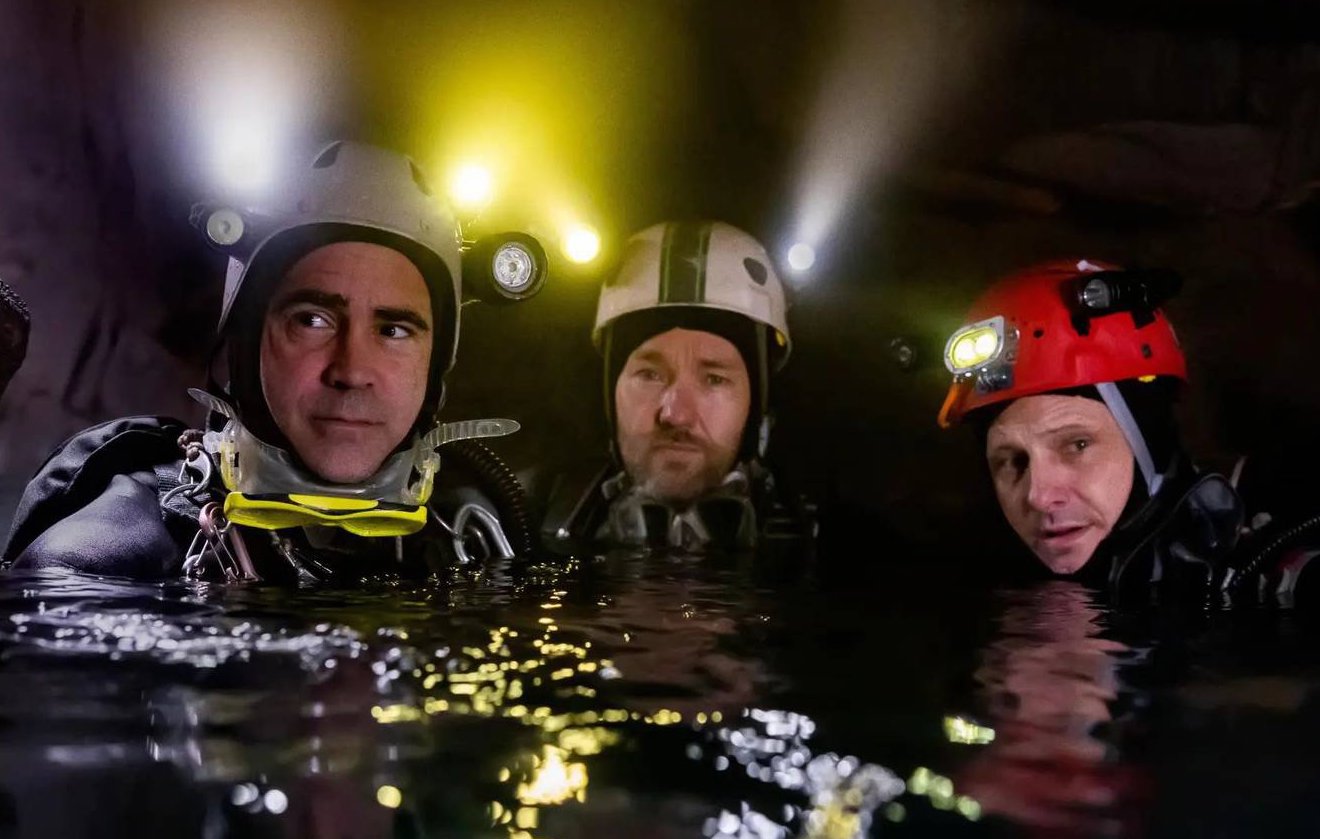
Colin Farrell, Joel Edgerton, Viggo Mortensen

“THIRTEEN LIVES” My rating: A (Amazon Prime)

147 minutes | MPAA rating: PG-13

“Thirteen Lives” may be the most engrossing, satisfying film of Ron Howard’s career.

It’s a virtual masterclass in dramatic construction and emotional massaging; moreover it is one of the few films I can think of that contains not one misstep, one wrong performance, one phony moment.

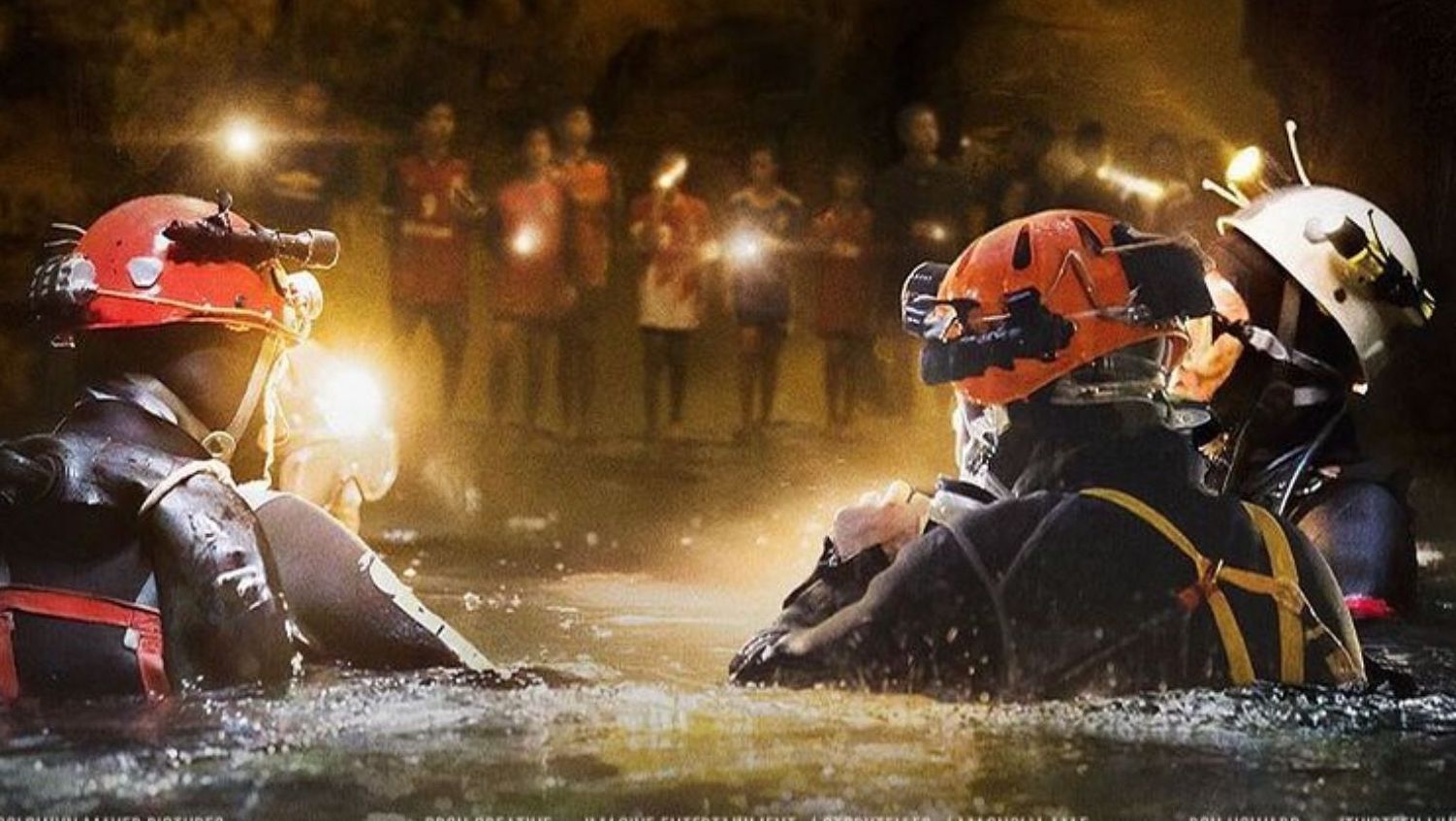
Howard’s recreation of the 2018 rescue of 12 Thai soccer players and their coach from a flooded cave (the screenplay is by William Nicholson and Don MacPherson) manages simultaneously to be a deeply emotional experience and a clear-eyed recreation of actual events. 

 It is modest to a fault, tempering overwhelmingly dramatic material through the lens of a measured docudrama style. Clearly, Howard’s recent forays into documentaries (“The Beatles: Eight Days a Week,” “Pavarotti,” “Rebuilding Paradise,” “We Feed People”) proved invaluable in finding just the right approach for this massive effort.

The payoff is nothing short of spectacular.

In many regards Howard’s 1995’s “Apollo 13” provided the model for this sort of fact-based historic recreation; “Thirteen Lives” is even more successful in capturing the tension between individual human drama and big, overwhelming events.

Though the film features Viggo Mortensen, Colin Farrell and Joel Edgerton as cave rescue specialists from the UK, there’s no actorly showboating, no obvious star turns.  Everyone seems to be foregoing their moment in the spotlight in favor of a group dynamic.

In this the performances reflect Howard’s overall message that while there certainly were heroes at work (including two Thai Navy Seals who died in the rescue efforts), this is  a tale of literally thousands of individuals who came together to accomplish the impossible.

Howard has never been a director who flexed his stylistic muscles; his approach here is straightforward, even impersonal. This allows us to concentrate on the story itself, which has been presented with marvelous economy and insight.

In the film’s opening minutes we meet the kids and their coach on the practice field.  They decide to treat themselves to a visit to the nearby Tham Luang, a spectacular cave nearly four miles long.  We see them park their bikes at the entrance and eagerly race into the darkness.

We won’t see them again for another hour, or 10 days in real time.  They go missing, their bikes are discovered, and immediately the authorities launch a rescue effort.

Tham Luang completely floods during the monsoon season, and the boys have been unlucky enough to enter the cavern just as an early storm is pouring millions of tons of water into the subterranean system.  It is presumed that they have been trapped by rising waters and forced to retreat ever deeper into the darkness.

While Thai military divers search for them in a labyrinth of submerged stalactites and passages so narrow they must remove their oxygen tanks, an army of volunteers descend on the mountain above the cave with shovels, pumps, pipes and chutes fashioned from split bamboo in an effort to divert water off the hillside and away from the cave.

on Howard

Local officials meet with local farmers to explain the process.  Will their crops be ruined when their fields flood? a woman asks.  Yes they will.  The farmers exchange glances and nod. Those 13 lives come first.

The cave rescue specialists played by Farrell and Mortensen arrive on the scene virtually without portfolio and by virtue of their independent status (they’re not part of the Thai military or government) have the freedom to take extraordinary risks. 

But discovering the boys alive doesn’t end the crisis.  The rain that trapped them was only a preview; within two weeks the full-fledged monsoon will fill every air pocket in the cave with water for several months.  They cannot wait out the weather; they must find a way out.

Several experienced divers have almost panicked and drowned in the treacherous waters.  There is virtually no safe way to guide the boys through several kilometers of cloudy runoff; none of the children have used scuba equipment and several cannot swim.  

That’s where Edgerton’s character comes in.  In addition to being a cave rescue diver, he’s an anesthesiologist; maybe they can suit the children up in scuba gear, knock them out with drugs and pull them to safety? 

“They’re packages,” one of the rescuers explains. “We’re just delivery guys.”

The second hour of “Thirteen Lives” is a step-by-step look at how the rescuers pulled it off. This is an exquisitely timed, bite-your-nails adventure that will have viewers shaking their heads in disbelief.

By film’s end audiences will feel nearly as battered and worn out as the kids and their saviors.  But it’s a good ache.

| Robert W. Butler

Read Full Post »

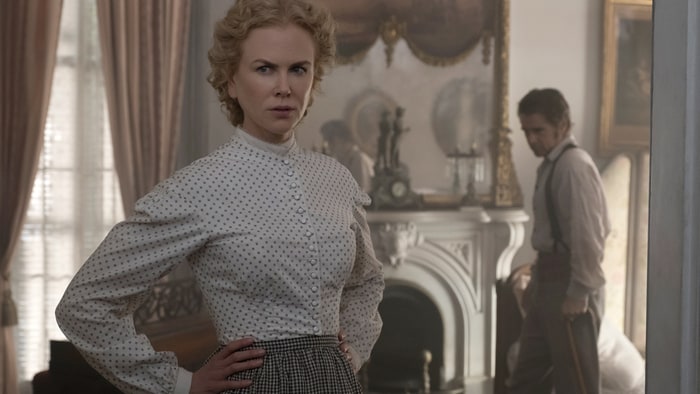
Nicole Kidman, Colin Farreell

“THE BEGUILED” My rating: C+

93 minutes | MPAA rating: R

Riding a tsunami of high expectations (she’s only the second woman to be named best director at Cannes), Sofia Coppola’s “The Beguiled” is poised to become the Second Coming of feminist cinema.

Except that it isn’t. Not even close.

It’s not a bad movie. “The Beguiled” (based on the same novel as the 1971 Don Siegel/Clint Eastwood version) is fiercely atmospheric and slyly subversive. It’s been well acted and the physical production is impressive.

But it’s emotionally remote and something of a bore.  Don Siegel may have been a pulp filmmaker, but his melodramatic instincts were fun, at least.

Coppola’s screenplay offers some new dialogue but the plot arc is mostly faithful to the earlier movie and the novel.

During the Civil War, a handful of teachers and students at a Virginia boarding school for women discover a wounded Union soldier, Corporal McBurney (Colin Farrell). They sew up his mangled leg, intending to turn him over to the rebel home guard when he’s healed.

But the presence of a potent male sets off yearnings among the residents. Among them is the outwardly formidable headmistress (Nicole Kidman), a lonely teacher (Kirsten Dunst), a spoiled teen on the cusp of sexuality (Elle Fanning), and even a small girl (Oona Laurence) looking for a playmate.

The canny bluebelly works the situation, becoming to each woman or girl just what she requires in this testosterone-starved environment.

Those looking for a fresh feminist twist to the material will be disappointed.  There’s less about women’s theory here than about the dark corners of the human psyche: sexual fear and repression, jealousy, revenge, exploitation. (more…)

Read Full Post »

Eddie Redmayne

Eddie Redmayne

“FANTASTIC BEASTS AND WHERE TO FIND THEM”  My rating: C

133 minutes | MPAA rating: PG-13

There’s some magic in “Fantastic Beasts and Where to Find Them,” but it’s all courtesy of the special effects and design departments.

Dramatically speaking, this attempt to expand the “Harry Potter” franchise is stillborn. Not even the usually screen-dominating Eddie Redmayne can give it a compelling head or heart.

Based on an original screenplay by “Potter” creator J.K. Rowling (who also produced this film),  “Fantastic Beasts…” is a prequel unfolding in the 1920s. This setting gives the set and costume designers plenty to play with, and their vision of Jazz Age New York City — and the parallel wizarding world that coexists with it — is rich and evocative.

Would that the same could be said for the story and characters.

Redmayne plays Newt Scamander, a British wizard who comes to the Big Apple with a small suitcase filled with fantastic creatures. Eventually we learn that he’s a sort of Marlon Perkins on a mission to preserve magical species on the verge of extinction. Much of the film consists of chase scenes in which Newt tries to recapture escapees from his luggage.

Colin Farrell

Colin Farrell

The first one, involving a platypus-like creature that gobbles up jewelry and precious metals, is mildly amusing. Things go downhill from there.

Newt finds that America’s wizarding world is in crisis. The Magical Congress of the U.S.A., the governing institution, has been fighting a losing battle to keep wizardry a secret from the Muggles (only the Yanks call them No-Mags…as in “no magic”). But their cover is being blown by the depredations of some sort of malevolent magical creature that is leveling entire blocks of Manhattan.

Newt’s guide through North American wizardry is Porpetina Goldstein (Katherine Waterston), a sort of bob-coiffed lady detective who has taken it upon herself to police these mysterious happenings.

And he unwittingly gets a sidekick, a roly poly and somewhat bumbling human named Jacob Kowalski, played by Dan Fogler, who immediately begins stealing scenes from his Oscar-winning costar. In fact Fogler’s disbelieving No-Mag is the single best thing in the film, and his romance with Porpentina’s psychic sister  Queenie (Alison Sudol) provides the only charm and genuine emotion.

Something’s amiss when the second bananas eclipse the leads.

(more…)

Read Full Post »

Tom Hanks as Walt Disney, Emma Thompson as P.L. Travers

Tom Hanks as Walt Disney, Emma Thompson as P.L. Travers

“SAVING MR. BANKS” My rating: B+ (Opening wide on Dec. 20)

125 minutes | MPAA rating: PG-13

“Saving Mr. Banks” — a serio-comic look at Walt Disney’s tireless courtship of “Mary Poppins” author C. L. Travers — can be viewed either as a charming explanation of how one of the best family films of all time came to be made, or as an infuriating example of corporate self aggrandizement.

While cognizant of the latter, I’ll go with the former.

The latest  from director John Lee Hancock (“The Rookie,” “The Blind Side”) is set during Travers’ two-week visit to L.A.  in the early 1960s, arranged so that Disney — who more than two decades before had sworn to his wife and daughters that he would bring their favorite heroine of children’s literature to the screen — could coax, canjole and charm the dubious author into signing over the movie rights to her books.

Disney was nothing if not determined. Without authorization he had been working for years on the a screenplay and his in-house tunesmiths — brothers Robert and Richard Sherman —  already had written the songs for what would be one of the greatest movie soundtracks of all time.

(more…)

Read Full Post »