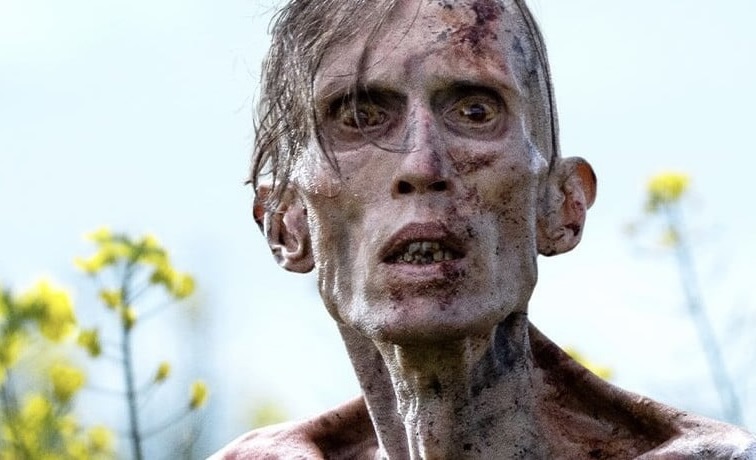
“28 YEARS LATER” My rating: B (Netflix)
115 minutes |MPAA rating: R
“28 Years Later” has plenty of gruesome action, a good chunk of suspense and even, in its final moments, a crushing emotional component.
And zombies, of course.
What it doesn’t have is a sense of completion. This continuation of the series, directed by “28…” veteran Danny Boyle, ends with an abrupt cliffhanger that leaves characters and plot points dangling. Obviously there will be a Part II. In the meantime, the film feels incomplete.
Fans of post-apocalyptic nihilism will no doubt be transported; your hard-core zombie freak will find plenty of new revelations to discuss with the like-minded; and action junkies should get satisfaction. But let’s be honest…this is just another zombie movie. Well made and with a deep pedigree, perhaps, but it’s going to appeal mostly to the already converted.
Basically Alex Garland’s screenplay delivers two stories and a snippet of a third that sets up the next film.
After a brief (and kinda pointless) prologue set back at the beginning of the “rage virus” infestation, Part One picks up 28 years later on an island off the coast of England. Here human survivors have established a zombie-free commune, a just-the-basics but nurturing environment where 14-year-old Spike (Alfie Williams) has grown up in.
Not that everything is copacetic in this island refuge. Spike’s mother Isla (Jodie Comer) suffers from some debilitating condition, and his father Jamie (Aaron Taylor-Johnson) has sought solace in the arms of other women.
The bulk of this segment finds Jamie leading Spike off the island for a sort of coming-of-age initiation on the mainland. Under his Dad’s firm but encouraging tutelage Spike is expected to use his bow and arrow to dispatch a zombie, thus cementing his manhood.
Their trek reveals to us the changes that have undergone Merrie Olde England after all three decades of being quarantined from the rest of civilization.
On the neat side there are the huge herds of deer that race across the landscape like stampeding bison.
On the not-so-neat side are the zombies, which have evolved into two species. Easiest to deal with are the obese, sluggish, worm-eating “slow-and-lows.” More problematical are the more humanoid zombies — thin, naked wraiths that move with remarkable speed. Worst of all are the zombie leaders, the “alphas,” who look like Jason Momoma after a long night of binge drinking and seem capable of at least minimal strategizing.

Alfie Williams, Jodie Comer, Ralph Fiennes
So that’s the movie’s first half. Part Two offers a different sort of quest.
Desperate to find a cure for his mother’s condition, young Spike hatches an audacious and dangerous plan. Leaving his father behind, he will sneak Isla to the mainland to find the physician reputed to be living there. Surely there is a cure for what ails her.
Along the way they team up briefly with a young Swedish soldier (Edwin Ryding) marooned while enforcing the quarantine. They witness a female zombie giving birth (apparently the walking dead have active sex lives) and finally meet the fabled medico (a delightfully scenery-chewing Ralph Fiennes), who still retains his diagnostic skills after having spent 30 years building a massive pyramid of human skulls.
What’s remarkable about all this is that young Williams and Comer — despite all the mayhem surrounding them — are able to create a genuinely touching mother/child relationship. Which provides the film with a quietly heartbreaking pivotal moment.
Production values are strong, offering a thoroughly convincing view of what England might look like once people are gone.
And the action scenes benefit from fiercely kinetic editing that allows us to see the zombies and splashes of gore mostly in staccato flashes. It’s a lesson learned from “Jaws” — what you can’t clearly see is far more unsettling than what you can.
| Robert W. Butler




 Butler's Cinema Scene