Feeds:
Posts
Comments

Angela Nikolau, Ivan Beerkus

“SKYWALKERS: A LOVE STORY” My rating: B (Netflix)

100 minutes | MPAA rating: R

If the usual horror movies no longer creep you out, spend some time with the young protagonists of “Skywalkers.” This doc will leave you sweating, swaying and palpitating. 

Angela Nikolau and Ivan Beerkus are Russian twenty somethings who practice extreme climbing, also known as rooftopping.  They get their kicks — and earn a living — by sneaking (or breaking) into high-rise buildings, climbing to the very top floor and then shimmying up the narrow spires that point to the heavens.

The climb is only part of it.  Once on top of the world Angela and Ivan take photos and videos that they sell worldwide through the Internet.  

Often Ivan will lift Angela over his head in a death-defying pas de deus. She will change into fancy costumes and then pose on the precipice like a runway model with a death wish. They employ drones which often fly around the summit, inducing in viewers a massive case of vertigo.

It’s beautiful.

It’s terrifying.

Jeff Zimbalist’s documentary centers on the couple’s attempt to climb Kuala Lumpur’s Merdeka, at 118 stories the second tallest structure in the world. 

The local authorities have already nabbed other climbers and sentenced them to long prison sentences. Angela and Ivan try to reduce the risks by doing all their planning in nearby Thailand and only going to Kuala Lumpur on the eve of their climb, scheduled to coincide with a big World Cup game which, hopefully, will keep construction workers and security guards looking at their TVs and not for intruders.

(Narratively, the film bears a close resemblance to “Man on Wire,” the Oscar-winning documentary about Philippe Petit’s 1974 tightrope walk between the World Trade Center towers.)

“Skywalkers” calls itself a love story, and it is that, too.  Angela, who has the lithe figure and acrobatic instincts of a ballerina, comes from a broken family and discovers with Ivan not only personal romance but also an sense of accomplishment.  They may be viewed as a troublesome Bonnie & Clyde by the authorities, but they see themselves as practitioners of a new art form.

The most riveting moments are provided by the footage the two climbers get from the Go-Pro cameras they carry with them. We feel like we’re on the climb with them.  And the views are spectacular (they’re usually so far up there are clouds below them).

On the ground…well, I wonder if  what we see there is genuine documentary footage or after-the-fact re-enactments.  I say this because the interactions between the two lovers seem so carefully staged, the camera angles and editing so sophisticated, that I have a hard time accepting that this was fly-on-the-wall cinema verite footage. It looks too polished.

But there’s no doubt about the authenticity of the climbs themselves.  They’re a visual assault that’ll leave you gasping for breath.

Jude Law, Alicia Vikander

“FIREBRAND” My rating: B (On demand)

221 minutes | MPAA rating: R

The makers of “Firebrand” want very much to  examine  a famous bit of Tudor history through a feminist perspective.

It’s a little ironic, then, that the overwhelming personality on display is that of good old Henry VIII, played so memorably by Jude Law that I wouldn’t be surprised to see him get an Oscar nod.

Directed by Karim Ainouz and scripted by Henrietta Ashworth, Jessica Ashworth and Elizabeth Fremantle, “Firebrand” centers on Katherine Parr, the last of Henry’s six wives.

Queen Katherine (a makeup-free Alicia Vikander) is, initially at least, so trusted by the King that he leaves her in charge of the country while he’s off battling Frenchmen.  

But Katherine thinks for herself.  She is particularly troubled by Henry’s Church of England which, after a few years of relatively liberalism (commissioning an English translation of  the Bible so that the common citizen could read the Gospels). has now retreated into control-freak mode just as smothering as the now-outlawed Catholicism.

Early in the film Katherine sneaks off to visit her childhood friend Anne Askew (Erin Doherty), an intellectual, preacher and fugitive for her incendiary opposition to the English Church’s iron-fisted version of Protestantism.  

That meeting will come back to haunt her when Katherine is accused of betraying her royal hubby.  And we all know how Henry dealt with wives who didn’t please.

For a while it appears that “Firebrand” is going to get lost in the weeds of period politics and cultural minutiae.  All that changes when Henry returns from France and Law takes over the proceedings.

Sexy Jude Law as bloated, bloviating Henry VIII?  Doesn’t sound like that should work.

But with a prosthetic stomach and a bristly beard Law makes a seemingly effortless transformation.  His Henry is suffering from a gangrenous leg that eventually will kill him, but not even pain and the prospect of death can curb his emotional sadism and casual brutality. 

Moments of human frailty and emotional neediness are eclipsed by episodes of anger and physical violence.  The guy may be king, but he’s a loathsome mess. And the most compelling thing in the film.

In its final stages “Firebrand” blows off actual history for a “what if” approach that will induce winces from dedicated Anglophiles but proves satisfying from a dramatic viewpoint. Hey, it’s only a movie.

| Robert W. Butler
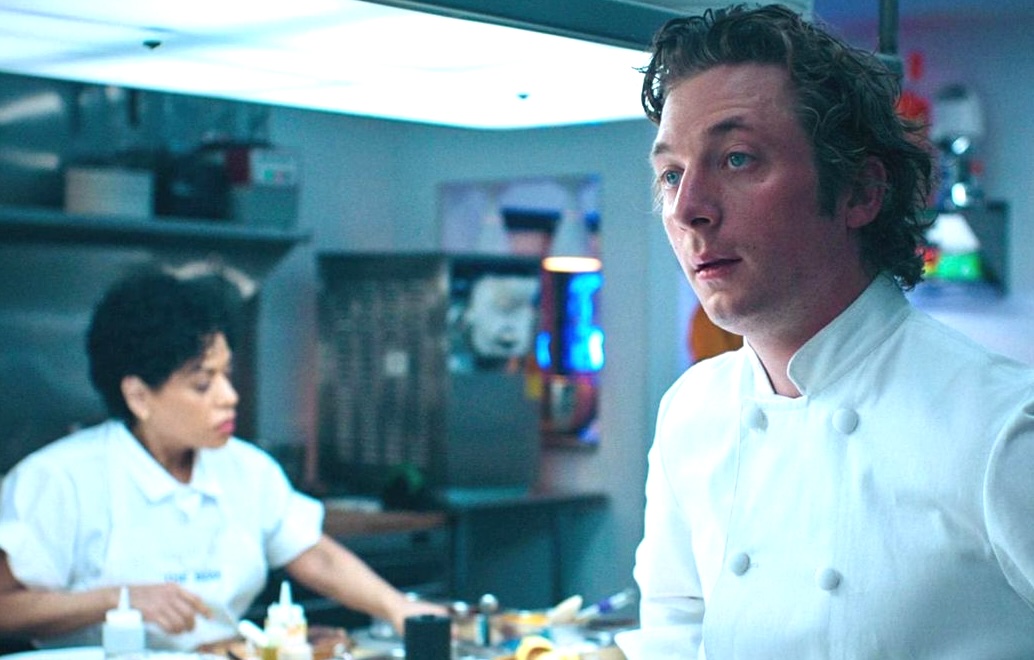
“THE BEAR – SEASON 3” (Hulu)

Liza Colon-Zayas, Jeremy Allen White

Some of the early reviews of the latest season of “The Bear” were so pissy I delayed watching the new episodes lest I find myself in a blue funk of disappointment.

Happy to say that the reports of the show’s demise were premature. 

Not just premature, but spectacularly off base.

Okay, I get that viewers who demand heavy plotting and forward momentum are going to be a bit disappointed.  Not all that much happens in a narrative sense this season.

The relationship of sad-eyed Carmy (Jeremy Allen White) with pediatrician Claire (Molly Gordon), whom he more or less dumped last time out?  Barely addressed.

The radical  transformation of the family’s seedy sandwich shop into a high-end restaurant?  Pretty much completed…mostly now just a case of settling in.

The maturation of the sad sack screwup Ritchie (Evan Moss-Bachrach)  into a motivated, hard-working maitre d?  Been there, done that.

There are crises, of course.  Carmy is so hellbent on making his restaurant stand out that he insists on changing the menu every freaking day, pretty much guaranteeing kitchen chaos and a level of employee discontent.

(By the way…Carmy is so disturbingly moody this time around that he practically becomes a ghost in the background.)

The joint is yet to get an official review from the critics, and everyone is on pins and needles waiting for that make-or-break moment.

Uncle Jimmy (Oliver Platt), who financed the new operation, is getting nervous about ever getting any of his money back what with Carmy’s spendthrift quest for excellence.

And No. 2 chef Sydney (Aye Edebiri) has drawn the attention of another restauranteur who wants to make her his partner…with a huge raise, pension and medical benefits.  Will she strike out on her own or stick with Carmy and his manic-but-mostly-depressive mood swings?

In lieu of sweeping drama (or comedy…the Emmy people insist on categorizing “The Bear” as a comedy even though it exhibits a dramatic soul unequaled by virtually any other series) the scripts by creator Christopher Storer delve deep into the personalities of the characters…characters about whom most of us care more than we do about our own neighbors. 

And entire episode is devoted to the backstory of the  hot-tempered Tina (Liza Colon-Zayas) detailing how her desperate search for a job — any job — found her being taken under the wing of Carmy’s brother Michael (Jon Bernthal).

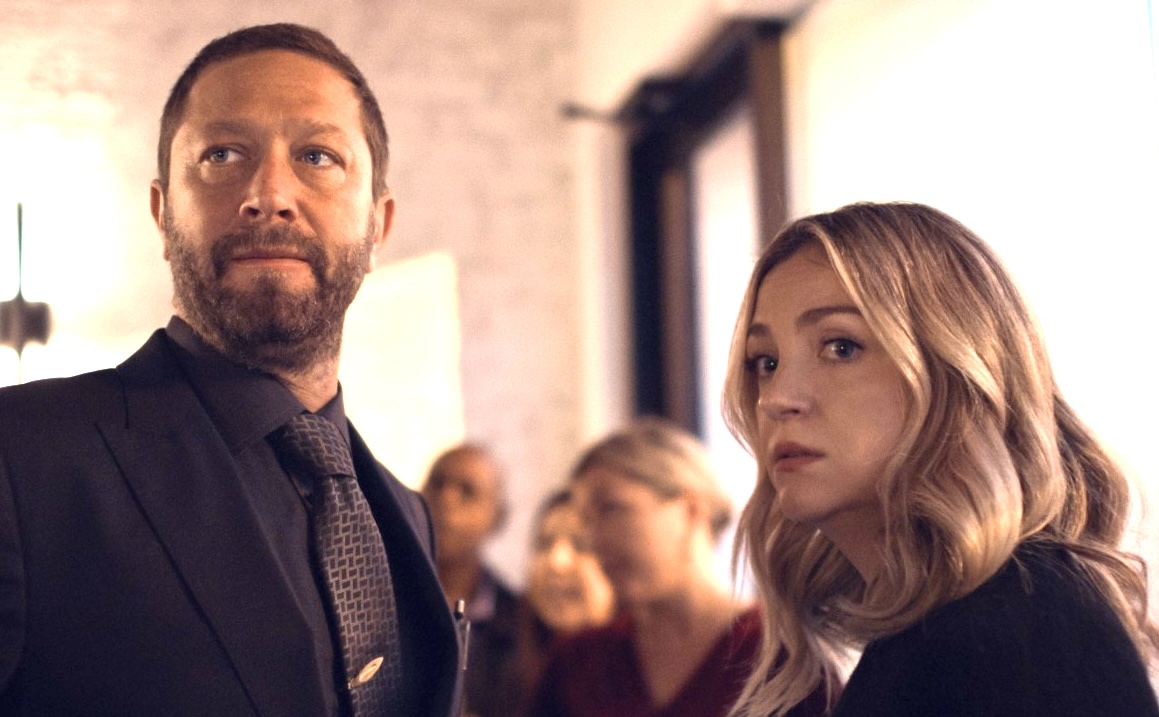
Evan Moss-Bachrach, Abby Elliott

Another episode follows sister Sugar (Abby Elliott) into labor.  Shot almost entirely in close-ups in a hospital delivery room, the segment is once again rocketed into the stratosphere by the hovering presence of her and Carmy’s borderline nuts mother (Jamie Lee Curtis).

Even the oafish Fak brothers (Ricky Staffieri, Matty Matheson) are revealed to have soulful depths beneath their street-corner slob exteriors.

But throughout the season we are treated to a dozen or so conversations between characters that usually start out as casual encounters but  end up leaving us immersed in the depths of their personalities.  Think you know everything about these folks? There’s plenty yet to discover.

And the final episode is nothing short of a heartfelt valentine to the men and women of the restaurant business.  

One of Chicago’s most acclaimed chefs (she’s played by the brilliant Olivia Colman…we met her briefly last season) is calling it quits and invites all of her fellow chefs from across the city to her restaurant on closing night.

The segment is populated with real Chicago chefs.  We eavesdrop on conversations and reminiscences. Funny stories are told.  A long-simmering enmity reaches a near-flash point.

It’s often amusing, but also achingly bittersweet.  The restaurant business often gets a bad rap — horrible hours, fierce pressure, addictions and anger — but by the time this season wraps up you’re left with a feeling of deep respect for the people who have made it their life’s work to feed the rest of us.

All together now: “Yes, Chef!!!!!”

| Robert W. Butler

“OUTSTANDING: A COMEDY REVOLUTION” My rating: B (Netflix)

100 minutes | No MPAA rating

Part history lesson, part celebration of out culture, Page Hurwitz’s “Outstanding” digs into the world of gay standup comics.

Remarkably, Hurwitz has so much material to work with that there’s merely a passing reference to Ellen DeGeneres, the once and future queen of gay comics.

There are the usual clips of the comics doing their thing on stage and on the TV screen.  Among the notable talking heads who help put it all in perspective are Bruce Vilanch, Rosie O’Donnell, Guy Barnum, Lily Tomlin and Margaret Cho.

Big chunks of the doc are devoted to iconic gay performers like Robin Tyler (quite possibly the first out comedienne of the modern era) and style icon and angry observer Sandra Bernhard, who added some spice to the boring Reagan years.

And near the end the film looks into the rise of the new lesbian comics like Fortune Feimster and  Hannah Gadsby.

If I have a criticism of the film it’s that it overwhelming deals with lesbian comics over gay men…although much attention is paid to Eddie Izzard, whose embrace of trans ethos puts him in a class by himself.

Some of the artists featured here are worthy of stand-alone documentary treatment.  But the omnibus approach taken by Hurwitz provides an effective look at the variety and breadth of gay comedy…and whets the viewer’s appetite for more.

Eddie Murphy

“BEVERLY HILLS COP: AXEL F” My rating: C (Netflix)

118 minutes | MPAA rating: R

Early on in “Beverly Hills Cop: Axel F” Eddie Murphy’s cop Axel Foley is admonished:

“Watch your ass out there. You’re not 22 any more.”

Wise advise. The folks who made this movie should have heeded it.

This effort from director Mark Molloy and a small army of writers (Danilo Bach, Daniel Petrie Jr., Will Beall) tries to recapture the magic of the original 1984 “Beverly Hills Cop,” a magic that has been slipping away a bit more with every sequel.

The filmmakers bring back old cast members (Judge Reinholt, John Ashton, Bronson Pinchot) and toss in a couple of newbies (Joseph Gordon Levitt, Kevin Bacon and Taylour Paige, Murphy’s real-life daughter here playing Axel’s estranged offspring).

But the real problem is that they expect the 63-year-old Murphy to portray the same insouciant, fast-talking, street hustling Axel Foley of 40 years ago. That Axel was a sassy kid. The new Axel is closer to grumpy old man.

The plot finds our man leaving Detroit for L.A. when his long-alienated daughter, now a criminal attorney, is threatened by a dirty cop running the city’s anti-drug unit. There’s no mystery here; we know from square one that Kevin Bacon’s character is badly bent and it’s just a matter of time and several chase scenes before Axel wraps everything up.

There is some modest pleasure in seeing Murphy share the screen with his child; Paige is adequate in the angry daughter role, but there’s nothing here to write home about.

Mostly this new Axel adventure reminds us of just how good Murphy was a couple of years back in the rollicking and oddly heartfelt “Dolemite Is My Name.” More of that, please.

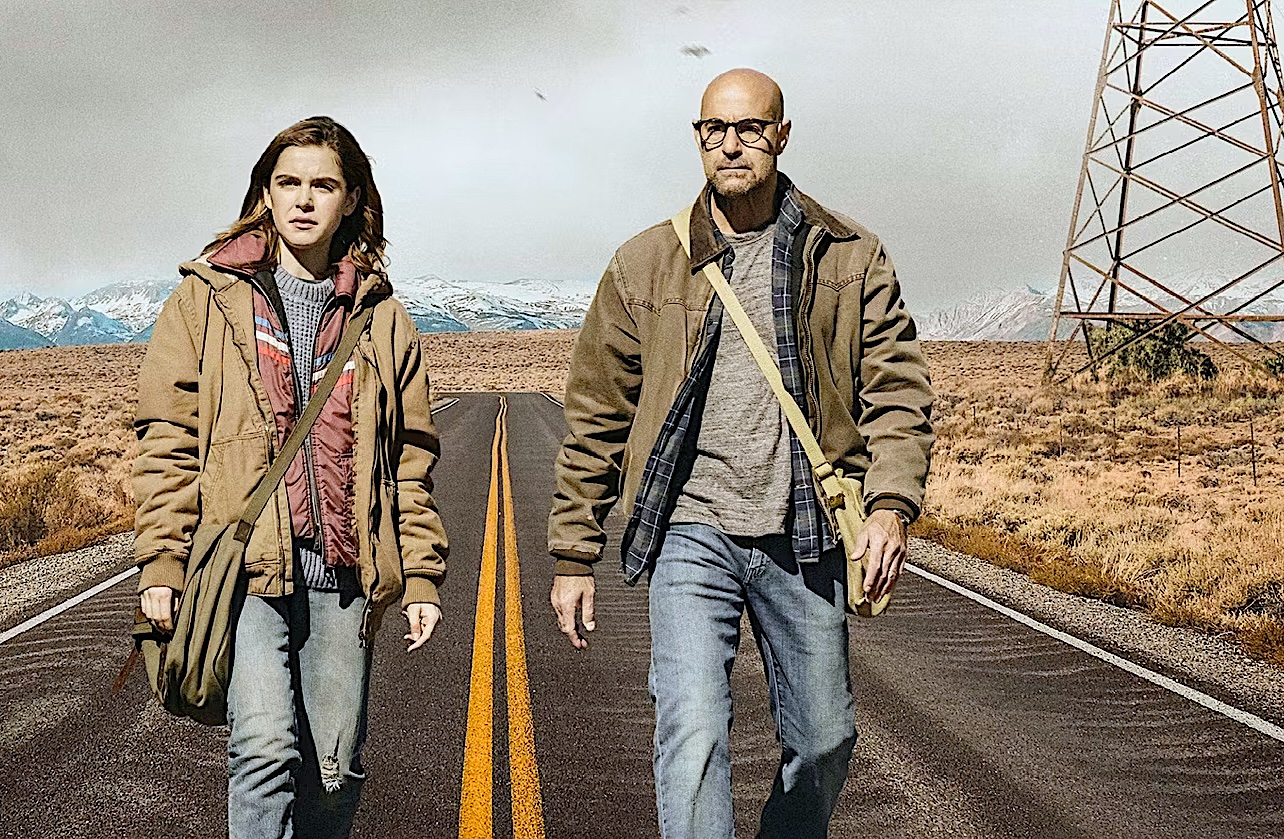
Kieran Shipka, Stanley Tucci

“THE SILENCE”  My rating: C+ (Netflix)

90 minutes | MPAA rating: PG-13

My initial review of “The Silence” began with these words: “The Silence” is such a blatant ripoff of “A Quiet Place” that John Krasinksi should be collecting its residuals.

We’re talking about a family being stalked by sightless creatures that respond to sound.  The only reason this particular bunch have a fighting chance is that they all know sign language thanks to a teenage daughter who is hearing impaired.  They can communicate without talking.

Here’s the thing. Apparently “The Silence” was based on a book published in the mid-teens, and was in production at the same time as “A Quiet Place.” Which raises the question of whether Krasinski’s film ripped off the premise of “The Silence.”

To this I have no answer. I will observe, however, that “A Quiet Place” is the superior film.

whatever. “The Silence” has been reasonably well made by director John R. Leonetti.  And he has assembled a surprisingly classy cast.

The always-reliable Stanley Tucci is the father.  Miranda Otto (the “Lord of the Rings” franchise) is the mother.  There’s the deaf daughter (Kieran Shipka…she played Dan Draper’s kid on “Mad Men”), a little brother (Kyle Breitkopf), an asthmatic grandma who always coughs at the wrong time (Kate Trotter) and a family friend (John Corbett) who seems to have better survival skills than his fellow city dwellers.

The baddies are  aerial lizards, about the size of flying squirrels.  One can mess you up, but when they attack as a flock you’re a goner. (Hmmm….maybe some of this film’s profits should go to the Hitchcock estate…there are a lot of visual references to “The Birds”.) Anyway, the special effects are convincing.

It’s a survival story with the family escaping civilization and trying to find a safe spot out in the sticks while avoiding the usual dangers of the post-apocalyptic playbook (tongue-less religious zealots, anyone?).

A momentary escape from reality.

| Robert W. Butler

“REMEMBERING GENE WILDER” My rating: B+ (Netflix)

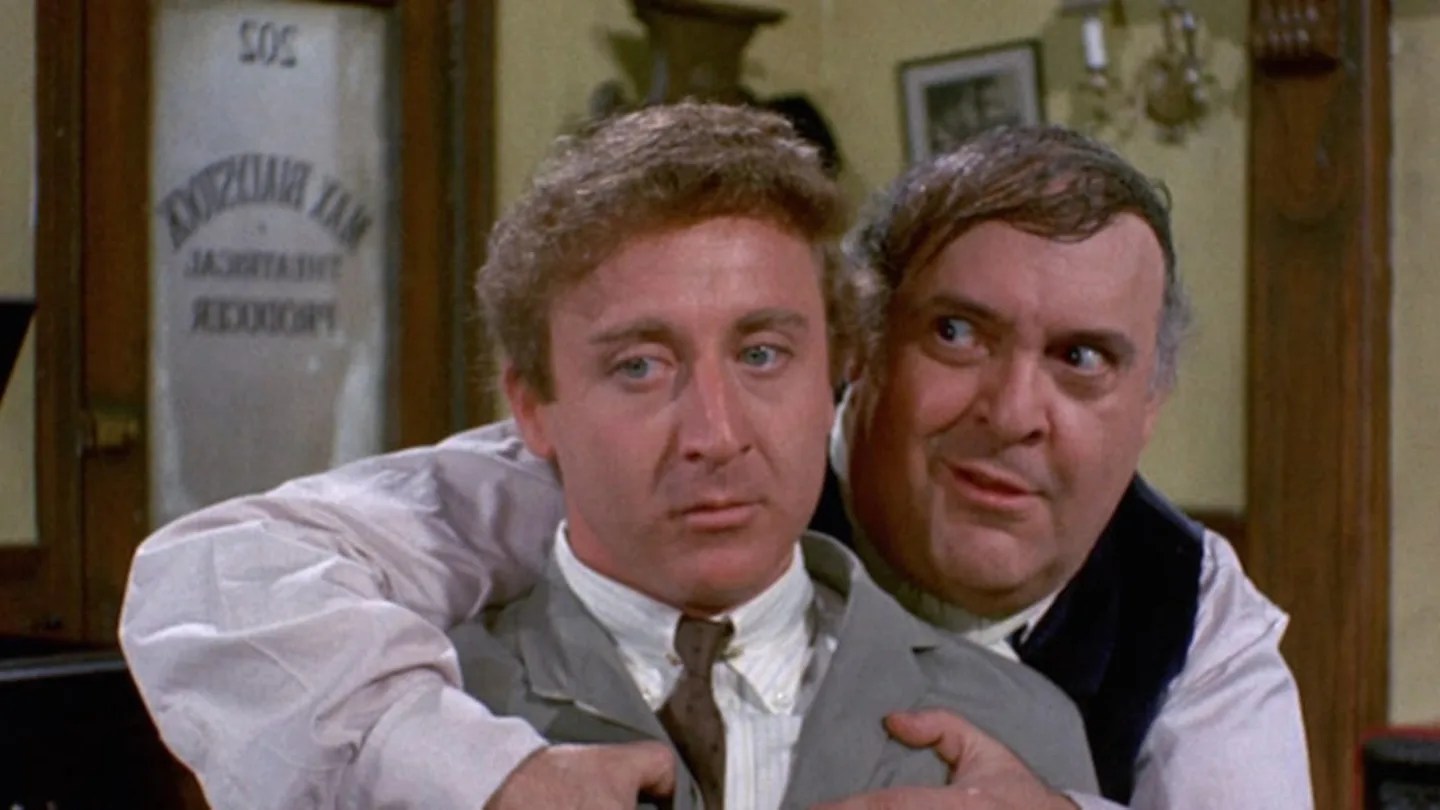
Gene Wilder and Zero Mostel in “The Producers”

“REMEMBERING GENE WILDER” My rating: B+ (Netflix)

92 minutes | No MPAA rating

I’d almost forgotten what a wonderful performer Gene Wilder was.

But then I caught Ron Frank’s documentary “Remembering Gene Wilder” and it all came rushing back.

The film makes the case that Wilder was a comic genius…and given that he was the instigator of “Young Frankenstein” and wrote the original screenplay, you won’t hear me arguing.

But there’s so much more, from his first high-visibility gig as a kidnapped bank employee in “Bonnie and Clyde,” to his landmark work with Mel Brooks (“The Producers,” “Blazing Saddles,” “Young Frankenstein”), his comic collaborations with Richard Pryor and especially his turn as the star of “Willy Wonka & the Chocolate Factory.”

He appears to have been a very nice man, an impression reinforced by his two marriages (the first to Gilda Radner, who died from cancer).

Plenty of colleagues and friends show up to share memories — Brooks, Alan Alda, Harry Connick Jr., Carol Kane, Eric McCormick — but the backbone of the piece are the clips from Wilder’s films. They’re so good you end up making a list of the man’s features that need to be revisited.

Isabel Deroy-Olson, Lily Gladstone

“FANCY DANCE” My rating: C+ (Apple+)

90 minutes } MPAA rating: R

Perhaps seven or eight years ago — pre-“Reservation Dogs” — Erica Tremblay’s “Fancy Dance” might have seemed like a revelation.

Now it carries a whiff of been-there-done-that, an aroma not dispelled even by Lily Gladstone’s slow-burning lead performance.

Filmed mostly on Indian land in Oklahoma, the film centers on Jax (Gladstone), who has become the caregiver for teenaged Roki (Isabel Deroy-Olson), her niece. Loki’s mom vanished a couple of weeks earlier.

Jax suspects foul play, but the indifferent authorities are dragging their feet; meanwhile she tries to keep Roki’s hopes up that the girl’s mom will appear in time for the mother/daughter dance at the upcoming tribal powwow.

For much of its running time “Fancy Dance” is a study of poverty and dead ends. Jax has a long history of trouble with the law and she’s already got Roki boosting needed food and other items from local merchants.

Need a ride? Steal a car. Pretty simple.

Things come to a head when the child welfare people move to place Roki in foster care. An outraged Jax snatches the girl and together they go on the run.

As a snapshot of reservation life, “Fancy Dance” seems accurate if not exactly revelatory. Similarly, the theme of missing indigenous women isn’t exactly fresh, having been tackled in the most recent season of “True Detective” and in the striking feature “Catch the Fair One.”

Still, you’ve got Gladstone, hot off her triumph in “Killers of the Flower Moon” and possessor of the saddest pair of eyes in current cinema. Even when the film loses momentum, her presence keeps us watching.

Mads Mikkelson

“THE PROMISED LAND”  My rating: B (Hulu)

127 minutes | MPAA rating: R

The difference between actor and movie star is nicely delineated  in the career of Mads Mikkelson, who appears to care not a whit about his image while always on the lookout for  unexpected characters.

Viking berserker. Alcoholic high school teacher.  James Bond villain. Drug pusher.

The guy doesn’t care if we like his characters. In fact, I often think he goes out of his way to glom onto the off-putting.

In the period piece “The Promised Land” Mikkelsen plays a highly fictionalized version of the real-life Ludvig Kahlen,  who after 25 years as a soldier (rising from private to captain) retires to his native Denmark with a crazy dream of turning the barren Jutland heath into a paradise.

Kahlen is not a warm, fuzzy guy.  He’s humorless. Stiff.  Ill at ease in social situations. And so invested in the idea of achieving legitimacy through an agricultural miracle that he has no time for anything that might get in his way…especially other people.

Written and directed by Nikolaj Arcel, “The Promised Land”  melds several genres to satisfying effect.

There’s the whole man-against-nature thing, with Kahlen battling the elements to survive brutal winters, improve the nutrient-poor soil and bring in a crop of potatoes, a vegetable at the time (mid-1700s) unknown to the Danes but capable of growing just about anywhere.

Even more daunting is the opposition of local landowner Frederik De Schinkel (Simon Bennebjerg),  the Danish equivalent of a Deep South plantation owner who rapes, beats and even kills the peasants under his thumb. (He’s a hateful prick…the model might very well have been Tim Roth’s arrogant sadist from “Rob Roy.”) De Schinkel is not thrilled with the idea of this plebeian newcomer improving the “unimprovable” land under his very nose, going so far as to form a marauding hit squad of murderers plucked from prison.

Finally there’s the human side of the equation. Despite his loner personality, Kahlen slowly finds himself part of a makeshift family along with a housemaid who has fled De Schinkel’s predatory grasp (Amanda Collin) and an orphaned child (Melina Hagberg) reared by forest-dwelling bandits.  

So what’s it going to be…stick with his master plan or succumb to the temptations of human interaction?

Terrific cinematography (Rasmus Videbaek) and utterly convincing production design (Jette Lehmann) mark this intimate epic, which ends on a much more positive note than the one experienced by the real-life Kahlen…but then, that’s why we go to the movies.

| Robert W. Butler

Adria Arjona, Glen Powell

“HIT MAN’ My rating: B (Netflix)

115 minutes | MPAA rating: R

An old cliche of Hollywood movies had a nondescript wallflower undergoing a transformation into jaw-dropping beauty, usually with the leading man saying something like, “Why Miss Jones, I’ve never before seen you without your glasses.”

Same thing happens in Richard Linklater’s “Hit Man,” which despite its title is not a noir-ish action piece but rather a romantic comedy (albeit one with subversive undertones).

Undergoing the transformation here is a guy who evolves from dull, dweeby college instructor to…well, anybody he feels like being.

Glen Powell — a 20-year acting veteran who recently became an “overnight” success thanks to “Top Gun: Maverick” and the Sidney Sweeney rom-com “Anyone But You” — seems to be having an absolutely wonderful time playing a dozen or so different characters.

Based on the (mis)adventures of a real-life undercover police consultant, the film starts with teacher and gearhead Gary Johnson (Powell) setting up surveillance equipment for a very special team on the New Orleans P.D.

This squad specializes in sting operations; they spread the word that a hit man is available for hire, then arrest the morons who come to said assassin (actually an undercover cop) waving money for a murder.

Is it entrapment? Maybe, but at least these are murders that never happen.

When the dirtbag cop who usually plays the hit man is relieved of duty for some infraction, nerdy Gary is enticed to take  his place.

Despite an early case of nerves, it turns out Gary’s good at this.  Before long he’s developed a small roster of alter egos, augmenting his appearance with fake teeth, contact lenses, wigs and a wardrobe that allows him to be everything from good ol’ boy to slick Eurotrash.

The moral dilemma at the heart of the screenplay (by Linklater, Powell and Skip Hollandsworth) arrives in the form of Madison (Adria Arjona), a young woman who wants to get rid of her insanely jealous husband.

Of course, Gary is thinking what every man watching this movie is thinking: if I can talk her out of killing her husband maybe she’ll land in my lap.

This is, of course, an ethically and legally dubious choice. But what can I tell you? In his latest hit man persona Gary is friendly, confidant, cultured, attentive and romantic. And the vibes given off by Powell and Arjona when they share the screen are scorching.

Problem is, Madison is still on the NOPD’s radar, and Gary will have to woo her while avoiding detection by his cop colleagues.

The mood here is lightly comic, then seriously romantic, and finally dourly cynical.

In any case, you’ve got to admire a film that sucks you in with a title like “Hit Man” and then never so much as waves a weapon, much less kills anybody.

“THE EIGHT HUNDRED”My rating: B- (Prime)

149 minutes | No MPAA rating

Inspiring equal parts awe and indifference, the Chinese “The Eight Hundred” is an epic war film made on a scale virtually unseen since the days of the ’60’s road show.

A cast of thousands. Unbelievable battle scenes. A butt-numbing running time.

Director Hu Guan and his crew here take on a bit of history all but unknown in the West.  But in China the 1937 siege of Shanghai’s Sihang Warehouse carries the kind of patriotic weight the Alamo does for Texans.

Here’s the setup.  Japan has invaded China and is advancing on Shanghai.  Soldiers of China’s National Revolutionary Army hold the invaders at bay for three months. Now they’ve retreated to a multi-story warehouse on the banks of what appears to be a river (actually it is known as Suzhou Creek).

 Besieged by 20,000 Japanese troops, they are determined to fight to the last man.

The scale of this production is flabbergasting.  The warehouse is just across the creek from the International Settlement, Shanghai’s “ghetto” for foreigners and a playground crammed with nightclubs, opium dens, movie palaces and bordellos. 

The Settlement is  off-limits to the Japaneses (they don’t want draw European powers into the fight by killing foreign citizens), and this allows the foreigners to go about their business and/or watch the fighting  in relative safety.

Weirder still, at night the Settlement is lit up like a carnival midway, an eye-dazzling magic kingdom just a few hundred yards from the carnage.

“The Eight Hundred’s” battle scenes are like “Saving Private Ryan” on steroids.  Astonishing. Everything from brutal hand-to-hand combat to strafing runs by Japanese airplanes.

But here’s the thing: The production is so bent on giving us the big picture that it never gives us the little picture. The characters — officers and fighting grunts,  Western journalists covering the situation,  decadent club owners, prostitutes, diplomats, everyday Chinese — have been boiled down to maybe one salient characteristic.

Moreover, there are so many characters that none really have time to let their stories be told. (Things are even worse on the enemy’s end…the Japanese soldiers are essentially faceless versions of “Star Wars’” storm troopers.)

So in the end you’ve got a jaw-dropping spectacle for the eye and ear and a flag-waving paen to bravery, but a dead end in terms of personal human drama.

Well, sometimes you just take what you can get. And there’s no arguing with the numbers…”The Eight Hundred” earned $484.2 million in its initial theatrical release. making it the second highest-grossing film of 2020.

| Robert W. Butler

Holliday Grainger, Callum Turner

“THE CAPTURE” (Peacock):

“Torn from the headlines” doesn’t begin to cover the relevancy of “The Capture,” a Brit thriller that takes our current unease about artificial intelligence and pumps it up to paranoia-inducing levels.

At its heart this series from creator Ben Chanon asks if we can still believe our own eyes.

Hint: We can’t.

Holliday Grainger (she played the Girl Friday in the detective series “C.B. Strike”) stars as Rachel Carey, a police inspector investigating the case of a missing human rights attorney.  

Surveillance cameras have captured footage of the woman being beaten by her most recent client  (Callum Turner). But the suspect says — video footage notwithstanding — it never happened.  He’s being framed.

Detective Carey smells a rat.  And over the course of the two seasons she will uncover a government conspiracy to  use deep fake videos to create “evidence” where none exists.

It gets even more alarming in Season Two, when Britain’s head of security (Paapa Essiedu) submits to a live TV interview only to find that even as they are being broadcast his voice and image are being altered so that he appears to be embracing politically fatal positions.

“The Capture” has been impeccably cast and acted (Ron Perlman is wonderful as a cynical CIA overlord with a finger in everybody’s pie), but its real power is that of a wakeup call.

London has more public surveillance cameras than any city on Earth, and from their monitor-lined bunkers the spooks can follow a citizen’s every move.  The shadowy figures behind all this are determined to keep their secrets, and murder is always an option.

You can tell yourself that this is only a TV show.  Except that everything we see in “The Capture” is technically possible.  And when you can’t believe your own eyes, is there such a thing as the truth?

Benedict Cumberbatch and imaginary friend

“ERIC”(Netflix):

Generally speaking, I’ll watch Benedict Cumberbatch in anything.

“Eric,” though, may make me reassess my position.

It’s not that Cumberbatch is bad here.  But he plays a terrible person so effectively that it’s like gargling ground glass.  

An even bigger problem is that series creator Abi Morgan (her writing credits include
such stellar efforts as “Brick Lane,” “Shame” and *Suffragette”) wants the show to be all things to all people and in the end it ends up being about nothing in particular.

Well, that’s not quite true.  “Eric” is definitely about contrivance and overkill.

Superficially, at least, this is the tale of a missing child. Ten-year old Edgar Anderson (Ivan Morris Howe) vanishes on his morning walk to  his school in NYC.  

His father, Vincent (Cumberbatch) is a puppeteer and creator of a “Sesame Street”-type kiddie’s TV show.  He’s also egotistical, alcoholic, angry and far better delivering morals to a TV audience than at dealing with his own son’s insecurities.

Mother Cassie (Gabby Hoffmann) is a writer having an affair with a young guy who works for a mobile soup  kitchen. 

The family situation is blisteringly toxic, a fact immediately clear to Detective Ledroit (McKinley Belcher III) of the missing persons bureau.  He wonders if the smugly arrogant Vincent might not have had a hand in the boy’s disappearance.  Another possibility is the building’s super (Clarke Peters), in whose basement apartment young Edgar often took refuge from his parents’ emotional brawling.

Now a missing child s compelling on its own, but writer Morgan keeps stuffing the ballot box.

Ledroit is a closeted gay man whose lover is dying of AIDS (the time is the mid-1980s, when most people were fearful of even touching someone HIV positive).  And he has an ex-lover who is running a “Studio 54”-type nightclub that may be a front for child sex slavery.

Oh, and did I mention that Ledroit is black and dealing with racism on the force?

He’s also faced with a couple of crooked vice cops who may be responsible for the vanishing of another teenage boy.

And there’s a huge chunk of the film set in the subterranean world of homeless subway dwellers — sorta like that old TV show “Beauty and the Beast.”  Not to mention all the shots taken at politicians who want to drive off the undesirables to make way for high-rise condos. (Vincent’s estranged father is a Trump-ish real estate developer.)

Well, that’s a whole load of issues for one movie to carry, but the biggest is yet to come.

It seems that little Edgar was secretly designing a new character for his father’s TV show, a big hulking mass of blue hair and horns he dubbed Eric.  Eric looks like one of the creatures from Where the Wild Things Are, and becomes an imaginary friend to the booze-and-drug-addled Vincent. Now the movie becomes a fantasy/psychodrama about a guy and his monstrous alter ego  wandering Manhattan in search of the missing child.

I stuck with “Eric” simply because I could not believe the avalanche of overkill the show keeps dealing in whopping shovelfuls. Even the song choices playing underneath scenes are criminally heavy-handed (Lou Reed singing “Heroin” for a sequence featuring drug abuse?).

Being this audaciously wrong is actually kind of fascinating.

| Robert W. Butler

Penelope Cruz, Adam Driver

“FERRARI’ My rating: B- (Hulu)

130 minutes | MPAA rating: R

Great performances from Adam Driver and Penelope Cruz notwithstanding, “Ferrari” is a hard movie to warm up to…because its subject is a hard man to like.

Director Michael Mann’s latest is a character study of sorts, centering on a giant of industry at a pivotal moment in his career.  That the career in question is auto racing makes for built-in drama.

In 1957 Enzo Ferrari (Driver) is both at the peak of his powers as a maker of racing cars and on a financial precipice.  His obsession with fielding the world’s best race team has left him nearly insolvent and facing the glum prospect of forging a partnership with big money interests who will want a say in running the show.

His domestic life is no less precipitous.  Ferrari and his all-but estranged wife Laura (Cruz) are still mourning the death a year before of their only child; Ferrari’s history of infidelity isn’t helping.

In fact, for more than a decade he has kept a former assembly line employee, Lina (Sharlene Woodley, whom I never for a minute bought as Italian), as his mistress.  They even have a 10-year-old son, a humiliation Ferrari has managed to keep a secret from Laura, although everybody else seems to know about it.

And now Laura holds the fate of the company…she owns half the stock and her cheating hubby can do nothing without her approval.

meanwhile Ferrari is putting all his chips in on winning the Mila Miglia, a 1000-mile race on public roads so dangerous that drivers joke about dying at the hands of dogs and children.  Ironically it will be the last Mila Miglia ever, with a death toll so off the charts the entire event would be permanently cancelled.

Driver’s Ferrari is self-absorbed and always a few chess moves ahead of everybody else.  He offers a gentlemanly facade but is ruthless in achieving his goals.  He can also be amusingly crotchety. 

In one memorable scene he reams a pack of racing journalists: “When we win I can’t see my cars for the shots of starlet’s asses.  When we lose you’re a lynch mob. It’s enough to make the Pope weep.”

The real star of the show though, is Cruz. Sans makeup and carrying her load of grief like a manhole cover, she is a modern-day Medea torn between revenge and the need to see the family business succeed. It’s a wow-quality performance.

Pedro Pascal, Nicolas Cage

“THE UNBEARABLE WEIGHT OF MASSIVE TALENT” My rating: B (Roku)

107 minutes | MPAA rating: R

Movies don’t get much more meta than “The Unbearable Weight of Massive Talent” in which Nicolas Cage — a sometimes great actor who often seems more interested in the paycheck than the screenplay — plays Nicolas Cage, a sometimes great actor who often seems more interested in the paycheck than the screenplay.

Co-written and directed by Tom Gormican, “Unbearable Weight…” offers self-parody on steroids. Apparently Nicolas Cage is aware of all the weird things people say about him and is more than happy to exploit them. 

The premise finds Cage (who often imagines conversations with his younger, more successful self) so desperate for work that he agrees to fly to Spain to be the entertainment at the birthday party of billionaire named Javi Gutierrez (Pedro Pascal).  Surprisingly, Javi and Nick hit it off…they appreciate the same old movies and Javi has even written a screenplay he’d love for his guest to consider.

Enter two dodgy CIA types (Tiffany Haddish, Ike Barinholtz) who inform Nicolas that his host is actually an international arms dealer…and convince him to become a spy inside Javi’s sprawling seaside estate.

Part buddy movie, part spy spoof (Nick and Javi end up searching for a politician’s kidnapped daughter), part sendup of Hollywood excess, “The Unbearable Weight of Massive Talent” roars along  thanks to Cage’s willingness to send up his own oft-overcooked acting style.

 One can only imagine that for this actor it offered a decade’s worth of therapy in just one gig.

Brian Jones, Mick Jagger

“THE STONES AND BRIAN JONES *My rating: B (Hulu)

93 minutes | No MPAA rating

Documentarian Nick Broomfield has always had a thing for music subjects — Suge Knight and the murders of Biggie & Tupac, Leonard Cohen, Whitney Houston, Kurt Cobain and Courtney Love.

Here he tunes up the way-back machine to explore the life and legacy of the forgotten Rolling Stone, Brian Jones.

It’s a sad tale.  Jones was the founder of the Stones, envisioning it as a blues band. He was charismatic and well spoken,  and wildly musical (he introduced the sitar to the Stones and played the flute solo on “Ruby Tuesday”).

But he was eclipsed by the songwriting talents of Mick Jagger and Keith Richards. At the same time Jones’ emotional/mental issues and substance abuse derailed his career; he became so unreliable that Jagger and Richards fired him.  After that it was a quick trip to the boneyard.

For boomers “The Stones and Brian Jones” is a heady trip down Memory Lane. Broomfield has assembled a treasure trove of vintage footage of the Stones. 

It’s a tale populated  not only by the Stones themselves (bassist Bill Wyman is a valuable talking head here), but by the likes of Eric Burden (of The Animals), Marianne Faithful (the pop songstress who had affairs with three of the band’s members), Jones’ various girlfriends (he left behind a small army of illegitimate children) and Paul McCarthy.

Undergoing particular scrutiny is the late Anita Pallenberg, glamorous girlfriend to the band who comes off as a self-serving succubus.

 Curiously, Broomfield has chosen not to say much of anything about Jones 1969 drowning death.  Over the years there has been a growing body of evidence to suggest Jones was murdered, probably by a worker with whom he had a pay dispute. But no mention of that here.

| Robert W. Butler

Colin Farrell

“SUGAR”(Apple+):

The year’s biggest gotcha!!! moment arrives at the end of Episode 6 of “Sugar,” and it’ll leave you reeling.

And that’s all I’ll say about that.

But there’s plenty of other stuff to relish in creator Mark Protosevich’s smart, stylish and thought-provoking re-examination of classic private eye tropes.

Colin Farrell is at his absolute best as John Sugar, a private investigator specializing in missing person cases.  

Noir usually requires a protagonist who is essentially honest but bummed out and bitter, a guy sickened by the corruption of the big city but driven to discover the truth.

Sugar, though, loves L.A.  For him it’s like a trip to Disneyland.  For one thing, he tools around town in a vintage Corvette convertible while sporting immaculately tailored suits. Even when facing down despicables he’s gentlemanly, more curious than judgmental.

Moreover, he loves working in the motion picture capital of the world. One  of the show’s cleverest conceits is that he’s always encountering characters and situations that remind him of classic films…and brief clips from those films are scattered reverentially throughout the series.

It’s been said that everything we need to know we learned in kindergarten.  John Sugar learned  it watching movies.

Sugar’s current case involves the disappearance of a young woman bred of Hollywood royalty.  Her grandfather (James Cromwell) is a financial titan; her father (Dennis Boutsikaris) is a ruthless producer, and her half-brother (Matt Corddry) is a former child star now wallowing in a drug-infused career burnout.

Sugar appears to have no close friends (an abandoned dog becomes his main bud), though he has a sort of Girl Friday (Kirby) who assigns cases to him and is always warning against getting too involved with the clients.

And in the course of the investigation Sugar finds himself spending time with the missing girl’s one-time stepmother (Amy Ryan), an actress and recovering alcoholic who finds herself attracted to this cooly empathetic white knight.  (Aside from the missing persons case, the series’ biggest mystery is whether these two will ever make a romantic connection.)

Now all this sounds intriguing enough, but it’s only a prelude to the mind-blowing reveal that comes halfway through.

“Sugar” is so good it’s worth subscribing to Apple+ just for this one series.

Ewan McGregor, Alexa Goodall

“A GENTLEMAN IN MOSCOW” (Paramount +):

Ewan McGregor gives what may be a career-high performance in “A Gentleman in Moscow.” 

He’s so good that one is willing to overlook some of the production’s flaws just to luxuriate in his presence.

Based on Amor Towles’ best-selling novel, “Gentleman…” over eight episodes follows the life of Alexander Rostov, a Russian count caught up in the Revolution.  

Being rich, cultured, erudite and well-educated, Alexander seems destined for a firing squad.  He’s saved when he is credited (erroneously) with composing a popular pro-Communist poem; instead of death he is sentenced to spend the rest of his life in Moscow’s Metropol Hotel.

Which is ironic, since the Metropol, an art nouveau masterpiece, is a last bastion of Western decadence in the economically devastated USSR. The Communist Party uses it as a showplace so foreign visitors can experience posh accommodations while the rest of the country starves.

 Alexander may be an impoverished prisoner sleeping in a frigid attic room, but he’s free to move about the building, to hobnob with guests and staff.  He becomes a waiter…and the in-house wine expert. And he even creates his own secret salon, a sort of throwback to his former life of luxury, this time furnished with pilfered items.

The heart of McGregor’s interpretation lies in Alexander’s mix of fatalism (the old world order is gone and isn’t coming back) and his innate humanism, which allows him to see the good in all people (though in the case of certain Party die-hards, it’s a rough go). And despite his view of himself as a loner, he becomes a father — twice.

There are four basic plot threads interwoven here.

Initially there is  Alexander’s relationship with Nina (Alexa Goodall), the daughter of a hotel guest who becomes his best friend and guide to the wonders of the hotel (the child  has somehow gotten her hands on a master key.) Years later, after the grown Nina and her husband become victims of a Stalinist purge, Alexander will care for their daughter Sofia (Billie Garson), who becomes a brilliant pianist.

Throughout his 30-year stay in the Metropol Alexander will carry on an affair with Anna Urbanova (Mary Elizabeth Winstead), a star of Soviet cinema who enjoys her decadent pastimes and especially the Count’s old-world charm. This is one of the series’ big flaws: I didn’t buy Winstead (in real life she is Mrs. Ewan McGregor) as a jaded European; there’s too much all-American girl about her. Sometimes it feels she’s playing dress-up in Mom’s closet.

Finally there’s Osip (Johnny Harris), Alexander’s bald, brutal KGB overseer. Osip is Red down to his toenails; he hates the nobility and is looking for any excuse to condemn Alexander.  But over the decades theirs becomes the series’ most intriguing relationship.  Initially Osip demands that Alexander spy on the hotel’s guests; eventually the thug finds himself relying on Alexander’s cultured past and obvious “people” skills to navigate the dark twists and turns of a Stalinist society. Weirdly enough, they almost become friends.

The physical production is sumptuous, with the Metropol Hotel presented as a sort of funhouse  wonderland.  We explore this castle from the cellar furnace room to the rooftop (as close as Alexander can get to the great outdoors), luxuriating now and then in the posh dining room and bar, and the luxurious suites…not to mention the back stairways, kitchens and offices.

Finally, there’s one aspect of the series that bugged me. Usually I’m all for non-traditional casting, but the makers of “Gentleman…” have taken it to extremes. Black actors here take roles that for historic accuracy should be portrayed by…well, people who look Russian. The Russian minister of arts is black, an American diplomat (in the 1940s and ‘50s) is black; even Alexander’s boyhood best friend (Fehinti Balogun) is black (and with braided dreadlocks, even). 

These instances took me out of the show and temporarily derailed my attention and enjoyment. 

But then I come back to McGregor’s display of unassuming decency.

Left to right: Alison Brie, Sam Neill, Annette Bening, Conor Kerrigan Turner, Essie Randles, Jake Lacey

“APPLES NEVER FALL” (Peacock):

First-rate players never get the payoff they deserve in “Apples Never Fall,” a murder mystery (sort of) about a hugely dysfunctional family that hints at becoming something dark and revealing before turning all soft and squishy.

The Delaney family of Palm Beach are local legends by virtue of running a tennis academy that has turned out the current world champion.

Mom Joy and dad Stan (Annette Bening, Sam Neill) are currently enjoying an uneasy retirement…he’s a bit of a boor who radiates possible violence, she’s a bored matron.

They’ve got four grown kids — played by Jake Lacy, Alison Brie, Conor Kerrigan Turner and Essie Randles — all of whom seem lost, professionally and/or personally.

Creator Melanie March mixes two genres here.  First there’s the arrival of Savannah (Georgia Flood), an abused woman (or so she claims) who washes up on Joy and Stan’s doorstep, is taken in my them, and slowly makes herself indispensable in ways their actual children won’t. Is Savannah a con artist? Dangerous?

Then there’s Joy’s disappearance, Stan’s stubborn refusal to cooperate with the cops, and lots of bloody evidence suggests she has been the victim of foul play.

“Apples Never Fall” dishes a ton of armchair psychology, a mess of subplots that do little more than pad the proceedings, and a jumbled time frame that makes it hard to figure out exactly where we are in the 7-episode story.

Finally, there’s a payoff that is more “meh” than “damn!”

| Robert W. Butler

Michael Douglas

“FRANKLIIN” (Apple+)

 I love just about everything about “Franklin”…except for Franklin himself.

So let’s be brutally honest here: Michael Douglas as Benjamin Franklin? Just doesn’t work.

I’m not saying Douglas makes the series unwatchable. It’s not that off-putting.

But Michael Douglas the movie star is here wrestling with Michael Douglas the actor…and the movie star wins.  More on that later.

This 8-part series (the writers are Kirk Ellis and Howard Korder, adapting Stacy Schiff’s non-fiction A Great Improvisation; all episodes are directed by TV vet Timothy Van Patten) takes us to Paris in the late 1770s.  

Inventor/journalist/all-round Renaissance man Benjamin Franklin, now 71, has been dispatched by the rebellious American colonies to seek France’s aid in the fight for freedom.

Accompanied by his teenaged grandson/secretary Temple (Noah Jupe), the wily old Franklin gets to work seducing French society, determined to secure money, arms and men for the American cause. Meanwhile British agents are bent on undermining those efforts.

“Franklin’s” scripts are the very model of effective historic drama. The intrigues of the French court are presented in all their complexity (the French characters speak French with English subtitles); meanwhile more personal dramas are playing out. (Every time a character or situation popped up that seemed like a writer’s invention, I’d do a bit of research and discover that it’s all based on fact.)

Despite his age, Franklin sets the French ladies aswooning…especially Madame Anne-Louise Brillon (Ludivine Sagnier), a composer who sees in Franklin the possibility of sexual equality. (The series is coy about whether Franklin had physical relations with these women, but controlling his active libido apparently was a lifelong struggle.) 

Meanwhile in a parallel story line, young Temple finds himself seduced by the many vices of upper-crust French society.  

The physical production is spectacular; much of the series appears to have been filmed in the actual historic settings.  The costuming (and the ladies’s wigs, oh, my!) are sumptuous.

All good.  

And then you have Douglas’ central performance.  I’m not sure exactly how I envisioned Franklin as a personality, but this wasn’t it.  Douglas’ Franklin in grumpy, dour and, frankly, not nearly charming enough.

But what really bugged me was his hairline.

Portraits of Franklin show him with long locks, but bald from his brows to the crown of his head. Douglas, though, has a hairline positioned several inches lower than that.  

Another thing: the real Franklin had a physique not unlike a potbellied stove.  But Douglas’ Franklin is notably trim.

The overall effect is less balding old man than aging rock star.  I came away with an impression of an actor more concerned with looking good than with nailing an historic truth.

Jeff Daniels

“A MAN IN FULL”(Netflix):  

Jeff Daniels is so adept at playing good guys (he was Atticus Finch on Broadway, for Chrissake) that when he shows a dark side (as in the Western “Godless”) it’s a shock.

In “A Man in Full” he portrays a fellow who in another show might be a villain. But because he’s played by Daniels we get a more nuanced approach.

Charlie Croker (Daniels) is an Atlanta real estate mogul who mixes good ol’ boy charm with a cutthroat business sense.  The plot of this David E. Kelley-scripted three-parter centers on Charlie’s efforts to avoid ruin…he’s a billion dollars in debt to a local bank that’s maneuvering to seize his assets.

Now Charlie probably deserves whatever comeuppance awaits him, but Daniels is so good we end up rooting for him to find a way out.  Also, the bank executive bearing down on him (the great Bill Camp) is such a nasty piece of work Charlie seems benign by comparison.

“A Man in Full” is less about finance, though, than about characters.

There is, for instance, Charlie’s current trophy wife (Sarah Jones)  who turns out to be a whole lot smarter and empathetic than one anticipates.

There’s  his ex Martha (Diane Lane) and their son (Evan Roe), who view the old mover and shaker with equal parts resignation, affection and wariness.

And especially there’s a bank underling (Tim Pelphrey), a sort of milquetoast everyman seeking to redress old hurts.  He ends up dating Lane’s character…but whether he’s bent on revenge or actual romance (this is Diane Lane we’re talking about) even he can’t decide.

As directed by Regina King and Thomas Schlamme, “A Man in Full” swoops in, throws some dramatic haymakers and sharply drawn performances, and concludes before wearing out its welcome.

“SECRETS OF THE OCTOPUS” (Disney +):

Octopi may be the coolest animals on Earth.

That’s the impression left by the three-part “Secrets of the Octopus,” a Paul Rudd-narrated nature documentary.

I mean, an octopus can change its color and skin texture to blend in with its surroundings.  We see one of these creatures using tools…a discarded shell becomes a shield to protect the octopus from predators.

Octopi appear to show other signs of intelligence, including a sense of curiosity about human visitors. And despite a reputation for being loners, some species live in colonies and one displays a relationship with a fish…the fish serves as a hunting dog, sniffing out and pointing to prey hidden in the coral and sand.

Think of this series as an expansion of the Oscar-winning “My Octopus Teacher.” 

It’s almost too much (the three hours feel a bit padded). But the underwater cinematography is so gorgeous — and the creatures themselves so weirdly compelling — that you can’t tear yourself away.

| Robert W. Butler

Sasha Luss

“ANNA” My rating: B- (Netflix)

118 minutes | MPAA rating: R

“Anna” is a guilty pleasure, delivering just enough cheese/sleaze to satisfy a viewer’s baser instincts but wrapping it all up in a clever storytelling style that keeps us on our toes and guessing.

I didn’t realize until watching the final credits that this spy thriller was written and directed by French icon Luc Besson…but I should have guessed.  “Anna” is basically a remix of Besson’s 1990 hit “La Femme Nikita.”

Both films center on a young woman recruited by a spy agency and trained as a ruthless assassin specializing in seduction and mayhem.

This time around our heroine is the Russian orphan Anna (Sasha Luss), a loner who becomes one of the KGB’s most relentless killers while working as a fashion model in Paris. Besson’s plot finds her undertaking a host of dangerous missions, often disguised by wigs.

What’s intriguing is the film’s structure.  After each kill the film flashes back to reveal that what we assumed about the mission was in fact wrong, that there were hidden intentions and meanings that shot right by us. With this setup what might otherwise be just a series of violent encounters instead triggers jaw-dropping revelations.

The supporting cast ain’t bad, either.  “Anna” counts two Oscar winners on its roster:  Helen Mirren is a delight as the chain-smoking cynical Russian spymaster who controls Anna’s life; Cillian Murphy is a CIA agent who tries to turn our girl to America’s interests.  And Luke Evans is just fine as the Anna’s field handler.

I was initially unimpressed by Luss’s turn as Anna…pretty but vacant.  Over time, though, one realizes that Anna is playing a long con on everyone…the Russians, the Americans and especially the audience. She’s revealing to each of these demographics only enough about herself to keep her plans in play.

Smart girl.

Hans Zimmer

“HANS ZIMMER: HOLLYWOOD REBEL”My rating: B (Netflix)

60 minutes | No MPAA rating

Checking out composer Hans Zimmer’s IMDB page is pretty mind-boggling.  The two-time Oscar winner has scored some of the seminal films of the last 40 years: 

“Gladiator,” “Dune,” virtually all of Christopher Nolan’s movies, “Thelma & Louise,” “A League of Their Own,” “The Lion King,” “Muppet Treasure Island,” “The Thin Red Line,” the “Mission: Impossible” franchise, “Black Hawk Down,” “The Last Samurai,” “The Da Vinci Code,” “The Pirates of the Caribbean” franchise, “Kung Fu Panda,” “12 Years a Slave,” “Hidden Figures,” “Blade Runner 2049,” “Dune,” “Top Gun: Maverick.”

Not to mention a ton of documentaries and a little TV show called “The Simpsons.” 

Francis Hanly’s “Hans Zimmer: Hollywood Rebel” can’t really explain Zimmer’s astonishing productivity and creativity (“superhuman” doesn’t seem too hyperbolic), but it does provide in a neat, one-hour session an intriguing overview of the man’s life and career.

What struck me most about the German-born Zimmer’s work is his reliance on atmosphere and rhythm over melody.  Some of my favorite movie scores (Jerry Fielding’s work on “The Wild Bunch,” for example) are less about delivering tunes than creating a sonic background reflecting the emotional tenor of the scene. 

This is what Zimmer does so well, often working alone at a keyboard/synthesizer to create sonic landscapes that only later are performed by a full orchestra (or not…Zimmer excels at mimimalist arrangements as well).  

The man appears to be unflaggingly good natured, if dangerously obsessive about his work.  His grown children describe him as an absentee father, though in recent years he’s been working to make up for lost time.

His coworkers and the directors he’s composed for — James L. Brooks, Stephen Frears, Ron Howard, Barry Levinson, Steve McQueen, Christopher Nolan, Denis Villeneuve, etc. — can’t wait to team up with him again and again.

Kingsley Ben-Adir

“BOB MARLEY: ONE LOVE” *My rating: B (Apple+)

107 minutes | MPAA rating: PG-13

I never saw “Bob Marley: One Love” in the theater. This may have been an OK thing, since I would have missed half the dialogue, which is delivered in a thick Jamaican/Rasta patois.

So let’s hear a round of applause for streaming service captioning.

Reinald Marcus Green’s film (it was written by  Terence Winter, Frank E. Flowers and Zach Baylin) is essentially hagiographic, but still compelling. 

We get the essentials on Marley’s brief but impactful life…his conflicts over the white father he never knew, his Jamaican nationalism (during the violent 1976 national election he was the target of an assassination attempt), his embracing of Rastafarianism (if you’re going to go whole hog into religious silliness, that’s the coolest option), his prodigious ganga consumption.

Marley is played by Brit actor Kingsley Ben-Adir, who doesn’t resemble Marley all that much but who nails his body language and stage presence.  Lashanda Lynch is fine as his wife and backup singer Rita Marley (and she has a terrific third-act eruption confronting her husband over his infidelities). 

But the real star of the show is the music itself.  It’s just one damn great song after another; Marley was reggae’s greatest tunesmith and lyricist, laying down spectacularly produced tracks that are yet to be equalled.  

| Robert W. Butler