Feeds:
Posts
Comments

Ryan Reynolds, Rob McElhenney

“WELCOME TO WREXHAM” (Hulu):

I’ve long been aware of the buzz surrounding “Welcome to Wrexham,” the documentary series that follows Yank actors Ryan Reynolds and Rob McElhenney as they navigate their recent ownership of a Welsh soccer club.

But I’m not much of a sports enthusiast and, anyway, soccer?

Well, color me convinced.  Like its fictional counterpart, “Ted Lasso,” “…Wrexham” is only superficially about sports. Its real subject is the human condition, especially the need to be part of something bigger.

Over three seasons (I hear a fourth is on the way) we see the Wrexham soccer club — the oldest in the world — rise from the ashes of long-festering mediocrity to become a force to be reckoned with.  In part this is due to an influx of cash from the two new owners, equally important is the enthusiasm of Wrexham fans.

The city of Wrexham — once a center of mining and brewing — has been in long decline. A winning team not only gives the locals Monday morning bragging rights but provides an economic kick in the arse that promises to lift the region out of the doldrums.

Okay, that sounds too wonky to be enjoyable. Here’s the thing: Reynolds and McIlhenney are a hugely amusing  duo (actually they make only periodic visits to the U.K., but show up in every episode, if only via Zoom), but what makes the show so brilliant is the way it eavesdrops on the lives of the locals.

The pub owner. They guy who runs the video rental store. The girl on the spectrum whose heartfelt enthusiasm for the team makes her a local celeb. The semi-pro photographer with crowd phobia who specializes in documenting what goes on outside the stadium on game day.

There are the players themselves, whose few moments of glory on the pitch are backed by weeks of grueling practice, debilitating injuries and the same sort of domestic issues common to people in all corners of life.

There are the employees of the club. My fave is Humphrey Ker, an owlish, bearded executive who exudes comical world-weariness. (I call him Eyore.) It is Humphrey’s job to explain to soccer-clueless American viewers the sport’s labyrinthine machinations.

Series director Bryan Rowland casts a wide net.  One entire episode is devoted to the subject of soccer hooligans…young men (usually) who view the matches as an excuse to engage in  bloody brawling with the opposing team’s fans.

Several half-hour segments celebrate the accomplishments of the club’s unpaid women’s team, whose members are arguably more successful than the guys.

Anyway, after watching “…Wrexham” I will never again look down my nose at the small-town folk who live for Friday night high school football.  Now I get it. 

Tobi Bamtefa, Jeremy Renner

“MAYOR OF KINGSTOWN”( Paramount+):


“Mayor of Kingstown” — yet another Taylor Sheridan-penned series — is like a mashup of the prison drama “Oz” sprinkled with the fixer mentality of “Ray Donovan.”

In other words, it’s suspenseful, grotesquely violent and matter-of-factly profane.

Jeremy Renner (quite excellent) stars as Mike McLusky, whose family has long been the power behind the scenes in the fictional city of Kingston, Michigan. With the murder of his older brother, ex-con Mike finds himself assuming his sibling’s role as fixer-in-chief. 

People come to him with problems that cannot be taken to the authorities; he finds solutions. Sometimes the solutions are legal.

As a former jailbird Mike knows his way around the prisons that are Kingstown’s main industry.  From beyond the walls (and sometimes inside them) he keeps tabs on the various prison gangs,  tracks the movement of drugs and other contraband, tries to mediate between inmates and the guards.

Two relationships make “Mayor of Kingstown” particularly memorable.  First there’s Mike’s sometimes shaky alliance with drug lord Bunny Washington (Tobi Bamtefa), a character half crook and half philosopher king.  

Then there’s Iris (Emma Laird), a baby-faced call girl sent by a criminal mastermind (Aiden Gillen) to seduce Mike; instead he ends up becoming her surrogate father and protector — although not even a cloistered nun could fail to see the unfulfilled sexual tension between the two.

The setup is perfect for a classic hooker-with-a-heart-of-gold romance; it’s to the show’s credit that it doesn’t go there.

Toss into the mix Dianne Wiest as Mike’s mom (who teaches inmates at a women’s prison), Sheridan regular Hugh Dillon (as a seriously compromised detective), and Taylor Handley (as Mike’s policeman baby brother) and you’ve got an engrossing crime melodrama.

Keeping it all held together is Renner, whose Mike is a roiling cauldron of moral contradictions.

Rob Lowe, John Owen Lowe

“UNSTABLE” (Netflix):

Gotta be honest…relatively few comedies make me laugh out loud.

“Unstable” does. A lot.

Rob Lowe is having the time of his life playing Ellis Dragon, an  inventor and tech mogul  (think a less loathesome Elon Musk) whose usual idiosyncrasies have gone into hyperdrive with the death of his wife.

The only thing keeping Ellis even halfway grounded is his son Jackson (Lowe’s real-life son John Owen Lowe), who reluctantly comes for a visit and ends up being sucked into his Dad’s business and personal dramas.

(Father and son Lowe pretty much created the show, coming up with an idea that would allow them to work together.)

“Unstable’s” primary dynamic is between the rich, privileged eccentric who can indulge his every whim, and the straight-man son who only wants to live his own life. 

They’re surrounded by wonderful characters: Sian Clifford (she was the sister in “Fleabag”), oozing Brit emotional reticence as Ellis’ second-in-command; Aaron Branch, Rachel Marsh and Emma Ferreira as nerdy lab rats; and finally Fred Armisen as Ellis’ shrink, whom the wacko billionaire has imprisoned in the basement.

Anyone remember the short-lived sitcom “Better Off Ted”? “Unstable” offers the same gleefully jaundiced view of the American workplace, populated with wise-cracking individuals.

Full disclosure: There are two seasons of “Unstable” and in the second the series has fallen into the rut of repeating itself.  But watch Season One…and refrain from drinking anything during the show to avoid involuntary spit takes.

| Robert W. Butler

Austin Butler, Jodie Comer

“THE BIKERIDERS” My rating: C (Peacock)

116 minutes | MPAA rating: R

A staggering amount of talent has been squandered in “The Bikeriders.” 

Everywhere you look in this film there are familiar faces capable of great performances.  And behind the camera is the (usually) superb director Jeff Nichols (“Take Shelter,” “Mud,” “Loving,” “Midnight Special”).

Why, then, must we settle for half-baked armchair psychology and dramatic indifference?

Nichols here adapts Danny Lyon’s 1968 book, a collection of photos and interviews that were the result of four years the author devoted to documenting a Chicago motorcycle club.

The book has long been revered for its insights into the outlaw mentality of working-class men living on the edge of a society whose precepts they disdain.

Well, the film captures the bikers’ alienation (which after a while becomes wearisome), but never finds an effective narrative voice.  

Part of the problem is its structure. Most of the yarn is told in flashback.

In the early 1970s Lyons (Mike Faist) decides to follow up on the men he wrote about. Since most are unavailable (many are dead) he interviews one of the gang’s “old ladies,” Kathy (Jodie Comer), who married the charismatic James Dean-ish Benny (Austin Butler).

Comer here falls back on a ridiculous accent (she sounds like the lovechild of Cyndi Lauper and Snooki of “Jersey Shore”) to describe her whirlwind romance and her longstanding doubts about these boy/men and their self-absorbed toxic masculinity.

Among the bikers are the club’s brooding founder and president Johnny (Tom Hardy), the scruffy Zipco (Michael Shannon), the bug-eating Cockroach (Emory Cohen), the loyal lieutenant Cal (Boyd Holbrook), and a late arrival, the California biker Funny Sonny (Norman Reedus).

“The Bikeriders” features much of the partying and fighting but none of the fun we got from the old Roger Corman biker movies of the late ‘60s. It’s dour and sour.

Yeah, there’s some pleasure to be had from the period music and costuming. But if you can’t care about the characters, what’s the point?

Matt Damon, Casey Affleck

“THE INSTIGATORS” My rating: B- (Apple +)

101 minutes | MPAA rating: R

If Carl Hiassen had cut his writing teeth in Boston instead of Florida, he might have given us “The Instigators,” a caper flick about a couple of hapless doofuses involved in a heist gone wrong.

Written by Chuck MacLean and actor Casey Affleck (who also stars) and directed by Doug Liman (“The Bourne Identity,” “Swingers,” “Edge of Tomorrow”), this is an amiable action effort that refuses to take itself too seriously.

Rory and Cobby (Matt Damon, Affleck) are perennial losers (they’re just not very smart) who out of desperation agree to an audacious robbery planned by a couple of local criminal movers and shakers (Michael Stuhlbarg, Alfred Molina). 

The idea is to crash the election-night celebration of the town’s spectacularly corrupt mayor (Ron Perlman) and make off with several hundred thousand dollars in “campaign contributions” (actually bribes).

Of course nothing goes as planned. Our boys find themselves on the lam both from the authorities (an uncredited Ving Rhames plays the Mayor’s personal cleanup batter) and from a killer (Paul Walter Hauser) dispatched by their criminal bosses.

And along the way they pick up Rory’s psychiatrist (Hong Chau). Is she a hostage or there for therapeutic reasons?  Not even she seems to know for sure.

Anyway, there’s a good deal comic banter between Damon and Affleck as two schlubs in way over their heads, and several effective action sequences which manage to keep a light tone despite the mayhem. 

Ryan Gosling, Emily Blunt

“THE FALL GUY” My rating: C+(On demand)

126 minutes | MPAA rating: PG-13

Color me disappointed.

On paper “The Fall Guy” sounds damn near perfect…two of my faves (Ryan Gosling, Emily Blunt) in a romantic comedy about a movie stunt man,  his director/love interest and the search for a missing movie star.

But David Leitch’s film (the screenplay is by Glen A. Larson and Drew Pearce), is mostly meh. I’m not sure whom to blame.

Veteran stunt guy Colt Seavers (Gosling) literally breaks his neck doing stand-in work for egotistical action star Tom Ryder (Aaron Taylor-Johnson).  During his long hospitalization Colt becomes estranged from his girlfriend, cinematographer Jody Moreno (Blunt).

Now Jody is making her directing debut with a big Tom Ryder sci-fi epic. She’s too stubborn to ask old beau Colt to join the team, but her sneakily manipulative producer (Hannah Waddingham) has no such qualms.

And no sooner has Colt come on the set than he learns that the megastar Tom Ryder has vanished.  He’s told to sleuth out the mystery.

So  you’ve got a sort of detective story unfolding on a movie set, and that is intertwined with a romance as Colt and Jody gingerly find their way into each other’s good graces.

Well, it should work.  Two great stars, lots of insider jokes about the movie biz, some behind-the-scenes Hollywood insights…

But no, sorry. Not this time.

| Robert W. Butler

Jessie Buckley, Olivia Colman

“WICKED LITTLE LETTERS” My rating: B- (Netflix)

100 minutes | MPAA rating: R

“Wicked Little Letters” is so crammed with familiar faces from Brit film and television that it’s a bit like reading the Equity membership list.

As it turns out, all that U.K. talent is what keeps the film from sliding into a morass of uneasily shifting tones. Or more accurately, the film suffers from neck-twisting tonal shifts but the great acting keeps us hanging in there.

Purportedly based on a real incident (I have my doubts) this effort from writer Jonny Sweet and director Thea Sharrock unfolds in the picturesque oceanside burg of Littlehampton in the years after World War I.

The first familiar face to greet us is the great Olivia Colman, here portraying the middle-aged spinster Edith Swan.

Edith lives with her parents, the domineering Edward (Timothy Spall!!!)  and his long-suffering wife Victoria (Gemma Jones).  She is shy, pious, unworldly, cowed by her father and oozes a goodie-two-shoes attitude that makes you want to slap her up the side of the head.

Here’s the problem.  Edith has been receiving filthy notes from an anonymous persecutor.  This mystery creep dishes sexual crudeness and personal insults in language that could make a longshoreman blush.  

Mother Victoria is quite undone by this onslaught of vileness; father Edward demands that the local police find the perpetrator.

Suspicion almost immediately falls on the family’s next door neighbor, Rose Gooding (Jessie Buckley), a foul-mouthed, hard-drinking Irish war widow (or so she says) with a young daughter (Alisha Weir) and a live-in boyfriend (Malachi Kirby).  

Until recently Rose and Edith had a sort of friendship (Edith sees it as her Christian duty to reach out to her hell-raising neighbor), but they’ve drifted apart.  And then the wicked little letters began arriving.

The screenplay covers a lot of ground.  There is, of course, Rose’s legal predicament.  Charged with libel, she faces a year in prison and the loss of her child.

Then there’s the rampant chauvinism in which the film’s menfolk are steeped.  Papa Edward is only the most obvious example.  The police are sexist swine — we get an eye- and earful through the experiences of Gladys  (Anjana Vasan), the town’s sole female officer, who slowly becomes convinced of Rose’s innocence.

When the officials decline even to look for other suspects, Gladys teams up with a couple of local ladies (Joanna Scanlan, Eileen Atkins) to secretly sleuth out the situation.

What they find…well, no sense giving too much away (even though most viewers will see it coming).  Let’s just say that beneath the thin veneer of stiff-upper-lip propriety that dominates all aspects of British life there bubbles a cauldron of repressed sexuality and wanton rebellion that just has to assert itself.

Categorizing “Wicked Little Lies” is problematic.  At times it’s broadly satiric, even silly…and then it dips into gut-wrenching melodrama as it examines the plight of the wrongly-accused Rose.  The two attitudes are never reconciled — director Sharrock does a terrific job of creating a believable setting, but can’t find a way to pull all the pieces gracefully together.

| Robert W. Butler

Angela Nikolau, Ivan Beerkus

“SKYWALKERS: A LOVE STORY” My rating: B (Netflix)

100 minutes | MPAA rating: R

If the usual horror movies no longer creep you out, spend some time with the young protagonists of “Skywalkers.” This doc will leave you sweating, swaying and palpitating. 

Angela Nikolau and Ivan Beerkus are Russian twenty somethings who practice extreme climbing, also known as rooftopping.  They get their kicks — and earn a living — by sneaking (or breaking) into high-rise buildings, climbing to the very top floor and then shimmying up the narrow spires that point to the heavens.

The climb is only part of it.  Once on top of the world Angela and Ivan take photos and videos that they sell worldwide through the Internet.  

Often Ivan will lift Angela over his head in a death-defying pas de deus. She will change into fancy costumes and then pose on the precipice like a runway model with a death wish. They employ drones which often fly around the summit, inducing in viewers a massive case of vertigo.

It’s beautiful.

It’s terrifying.

Jeff Zimbalist’s documentary centers on the couple’s attempt to climb Kuala Lumpur’s Merdeka, at 118 stories the second tallest structure in the world. 

The local authorities have already nabbed other climbers and sentenced them to long prison sentences. Angela and Ivan try to reduce the risks by doing all their planning in nearby Thailand and only going to Kuala Lumpur on the eve of their climb, scheduled to coincide with a big World Cup game which, hopefully, will keep construction workers and security guards looking at their TVs and not for intruders.

(Narratively, the film bears a close resemblance to “Man on Wire,” the Oscar-winning documentary about Philippe Petit’s 1974 tightrope walk between the World Trade Center towers.)

“Skywalkers” calls itself a love story, and it is that, too.  Angela, who has the lithe figure and acrobatic instincts of a ballerina, comes from a broken family and discovers with Ivan not only personal romance but also an sense of accomplishment.  They may be viewed as a troublesome Bonnie & Clyde by the authorities, but they see themselves as practitioners of a new art form.

The most riveting moments are provided by the footage the two climbers get from the Go-Pro cameras they carry with them. We feel like we’re on the climb with them.  And the views are spectacular (they’re usually so far up there are clouds below them).

On the ground…well, I wonder if  what we see there is genuine documentary footage or after-the-fact re-enactments.  I say this because the interactions between the two lovers seem so carefully staged, the camera angles and editing so sophisticated, that I have a hard time accepting that this was fly-on-the-wall cinema verite footage. It looks too polished.

But there’s no doubt about the authenticity of the climbs themselves.  They’re a visual assault that’ll leave you gasping for breath.

Jude Law, Alicia Vikander

“FIREBRAND” My rating: B (On demand)

221 minutes | MPAA rating: R

The makers of “Firebrand” want very much to  examine  a famous bit of Tudor history through a feminist perspective.

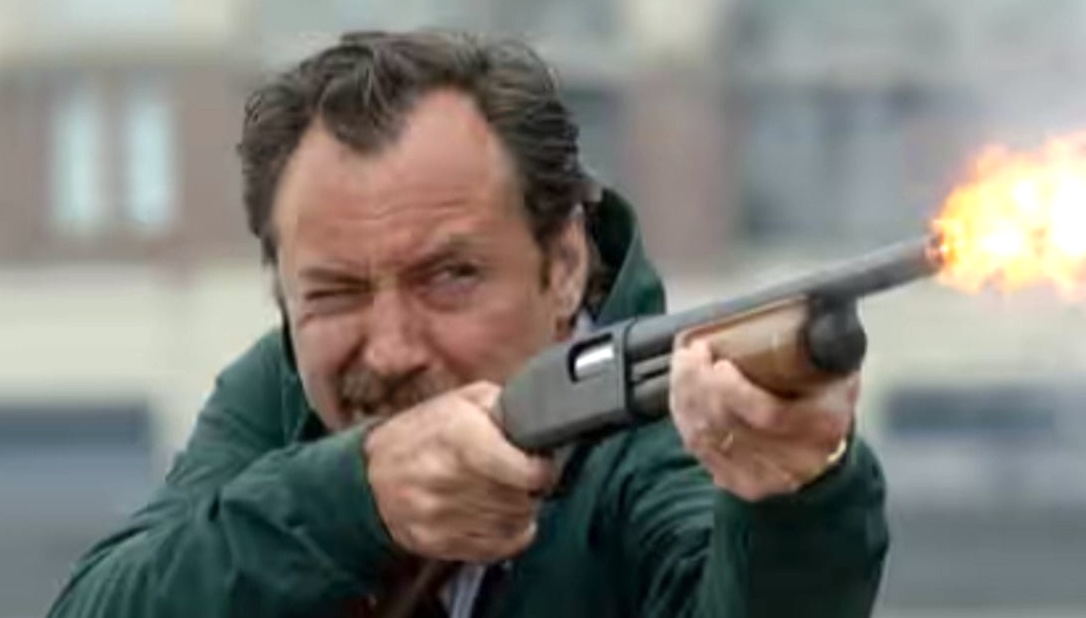
It’s a little ironic, then, that the overwhelming personality on display is that of good old Henry VIII, played so memorably by Jude Law that I wouldn’t be surprised to see him get an Oscar nod.

Directed by Karim Ainouz and scripted by Henrietta Ashworth, Jessica Ashworth and Elizabeth Fremantle, “Firebrand” centers on Katherine Parr, the last of Henry’s six wives.

Queen Katherine (a makeup-free Alicia Vikander) is, initially at least, so trusted by the King that he leaves her in charge of the country while he’s off battling Frenchmen.  

But Katherine thinks for herself.  She is particularly troubled by Henry’s Church of England which, after a few years of relatively liberalism (commissioning an English translation of  the Bible so that the common citizen could read the Gospels). has now retreated into control-freak mode just as smothering as the now-outlawed Catholicism.

Early in the film Katherine sneaks off to visit her childhood friend Anne Askew (Erin Doherty), an intellectual, preacher and fugitive for her incendiary opposition to the English Church’s iron-fisted version of Protestantism.  

That meeting will come back to haunt her when Katherine is accused of betraying her royal hubby.  And we all know how Henry dealt with wives who didn’t please.

For a while it appears that “Firebrand” is going to get lost in the weeds of period politics and cultural minutiae.  All that changes when Henry returns from France and Law takes over the proceedings.

Sexy Jude Law as bloated, bloviating Henry VIII?  Doesn’t sound like that should work.

But with a prosthetic stomach and a bristly beard Law makes a seemingly effortless transformation.  His Henry is suffering from a gangrenous leg that eventually will kill him, but not even pain and the prospect of death can curb his emotional sadism and casual brutality. 

Moments of human frailty and emotional neediness are eclipsed by episodes of anger and physical violence.  The guy may be king, but he’s a loathsome mess. And the most compelling thing in the film.

In its final stages “Firebrand” blows off actual history for a “what if” approach that will induce winces from dedicated Anglophiles but proves satisfying from a dramatic viewpoint. Hey, it’s only a movie.

| Robert W. Butler

“THE BEAR – SEASON 3” (Hulu)

Liza Colon-Zayas, Jeremy Allen White

Some of the early reviews of the latest season of “The Bear” were so pissy I delayed watching the new episodes lest I find myself in a blue funk of disappointment.

Happy to say that the reports of the show’s demise were premature. 

Not just premature, but spectacularly off base.

Okay, I get that viewers who demand heavy plotting and forward momentum are going to be a bit disappointed.  Not all that much happens in a narrative sense this season.

The relationship of sad-eyed Carmy (Jeremy Allen White) with pediatrician Claire (Molly Gordon), whom he more or less dumped last time out?  Barely addressed.

The radical  transformation of the family’s seedy sandwich shop into a high-end restaurant?  Pretty much completed…mostly now just a case of settling in.

The maturation of the sad sack screwup Ritchie (Evan Moss-Bachrach)  into a motivated, hard-working maitre d?  Been there, done that.

There are crises, of course.  Carmy is so hellbent on making his restaurant stand out that he insists on changing the menu every freaking day, pretty much guaranteeing kitchen chaos and a level of employee discontent.

(By the way…Carmy is so disturbingly moody this time around that he practically becomes a ghost in the background.)

The joint is yet to get an official review from the critics, and everyone is on pins and needles waiting for that make-or-break moment.

Uncle Jimmy (Oliver Platt), who financed the new operation, is getting nervous about ever getting any of his money back what with Carmy’s spendthrift quest for excellence.

And No. 2 chef Sydney (Aye Edebiri) has drawn the attention of another restauranteur who wants to make her his partner…with a huge raise, pension and medical benefits.  Will she strike out on her own or stick with Carmy and his manic-but-mostly-depressive mood swings?

In lieu of sweeping drama (or comedy…the Emmy people insist on categorizing “The Bear” as a comedy even though it exhibits a dramatic soul unequaled by virtually any other series) the scripts by creator Christopher Storer delve deep into the personalities of the characters…characters about whom most of us care more than we do about our own neighbors. 

And entire episode is devoted to the backstory of the  hot-tempered Tina (Liza Colon-Zayas) detailing how her desperate search for a job — any job — found her being taken under the wing of Carmy’s brother Michael (Jon Bernthal).

Evan Moss-Bachrach, Abby Elliott

Another episode follows sister Sugar (Abby Elliott) into labor.  Shot almost entirely in close-ups in a hospital delivery room, the segment is once again rocketed into the stratosphere by the hovering presence of her and Carmy’s borderline nuts mother (Jamie Lee Curtis).

Even the oafish Fak brothers (Ricky Staffieri, Matty Matheson) are revealed to have soulful depths beneath their street-corner slob exteriors.

But throughout the season we are treated to a dozen or so conversations between characters that usually start out as casual encounters but  end up leaving us immersed in the depths of their personalities.  Think you know everything about these folks? There’s plenty yet to discover.

And the final episode is nothing short of a heartfelt valentine to the men and women of the restaurant business.  

One of Chicago’s most acclaimed chefs (she’s played by the brilliant Olivia Colman…we met her briefly last season) is calling it quits and invites all of her fellow chefs from across the city to her restaurant on closing night.

The segment is populated with real Chicago chefs.  We eavesdrop on conversations and reminiscences. Funny stories are told.  A long-simmering enmity reaches a near-flash point.

It’s often amusing, but also achingly bittersweet.  The restaurant business often gets a bad rap — horrible hours, fierce pressure, addictions and anger — but by the time this season wraps up you’re left with a feeling of deep respect for the people who have made it their life’s work to feed the rest of us.

All together now: “Yes, Chef!!!!!”

| Robert W. Butler

“OUTSTANDING: A COMEDY REVOLUTION” My rating: B (Netflix)

100 minutes | No MPAA rating

Part history lesson, part celebration of out culture, Page Hurwitz’s “Outstanding” digs into the world of gay standup comics.

Remarkably, Hurwitz has so much material to work with that there’s merely a passing reference to Ellen DeGeneres, the once and future queen of gay comics.

There are the usual clips of the comics doing their thing on stage and on the TV screen.  Among the notable talking heads who help put it all in perspective are Bruce Vilanch, Rosie O’Donnell, Guy Barnum, Lily Tomlin and Margaret Cho.

Big chunks of the doc are devoted to iconic gay performers like Robin Tyler (quite possibly the first out comedienne of the modern era) and style icon and angry observer Sandra Bernhard, who added some spice to the boring Reagan years.

And near the end the film looks into the rise of the new lesbian comics like Fortune Feimster and  Hannah Gadsby.

If I have a criticism of the film it’s that it overwhelming deals with lesbian comics over gay men…although much attention is paid to Eddie Izzard, whose embrace of trans ethos puts him in a class by himself.

Some of the artists featured here are worthy of stand-alone documentary treatment.  But the omnibus approach taken by Hurwitz provides an effective look at the variety and breadth of gay comedy…and whets the viewer’s appetite for more.

Eddie Murphy

“BEVERLY HILLS COP: AXEL F” My rating: C (Netflix)

118 minutes | MPAA rating: R

Early on in “Beverly Hills Cop: Axel F” Eddie Murphy’s cop Axel Foley is admonished:

“Watch your ass out there. You’re not 22 any more.”

Wise advise. The folks who made this movie should have heeded it.

This effort from director Mark Molloy and a small army of writers (Danilo Bach, Daniel Petrie Jr., Will Beall) tries to recapture the magic of the original 1984 “Beverly Hills Cop,” a magic that has been slipping away a bit more with every sequel.

The filmmakers bring back old cast members (Judge Reinholt, John Ashton, Bronson Pinchot) and toss in a couple of newbies (Joseph Gordon Levitt, Kevin Bacon and Taylour Paige, Murphy’s real-life daughter here playing Axel’s estranged offspring).

But the real problem is that they expect the 63-year-old Murphy to portray the same insouciant, fast-talking, street hustling Axel Foley of 40 years ago. That Axel was a sassy kid. The new Axel is closer to grumpy old man.

The plot finds our man leaving Detroit for L.A. when his long-alienated daughter, now a criminal attorney, is threatened by a dirty cop running the city’s anti-drug unit. There’s no mystery here; we know from square one that Kevin Bacon’s character is badly bent and it’s just a matter of time and several chase scenes before Axel wraps everything up.

There is some modest pleasure in seeing Murphy share the screen with his child; Paige is adequate in the angry daughter role, but there’s nothing here to write home about.

Mostly this new Axel adventure reminds us of just how good Murphy was a couple of years back in the rollicking and oddly heartfelt “Dolemite Is My Name.” More of that, please.

Kieran Shipka, Stanley Tucci

“THE SILENCE”  My rating: C+ (Netflix)

90 minutes | MPAA rating: PG-13

My initial review of “The Silence” began with these words: “The Silence” is such a blatant ripoff of “A Quiet Place” that John Krasinksi should be collecting its residuals.

We’re talking about a family being stalked by sightless creatures that respond to sound.  The only reason this particular bunch have a fighting chance is that they all know sign language thanks to a teenage daughter who is hearing impaired.  They can communicate without talking.

Here’s the thing. Apparently “The Silence” was based on a book published in the mid-teens, and was in production at the same time as “A Quiet Place.” Which raises the question of whether Krasinski’s film ripped off the premise of “The Silence.”

To this I have no answer. I will observe, however, that “A Quiet Place” is the superior film.

whatever. “The Silence” has been reasonably well made by director John R. Leonetti.  And he has assembled a surprisingly classy cast.

The always-reliable Stanley Tucci is the father.  Miranda Otto (the “Lord of the Rings” franchise) is the mother.  There’s the deaf daughter (Kieran Shipka…she played Dan Draper’s kid on “Mad Men”), a little brother (Kyle Breitkopf), an asthmatic grandma who always coughs at the wrong time (Kate Trotter) and a family friend (John Corbett) who seems to have better survival skills than his fellow city dwellers.

The baddies are  aerial lizards, about the size of flying squirrels.  One can mess you up, but when they attack as a flock you’re a goner. (Hmmm….maybe some of this film’s profits should go to the Hitchcock estate…there are a lot of visual references to “The Birds”.) Anyway, the special effects are convincing.

It’s a survival story with the family escaping civilization and trying to find a safe spot out in the sticks while avoiding the usual dangers of the post-apocalyptic playbook (tongue-less religious zealots, anyone?).

A momentary escape from reality.

| Robert W. Butler

“REMEMBERING GENE WILDER” My rating: B+ (Netflix)

Gene Wilder and Zero Mostel in “The Producers”

“REMEMBERING GENE WILDER” My rating: B+ (Netflix)

92 minutes | No MPAA rating

I’d almost forgotten what a wonderful performer Gene Wilder was.

But then I caught Ron Frank’s documentary “Remembering Gene Wilder” and it all came rushing back.

The film makes the case that Wilder was a comic genius…and given that he was the instigator of “Young Frankenstein” and wrote the original screenplay, you won’t hear me arguing.

But there’s so much more, from his first high-visibility gig as a kidnapped bank employee in “Bonnie and Clyde,” to his landmark work with Mel Brooks (“The Producers,” “Blazing Saddles,” “Young Frankenstein”), his comic collaborations with Richard Pryor and especially his turn as the star of “Willy Wonka & the Chocolate Factory.”

He appears to have been a very nice man, an impression reinforced by his two marriages (the first to Gilda Radner, who died from cancer).

Plenty of colleagues and friends show up to share memories — Brooks, Alan Alda, Harry Connick Jr., Carol Kane, Eric McCormick — but the backbone of the piece are the clips from Wilder’s films. They’re so good you end up making a list of the man’s features that need to be revisited.

Isabel Deroy-Olson, Lily Gladstone

“FANCY DANCE” My rating: C+ (Apple+)

90 minutes } MPAA rating: R

Perhaps seven or eight years ago — pre-“Reservation Dogs” — Erica Tremblay’s “Fancy Dance” might have seemed like a revelation.

Now it carries a whiff of been-there-done-that, an aroma not dispelled even by Lily Gladstone’s slow-burning lead performance.

Filmed mostly on Indian land in Oklahoma, the film centers on Jax (Gladstone), who has become the caregiver for teenaged Roki (Isabel Deroy-Olson), her niece. Loki’s mom vanished a couple of weeks earlier.

Jax suspects foul play, but the indifferent authorities are dragging their feet; meanwhile she tries to keep Roki’s hopes up that the girl’s mom will appear in time for the mother/daughter dance at the upcoming tribal powwow.

For much of its running time “Fancy Dance” is a study of poverty and dead ends. Jax has a long history of trouble with the law and she’s already got Roki boosting needed food and other items from local merchants.

Need a ride? Steal a car. Pretty simple.

Things come to a head when the child welfare people move to place Roki in foster care. An outraged Jax snatches the girl and together they go on the run.

As a snapshot of reservation life, “Fancy Dance” seems accurate if not exactly revelatory. Similarly, the theme of missing indigenous women isn’t exactly fresh, having been tackled in the most recent season of “True Detective” and in the striking feature “Catch the Fair One.”

Still, you’ve got Gladstone, hot off her triumph in “Killers of the Flower Moon” and possessor of the saddest pair of eyes in current cinema. Even when the film loses momentum, her presence keeps us watching.

Mads Mikkelson

“THE PROMISED LAND”  My rating: B (Hulu)

127 minutes | MPAA rating: R

The difference between actor and movie star is nicely delineated  in the career of Mads Mikkelson, who appears to care not a whit about his image while always on the lookout for  unexpected characters.

Viking berserker. Alcoholic high school teacher.  James Bond villain. Drug pusher.

The guy doesn’t care if we like his characters. In fact, I often think he goes out of his way to glom onto the off-putting.

In the period piece “The Promised Land” Mikkelsen plays a highly fictionalized version of the real-life Ludvig Kahlen,  who after 25 years as a soldier (rising from private to captain) retires to his native Denmark with a crazy dream of turning the barren Jutland heath into a paradise.

Kahlen is not a warm, fuzzy guy.  He’s humorless. Stiff.  Ill at ease in social situations. And so invested in the idea of achieving legitimacy through an agricultural miracle that he has no time for anything that might get in his way…especially other people.

Written and directed by Nikolaj Arcel, “The Promised Land”  melds several genres to satisfying effect.

There’s the whole man-against-nature thing, with Kahlen battling the elements to survive brutal winters, improve the nutrient-poor soil and bring in a crop of potatoes, a vegetable at the time (mid-1700s) unknown to the Danes but capable of growing just about anywhere.

Even more daunting is the opposition of local landowner Frederik De Schinkel (Simon Bennebjerg),  the Danish equivalent of a Deep South plantation owner who rapes, beats and even kills the peasants under his thumb. (He’s a hateful prick…the model might very well have been Tim Roth’s arrogant sadist from “Rob Roy.”) De Schinkel is not thrilled with the idea of this plebeian newcomer improving the “unimprovable” land under his very nose, going so far as to form a marauding hit squad of murderers plucked from prison.

Finally there’s the human side of the equation. Despite his loner personality, Kahlen slowly finds himself part of a makeshift family along with a housemaid who has fled De Schinkel’s predatory grasp (Amanda Collin) and an orphaned child (Melina Hagberg) reared by forest-dwelling bandits.  

So what’s it going to be…stick with his master plan or succumb to the temptations of human interaction?

Terrific cinematography (Rasmus Videbaek) and utterly convincing production design (Jette Lehmann) mark this intimate epic, which ends on a much more positive note than the one experienced by the real-life Kahlen…but then, that’s why we go to the movies.

| Robert W. Butler

Adria Arjona, Glen Powell

“HIT MAN’ My rating: B (Netflix)

115 minutes | MPAA rating: R

An old cliche of Hollywood movies had a nondescript wallflower undergoing a transformation into jaw-dropping beauty, usually with the leading man saying something like, “Why Miss Jones, I’ve never before seen you without your glasses.”

Same thing happens in Richard Linklater’s “Hit Man,” which despite its title is not a noir-ish action piece but rather a romantic comedy (albeit one with subversive undertones).

Undergoing the transformation here is a guy who evolves from dull, dweeby college instructor to…well, anybody he feels like being.

Glen Powell — a 20-year acting veteran who recently became an “overnight” success thanks to “Top Gun: Maverick” and the Sidney Sweeney rom-com “Anyone But You” — seems to be having an absolutely wonderful time playing a dozen or so different characters.

Based on the (mis)adventures of a real-life undercover police consultant, the film starts with teacher and gearhead Gary Johnson (Powell) setting up surveillance equipment for a very special team on the New Orleans P.D.

This squad specializes in sting operations; they spread the word that a hit man is available for hire, then arrest the morons who come to said assassin (actually an undercover cop) waving money for a murder.

Is it entrapment? Maybe, but at least these are murders that never happen.

When the dirtbag cop who usually plays the hit man is relieved of duty for some infraction, nerdy Gary is enticed to take  his place.

Despite an early case of nerves, it turns out Gary’s good at this.  Before long he’s developed a small roster of alter egos, augmenting his appearance with fake teeth, contact lenses, wigs and a wardrobe that allows him to be everything from good ol’ boy to slick Eurotrash.

The moral dilemma at the heart of the screenplay (by Linklater, Powell and Skip Hollandsworth) arrives in the form of Madison (Adria Arjona), a young woman who wants to get rid of her insanely jealous husband.

Of course, Gary is thinking what every man watching this movie is thinking: if I can talk her out of killing her husband maybe she’ll land in my lap.

This is, of course, an ethically and legally dubious choice. But what can I tell you? In his latest hit man persona Gary is friendly, confidant, cultured, attentive and romantic. And the vibes given off by Powell and Arjona when they share the screen are scorching.

Problem is, Madison is still on the NOPD’s radar, and Gary will have to woo her while avoiding detection by his cop colleagues.

The mood here is lightly comic, then seriously romantic, and finally dourly cynical.

In any case, you’ve got to admire a film that sucks you in with a title like “Hit Man” and then never so much as waves a weapon, much less kills anybody.

“THE EIGHT HUNDRED”My rating: B- (Prime)

149 minutes | No MPAA rating

Inspiring equal parts awe and indifference, the Chinese “The Eight Hundred” is an epic war film made on a scale virtually unseen since the days of the ’60’s road show.

A cast of thousands. Unbelievable battle scenes. A butt-numbing running time.

Director Hu Guan and his crew here take on a bit of history all but unknown in the West.  But in China the 1937 siege of Shanghai’s Sihang Warehouse carries the kind of patriotic weight the Alamo does for Texans.

Here’s the setup.  Japan has invaded China and is advancing on Shanghai.  Soldiers of China’s National Revolutionary Army hold the invaders at bay for three months. Now they’ve retreated to a multi-story warehouse on the banks of what appears to be a river (actually it is known as Suzhou Creek).

 Besieged by 20,000 Japanese troops, they are determined to fight to the last man.

The scale of this production is flabbergasting.  The warehouse is just across the creek from the International Settlement, Shanghai’s “ghetto” for foreigners and a playground crammed with nightclubs, opium dens, movie palaces and bordellos. 

The Settlement is  off-limits to the Japaneses (they don’t want draw European powers into the fight by killing foreign citizens), and this allows the foreigners to go about their business and/or watch the fighting  in relative safety.

Weirder still, at night the Settlement is lit up like a carnival midway, an eye-dazzling magic kingdom just a few hundred yards from the carnage.

“The Eight Hundred’s” battle scenes are like “Saving Private Ryan” on steroids.  Astonishing. Everything from brutal hand-to-hand combat to strafing runs by Japanese airplanes.

But here’s the thing: The production is so bent on giving us the big picture that it never gives us the little picture. The characters — officers and fighting grunts,  Western journalists covering the situation,  decadent club owners, prostitutes, diplomats, everyday Chinese — have been boiled down to maybe one salient characteristic.

Moreover, there are so many characters that none really have time to let their stories be told. (Things are even worse on the enemy’s end…the Japanese soldiers are essentially faceless versions of “Star Wars’” storm troopers.)

So in the end you’ve got a jaw-dropping spectacle for the eye and ear and a flag-waving paen to bravery, but a dead end in terms of personal human drama.

Well, sometimes you just take what you can get. And there’s no arguing with the numbers…”The Eight Hundred” earned $484.2 million in its initial theatrical release. making it the second highest-grossing film of 2020.

| Robert W. Butler

Holliday Grainger, Callum Turner

“THE CAPTURE” (Peacock):

“Torn from the headlines” doesn’t begin to cover the relevancy of “The Capture,” a Brit thriller that takes our current unease about artificial intelligence and pumps it up to paranoia-inducing levels.

At its heart this series from creator Ben Chanon asks if we can still believe our own eyes.

Hint: We can’t.

Holliday Grainger (she played the Girl Friday in the detective series “C.B. Strike”) stars as Rachel Carey, a police inspector investigating the case of a missing human rights attorney.  

Surveillance cameras have captured footage of the woman being beaten by her most recent client  (Callum Turner). But the suspect says — video footage notwithstanding — it never happened.  He’s being framed.

Detective Carey smells a rat.  And over the course of the two seasons she will uncover a government conspiracy to  use deep fake videos to create “evidence” where none exists.

It gets even more alarming in Season Two, when Britain’s head of security (Paapa Essiedu) submits to a live TV interview only to find that even as they are being broadcast his voice and image are being altered so that he appears to be embracing politically fatal positions.

“The Capture” has been impeccably cast and acted (Ron Perlman is wonderful as a cynical CIA overlord with a finger in everybody’s pie), but its real power is that of a wakeup call.

London has more public surveillance cameras than any city on Earth, and from their monitor-lined bunkers the spooks can follow a citizen’s every move.  The shadowy figures behind all this are determined to keep their secrets, and murder is always an option.

You can tell yourself that this is only a TV show.  Except that everything we see in “The Capture” is technically possible.  And when you can’t believe your own eyes, is there such a thing as the truth?

Benedict Cumberbatch and imaginary friend

“ERIC”(Netflix):

Generally speaking, I’ll watch Benedict Cumberbatch in anything.

“Eric,” though, may make me reassess my position.

It’s not that Cumberbatch is bad here.  But he plays a terrible person so effectively that it’s like gargling ground glass.  

An even bigger problem is that series creator Abi Morgan (her writing credits include
such stellar efforts as “Brick Lane,” “Shame” and *Suffragette”) wants the show to be all things to all people and in the end it ends up being about nothing in particular.

Well, that’s not quite true.  “Eric” is definitely about contrivance and overkill.

Superficially, at least, this is the tale of a missing child. Ten-year old Edgar Anderson (Ivan Morris Howe) vanishes on his morning walk to  his school in NYC.  

His father, Vincent (Cumberbatch) is a puppeteer and creator of a “Sesame Street”-type kiddie’s TV show.  He’s also egotistical, alcoholic, angry and far better delivering morals to a TV audience than at dealing with his own son’s insecurities.

Mother Cassie (Gabby Hoffmann) is a writer having an affair with a young guy who works for a mobile soup  kitchen. 

The family situation is blisteringly toxic, a fact immediately clear to Detective Ledroit (McKinley Belcher III) of the missing persons bureau.  He wonders if the smugly arrogant Vincent might not have had a hand in the boy’s disappearance.  Another possibility is the building’s super (Clarke Peters), in whose basement apartment young Edgar often took refuge from his parents’ emotional brawling.

Now a missing child s compelling on its own, but writer Morgan keeps stuffing the ballot box.

Ledroit is a closeted gay man whose lover is dying of AIDS (the time is the mid-1980s, when most people were fearful of even touching someone HIV positive).  And he has an ex-lover who is running a “Studio 54”-type nightclub that may be a front for child sex slavery.

Oh, and did I mention that Ledroit is black and dealing with racism on the force?

He’s also faced with a couple of crooked vice cops who may be responsible for the vanishing of another teenage boy.

And there’s a huge chunk of the film set in the subterranean world of homeless subway dwellers — sorta like that old TV show “Beauty and the Beast.”  Not to mention all the shots taken at politicians who want to drive off the undesirables to make way for high-rise condos. (Vincent’s estranged father is a Trump-ish real estate developer.)

Well, that’s a whole load of issues for one movie to carry, but the biggest is yet to come.

It seems that little Edgar was secretly designing a new character for his father’s TV show, a big hulking mass of blue hair and horns he dubbed Eric.  Eric looks like one of the creatures from Where the Wild Things Are, and becomes an imaginary friend to the booze-and-drug-addled Vincent. Now the movie becomes a fantasy/psychodrama about a guy and his monstrous alter ego  wandering Manhattan in search of the missing child.

I stuck with “Eric” simply because I could not believe the avalanche of overkill the show keeps dealing in whopping shovelfuls. Even the song choices playing underneath scenes are criminally heavy-handed (Lou Reed singing “Heroin” for a sequence featuring drug abuse?).

Being this audaciously wrong is actually kind of fascinating.

| Robert W. Butler

Penelope Cruz, Adam Driver

“FERRARI’ My rating: B- (Hulu)

130 minutes | MPAA rating: R

Great performances from Adam Driver and Penelope Cruz notwithstanding, “Ferrari” is a hard movie to warm up to…because its subject is a hard man to like.

Director Michael Mann’s latest is a character study of sorts, centering on a giant of industry at a pivotal moment in his career.  That the career in question is auto racing makes for built-in drama.

In 1957 Enzo Ferrari (Driver) is both at the peak of his powers as a maker of racing cars and on a financial precipice.  His obsession with fielding the world’s best race team has left him nearly insolvent and facing the glum prospect of forging a partnership with big money interests who will want a say in running the show.

His domestic life is no less precipitous.  Ferrari and his all-but estranged wife Laura (Cruz) are still mourning the death a year before of their only child; Ferrari’s history of infidelity isn’t helping.

In fact, for more than a decade he has kept a former assembly line employee, Lina (Sharlene Woodley, whom I never for a minute bought as Italian), as his mistress.  They even have a 10-year-old son, a humiliation Ferrari has managed to keep a secret from Laura, although everybody else seems to know about it.

And now Laura holds the fate of the company…she owns half the stock and her cheating hubby can do nothing without her approval.

meanwhile Ferrari is putting all his chips in on winning the Mila Miglia, a 1000-mile race on public roads so dangerous that drivers joke about dying at the hands of dogs and children.  Ironically it will be the last Mila Miglia ever, with a death toll so off the charts the entire event would be permanently cancelled.

Driver’s Ferrari is self-absorbed and always a few chess moves ahead of everybody else.  He offers a gentlemanly facade but is ruthless in achieving his goals.  He can also be amusingly crotchety. 

In one memorable scene he reams a pack of racing journalists: “When we win I can’t see my cars for the shots of starlet’s asses.  When we lose you’re a lynch mob. It’s enough to make the Pope weep.”

The real star of the show though, is Cruz. Sans makeup and carrying her load of grief like a manhole cover, she is a modern-day Medea torn between revenge and the need to see the family business succeed. It’s a wow-quality performance.

Pedro Pascal, Nicolas Cage

“THE UNBEARABLE WEIGHT OF MASSIVE TALENT” My rating: B (Roku)

107 minutes | MPAA rating: R

Movies don’t get much more meta than “The Unbearable Weight of Massive Talent” in which Nicolas Cage — a sometimes great actor who often seems more interested in the paycheck than the screenplay — plays Nicolas Cage, a sometimes great actor who often seems more interested in the paycheck than the screenplay.

Co-written and directed by Tom Gormican, “Unbearable Weight…” offers self-parody on steroids. Apparently Nicolas Cage is aware of all the weird things people say about him and is more than happy to exploit them. 

The premise finds Cage (who often imagines conversations with his younger, more successful self) so desperate for work that he agrees to fly to Spain to be the entertainment at the birthday party of billionaire named Javi Gutierrez (Pedro Pascal).  Surprisingly, Javi and Nick hit it off…they appreciate the same old movies and Javi has even written a screenplay he’d love for his guest to consider.

Enter two dodgy CIA types (Tiffany Haddish, Ike Barinholtz) who inform Nicolas that his host is actually an international arms dealer…and convince him to become a spy inside Javi’s sprawling seaside estate.

Part buddy movie, part spy spoof (Nick and Javi end up searching for a politician’s kidnapped daughter), part sendup of Hollywood excess, “The Unbearable Weight of Massive Talent” roars along  thanks to Cage’s willingness to send up his own oft-overcooked acting style.

 One can only imagine that for this actor it offered a decade’s worth of therapy in just one gig.

Brian Jones, Mick Jagger

“THE STONES AND BRIAN JONES *My rating: B (Hulu)

93 minutes | No MPAA rating

Documentarian Nick Broomfield has always had a thing for music subjects — Suge Knight and the murders of Biggie & Tupac, Leonard Cohen, Whitney Houston, Kurt Cobain and Courtney Love.

Here he tunes up the way-back machine to explore the life and legacy of the forgotten Rolling Stone, Brian Jones.

It’s a sad tale.  Jones was the founder of the Stones, envisioning it as a blues band. He was charismatic and well spoken,  and wildly musical (he introduced the sitar to the Stones and played the flute solo on “Ruby Tuesday”).

But he was eclipsed by the songwriting talents of Mick Jagger and Keith Richards. At the same time Jones’ emotional/mental issues and substance abuse derailed his career; he became so unreliable that Jagger and Richards fired him.  After that it was a quick trip to the boneyard.

For boomers “The Stones and Brian Jones” is a heady trip down Memory Lane. Broomfield has assembled a treasure trove of vintage footage of the Stones. 

It’s a tale populated  not only by the Stones themselves (bassist Bill Wyman is a valuable talking head here), but by the likes of Eric Burden (of The Animals), Marianne Faithful (the pop songstress who had affairs with three of the band’s members), Jones’ various girlfriends (he left behind a small army of illegitimate children) and Paul McCarthy.

Undergoing particular scrutiny is the late Anita Pallenberg, glamorous girlfriend to the band who comes off as a self-serving succubus.

 Curiously, Broomfield has chosen not to say much of anything about Jones 1969 drowning death.  Over the years there has been a growing body of evidence to suggest Jones was murdered, probably by a worker with whom he had a pay dispute. But no mention of that here.

| Robert W. Butler