Feeds:
Posts
Comments

Posts Tagged ‘George Clooney’

Jessie Buckley

“HAMNET” My rating: B (In theaters)

125 minutes | MPAA rating: PG-13

For a good three quarters of Chloe Zhao’s “Hamnet” I found myself diverted — fine photography, good acting — but nowhere near the emotional catharsis that has many critics calling it a masterpiece.

But just wait.

“Hamnet” only comes fully to life in the last 20 minutes, but it does so with devastating intensity.

Well, better to peak late than early, and in that regard the film will leave viewers well wrung out as they head for the exits.

This is the story of how the death of Shakespeare’s young son, Hamnet, inspired the playwright to create perhaps his most enduring and overwhelming drama, “Hamlet.”

Zhao’s screenplay abandons the jumbled timeline of Maggie’ O’Farrell’s best-selling novel for a straightforward chronological narrative. At the same time it keeps a  couple of the book’s twistier aspects by leaving  nameless the Shakespeare character (we know he’s the Bard, but none of his contemporaries do) and by identifying his wife as Agnes when history tells us that Shakespeare’s wife actually was named Anne.

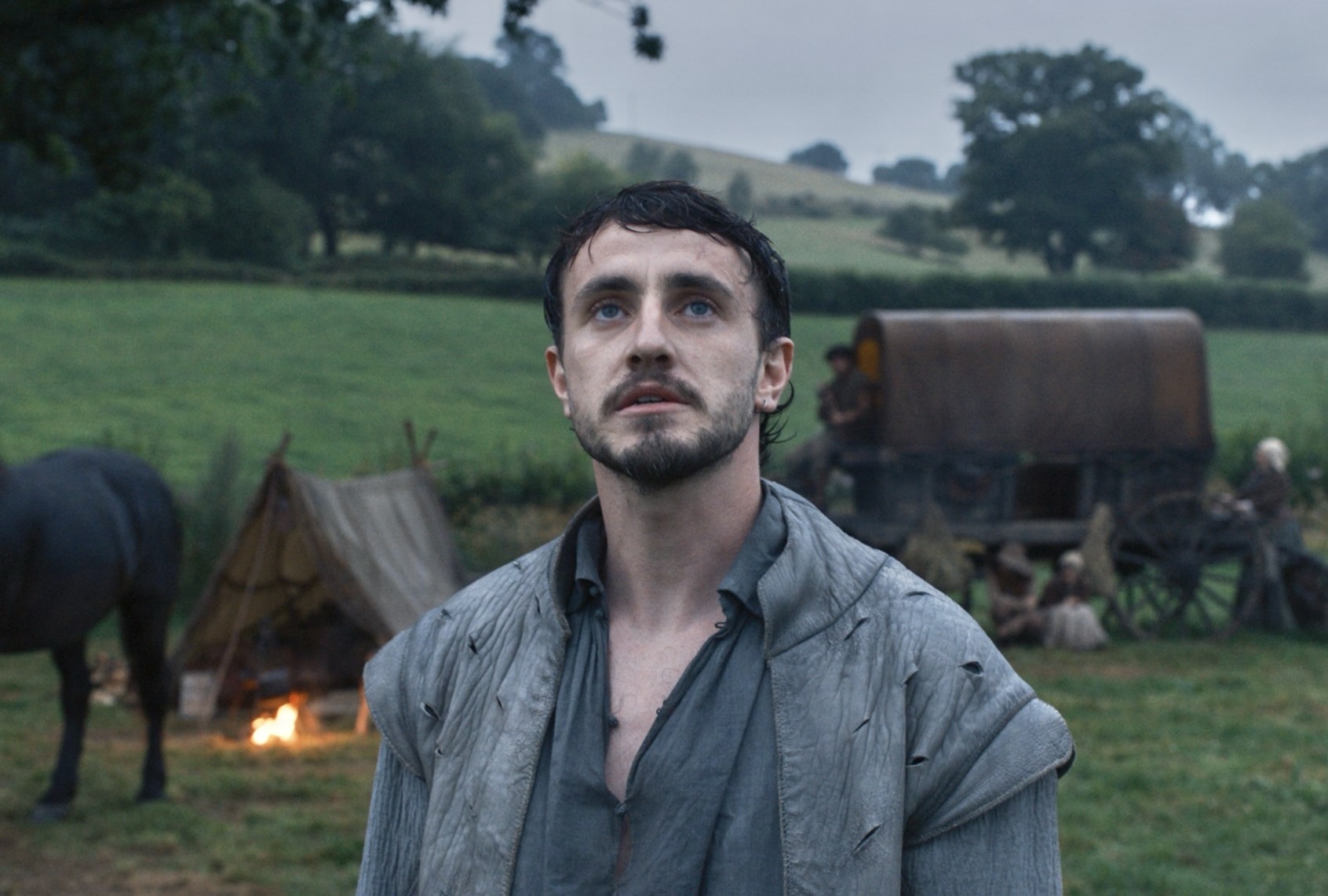
The film begins with the courtship of a small-town Latin tutor (Paul Mescal) and an odd young woman (Jessie Buckley) who spends much time in the woods, has a pet hawk and is rumored to be the daughter of a witch.

Their respective families (Emily Watson plays the tutor’s mother) disapprove, but young love (or lust) will have its way.  With Agnes pregnant, marriage is the next step.
Paul Mescal

The bulk of “Hamnet” is devoted to domestic life in Stratford.  The young husband begins spending time away in London (writing plays, we presume) while Agnes holds down the fort back home.  Their reunions are happy ones, and the couple have three children.

The only boy is Hamnet, so charmingly played by young Jacobi Jupe that we nave no trouble imagining the fierce love his parents have for him. 

At age 9 Hamnet succumbs to the plague in a horrendous death scene that leaves his mother a screaming wraith of pain.  Father arrives too late to see his boy alive.

Tragedy can bring families together or tear them apart. It appears that this family will never recover from Hamnet’s death.

When Agnes learns that her spouse’s latest play references their dead son, she makes the long trip to London to confront her now-estranged husband, arriving just in time to witness one of the first performances of “Hamlet.”

It’s at this point that “Hamnet” becomes something extraordinary. Agnes enters the open-air Globe with dozens of other playgoers, pushes her way to the front of the crowd and leans on the stage, ready to hurl objections and insults at this entertainment that capitalizes on her grief.

Except that during the performance she finds herself engrossed by the extraordinary storytelling and language. Like her fellow playgoers, she is transported to Elsinore Castle and caught up in the tale of loss, revenge and existential paradox. Abandoning her initial objections, Agnes ultimately recognizes that her husband has come to grips with their loss by using the theater to resurrect their dead child.

Art as therapy.

Zhao’s recreation of an Elizabethan production is extraordinarily captivating, not the least because Noah Jupe (older brother of the actor who played Hamnet) is so spectacularly good as the actor portraying Hamlet on stage.  

Watching this tragedy unfold is a transforming experience.  We recognize the awe and investment of the London audience in this new play; the sheer aesthetic pleasure that transcends the tragedy.

Mescal and Buckley give fine performances, but in the end it is the eternal genius of William Shakespeare that sticks in the memory.

George Clooney

“JAY KELLY”  My rating: C(Netflix)

132 minutes | MPAA rating: R

I’m a fan of George Clooney’s work. his persona and his politics.  But “Jay Kelly” left me cold.

Noah Baumbach’s latest film is a character study…sort of…of a man who apparently has no character.

Jay Kelly (Clooney) is a famous movie star.  Millions know him from his many screen appearances, but apparently nobody knows him, really.

His family, his friends, his co-workers…about all they get from him is suave charm, self-deprecating wit and good looks.  If there’s a real human being in the attractive package, it’s yet  to assert itself.

The screenplay by Baumbach and actress Emily Mortimer (who takes a small role) finds Jay on a trip to Italy to receive some sort of award.  Usually he flies in a private jet, but for this trip he has decided to take the train with all the other tourists and proles.  He says he doesn’t like being noticed, but he sure spends a lot of time being noticed.

If anyone is close to knowing Jay it’s his long-suffering manager Ron (Adam Sandler), who likes to think of himself as a friend.  Except as Jay points out, friends don’t usually take 15 percent.

“Jay Kelly” has an astoundingly deep cast — Greta Gerwig, Billy Crudup, Laura Dern, Patrick Wilson, Stacy Keach, Isla Fisher, Jim Broadbent, Riley Keough, Josh Hamilton (for starters) — though many have only a few seconds of screen time.

The film is stranded somewhere between satirizing Hollywood and its denizens and empathizing with Jay’s late-in-life realization that as a human he’s pretty much blown it.  But it’s neither funny enough or tragic enough to warrant a bloated running time (more than two hours).

Moreover, since Jay is a handsome cipher, our only real  human connection is Sandler’s Ron, who must ride herd on a mercurial star while trying to hold together his own private life.  It’s the film’s best performance.

“Jay Kelly” ends with Jay and an audience watching a compilation of scenes from his film and television work (actually they’re clips from George Clooney’s career, making for a sort of head-smacking meta moment).  To the extent that the segment stirs pleasurable memories it gives Jay’s life an emotional arc missing from the rest of the film.

But it’s a contrived moment in a film that already feels contrived.

| Robert W. Butler

Read Full Post »

Harper Steele, Will Ferrell

“WILL & HARPER”  My rating: B+ (Netflix)

114 minutes | MPAA rating: R

“Will & Harper” is both a hugely emotional paen to friendship and a sobering/reassuring look at grassroots America.

It’ll have you sobbing one minute, furious the next.

The Will of the title is Will Ferrell, famous comic actor.  Harper is the former Andrew Steele, a long-time writer for “Saturday Night Live” who at age 61 decided to transition.

At the outset of Josh Greenbaum’s documentary, Ferrell recalls getting an email from Steele announcing her new status as a woman.  Farrell never saw it coming.

But Will Ferrell is a very good friend.  Knowing that as a man Harper had often driven across America, hanging out in seedy motels and nefarious watering holes, Ferrell suggested the two buds take a road trip. 

It would give them plenty of time to explore their new relationship while seeing how, if at all, Harper would be accepted  by the everyday folk being bombarded with anti-trans propaganda.

There’s good news and bad news. At an Oklahoma road house Harper is serenaded by a group of Native American men who employ a plastic tub as a tom tom to chant a welcoming song.  Awwww.

The next day, in Texas, the two travelers take center stage at a crowded highway restaurant.  Clearly, the local folk are impressed at having a celeb in their midst, but many fire off a slew of cruel anti-trans tweets aimed at the comic’s companion.

But perhaps the most devastating part of the journey is hearing Harper speak of the many years in which she fought against recognizing her true sexual identity. It’s sad and inspiring.

Which is not to say that “Will & Harper” is a downer.  Ferrell and Steele have earned their livings by making other people laugh, and their banter has plenty of drollery sprinkled among the truth nuggets.

I believe I’m a better person for having watched it.

Brad Pitt, George Clooney

“WOLFS” My rating: B (Apple+)

108 minutes | MPAA rating: R

It really doesn’t go anywhere, but you’ve gotta enjoy the ride provided by “Wolfs,” a lean, funny crime dramedy fueled by Tarantino-esque banter.

The premise of writer/director Jon Watts’ film:  Two mob cleaners (they are hired to discreetly remove evidence — like dead  bodies — after violent encounters) find themselves working on the same assignment.

It must be a mistake because these unnamed dudes (played by George Clooney and Brad Pitt) always work alone and are fiercely protective of their trade secrets. (They’re “lone wolfs.”)

Nevertheless, here they both are in an expensive hotel room to remove the body of a young man who, while cavorting with an older woman (Amy Ryan), bounced off the bed and into a glass coffee table.

These wolfs don’t play well with each other.  The older one (Clooney) is a brooding grump. The younger (Pitt) is a cocky wise ass.  

Oil and water.

And then there’s the vinegar. (Here comes a spoiler but I don’t know how to avoid it.)

That would be “the kid” (Austin Abrams), the supposedly dead body that returns to life mid-disposal.  He’s a goofy college student who got picked up by the cougar while running an errand for a friend…an errand that involves a backpack full of drugs.

Now the two fixers and the kid are trying to return the illegal pharmaceuticals to their criminal owners without getting killed.

But not before an awesome chase through NYC with the two wolfs pursuing the whacked-out kid, who is racing gazelle-like through a snowstorm in his tidy whities. 

Remember Nicolas Cage’s quest for baby diapers in “Raising Arizona”?  It’s that good.

The thorny plot twists of “Wolfs” may not stand up to close scrutiny, but viewer doubts probably won’t kick in until after the final credits.  For the most part the flick is just plain fun.

Natasha Lyonne, Elizabeth Olsen, Carrie Coon

“HIS THREE DAUGHTERS” My rating: B+ (Netflix)

101 minutes | MPAA rating: R

Getting married. Having a kid. Losing a parent.

These are three of the most impactful experiences in a human life. Azazel Jacobs’ “His Three Daughters” examines the third event through a pressure-cooker environment and three astonishing performances.

The daughters are Katie (Carrie Coon), Rachel (Natasha Lyonne) and Christina (Elizabeth Olsen). The siblings have gathered in the New York apartment of their father, who lies dying in his bedroom (we won’t actually see him until the final moments of the film).

Though all were raised by the same single dad, the women have radically different personalities.

Katie, the oldest, is a brittle, opinionated woman who tries to come off as helpful but actually is merely bossy. Katie has rarely visited her father in recent months but now wants to dictate how this whole business of dying will unfold. The problem, of course, is that death doesn’t operate on a convenient schedule.

Christina has a husband and young daughter back in Ohio. She’s painfully insecure, always sharing appallingly sappy phone calls with her kid and shying away from argument and controversy.

Rachel is the family bohemian. She’s been living with her father for years, taking care of him in his decline. She appears not to have a real job and frequently lets off steam with a joint or two, both life choices that infuriate the judgmental Katie.

“…Sisters” unfolds almost entirely in the living room and kitchen of the apartment, creating a claustrophobic intensity that magnifies the points of conflict among the women.

Every few hours a hospice worker (Rudy Galvan) checks in; at one point Rachel’s boyfriend (Jovan Adepo) shows up to give her a bit of moral support and to unload on Katie and Christina, whom he (rightly) believes have shirked their familial responsibilities while Rachel got stuck with the role of caregiver.

“His Three Daughters” could quite easily have been conceived as a stage play rather than a film. The dialogue is tight and polished and wastes little time in exposing the character’s conflicted essences. Sometimes it sounds a bit artificial and forced, but any misgivings are quiickly dispersed by the power and subtlety of the performances.

Most of the film is brutally realistic. But in the final moments, when we finally meet the women’s father (Jay O. Sanders), it becomes borderline metaphysical. I can’t say more without ruining the effect…let’s just say that despite often rubbing our noses in dysfunction, “His Three Daughters” leaves us with a whiff of hope.

| Robert W. Butler

Read Full Post »

Taranji P. Henson

 “THE COLOR PURPLE” My rating: B- (In theaters)

 140 minutes | MPAA rating: PG-13

Good but not great, the new musical version of “The Color Purple” is a largely faithful adaptation of Alice Walker’s Pulitzer-winning novel.

But what does it say that while watching it I was constantly reminded of Steven Spielberg’s 1985 non-musical version? Weirdly enough, the original film feels fresher to me than this new iteration. 

The reason for this can be summed up, I believe, in two words: Whoopi Goldberg.  Goldberg was so fantastically good, so consummately entertaining as the long-suffering Celie  in the original that by comparison the musical’s Celie — “American Idol” winner Fantasia Barrino  in her feature film debut — seems a bit meh.

Not bad, just meh. This Celie is always having things happen to her; she is more a pawn of fate than a discernible personality.

That’s not an issue with other members of the virtually all-black cast: Tara P. Henson’s Shug Avery,  a lusted-after bluesy songstress, or Colman Domingo’s Mister, a study in toxic/stupid chauvinism, or Danielle Brooks’ Sofia, who tragically learns that her strong-willed independence is problematic in a white man’s world.

The story covers nearly a half century and Kris Bowers’ songs reflect most of the salient black musical styles of the era, from solo-guitar Delta blues to work chants, big band blues shouting, gospel, cakewalks and proto-soul. These numbers work fine within the framework of the story, but none struck me as particularly earworm-worthy. I didn’t go home humming them.

The production values offered by director Biltz Bazawule and his design staff are first-rate, as is the staging of most of the musical numbers. They are the film’s highlights.

In its final moments this “Color Purple” hit some of the emotional notes I’d been looking for…it took a while to get there.


Callum Turner (center)

”THE BOYS IN THE BOAT” My rating: B (In theaters)

124 minutes | MPAA rating: PG-13

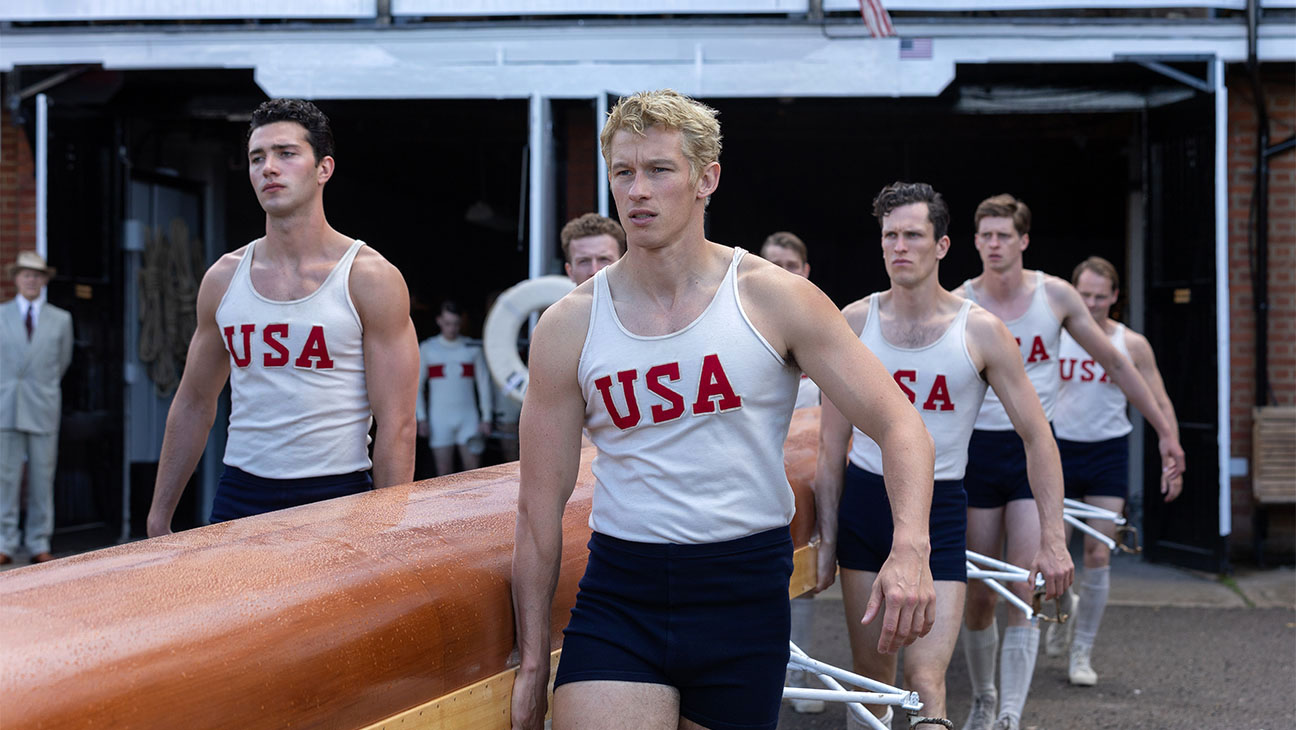
Let’s admit upfront that George Clooney’s “The Boys in the Boat” is a superficial drama densely packed with sports-movie cliches.

This makes it no less enjoyable.

For one thing, the cliches — training montages, a romantic subplot, the “big game” — are applied to the world of crew racing, the details of which most of us are ignorant.

So the film — a slightly fictionalized version of Daniel James Brown’s best-seller —immerses its audience  in an exotic sport in which individual excellence and ambition must be subservient to the group effort.  

When you’re rowing with eight other guys you do NOT want to stand out. It means you’re the broken cog in the well-oiled machine.

Mark L. Smith’s screenplay is set in the months leading up to the 1936 Berlin Olympics. Our nominal hero is Joe Rantz (Callum Turner), a pennyless University of Washington student who lives in a  burned-out car in a Depression-Era homeless encampment in Seattle; he tries out for crew simply because it offers its rowers three squares a day and a roof overhead.

We learn the punishing sport along with Joe and his crewmates, most of whom never are developed beyond a first impression.   Only a couple stand out. 

Coxswain Bobby Moch (Luke Slattery) is a small guy capable of bullying/coaxing his muscled rowers to greatness. (Since coxswains don’t row, every pound they add to the load is a liability.) And there’s Don Hume (Jack Mulhern), the crew’s strongest member but so painfully shy his friends aren’t sure he can speak.

Somewhat more fleshed out is Coach Al Ulbrickson (Joel Edgerton), desperate to end his reputation as an also-ran in the crew world, and perhaps George Pocock (Peter Guinness), the old fellow who designs and builds the boats and becomes a sort of philosophic mentor to Joe.

There is considerable inspirational speechifying, and many an observation about rowing being more poetry than sport.

But if the characters are barely developed, the boys’ David-and- Goliath story and the care with which Clooney and Co. recreate the crew world are utterly captivating.

Cheer yourself sick.

Suleika Jaouad, Jon Batiste

AMERICAN SYMPHONY” My rating: A- (Netflix)

104 minutes | MPAA rating: PG-13

Jon Batiste is a brilliant musician.

He’s an even better person.

That’s the takeaway from “American Symphony,” a documentary that originally was to chronicle Batiste’s efforts to write an orchestral piece but became about something far greater.

I knew going in that Matthew Heineman’s film would follow two tracks.  

First, there is Batiste’s creative journey in writing and performing “American Symphony,” an opus not only for orchestra but for jazz musicians, operatic singers, chanting Native Americans, Hispanic folk artists…it’s a real kitchen sink approach.

And then there’s the second plot, centering on Batiste’s wife Suleika Jaouad, a musician and essayist who found herself battling the leukemia she had originally beaten years earlier.

The portrait of Batiste that emerges here is that of a deeply spiritual man who embraces compassion as a lifestyle, who after a day of rehearsing and arranging for his work’s debut at Carnegie Hall would spend the night at the bedside of his wife.

Watching I kept asking myself if under the same circumstances I could be so patient, caring and supportive.

Doubtful.

It’s not like Batiste is an incarnation of Rebecca of Sunnybrook Farm.  He gets exhausted.  He admits to periods of depression. We see him having a texting session with his psychoanalyst.

But his innate goodness somehow always comes to the fore.

I cried easily and often watching “American Symphony,” a testament not only to human creativity but to humanity’s capacity for love. 

It’s one of the best cinematic gift we’ll get this Christmas.

| Robert W. Butler

Read Full Post »

Ben Affleck, Tye Sheridan

THE TENDER BAR” My rating:  B (Amazon Prime)

106 minutes | MPAA rating: R

Will the real Ben Affleck please stand up?

I cannot think of another major actor — okay…Nicolas Cage — whose public persona ranges so widely between genius and ass-hat smirk monkey. 

One cannot dismiss successes like Affleck’s Oscar-winning “Argo”; at the same time the man’s personal and romantic ups and downs are a publicist’s nightmare and a constant inspiration for late-night talk-show monologues.

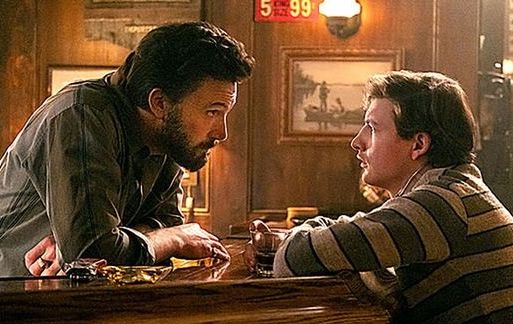
I’m happy to report that Affleck gives one of his best performances — hell, one of the best performances of the year — in “The Tender Bar,”  George Clooney’s knowing adaptation of J.R. Moehringer’s coming-of-age memoir.

Affleck is essentially a supporting player here but his work is so subtle, insightful and charismatic that all the tabloid baggage falls away and we are left in the thrall of an actor connecting perfectly with his character.

The rest of the film is no slouchfest, either. 

Early on young JR (played to perfection by first-timer Daniel Ranieri) and his mom (Lily Rabe) are forced by economic necessity to return to Mom’s blue-collar home town on Long Island. There they take up residence with crusty Grandpa (Christopher Lloyd), quiet Grandma (Sondra James) and especially JR’s uncle, Charlie (Affleck).

JR is essentially fatherless — his biological sire is a  boozing, womanizing, peripatetic radio deejay several years behind on the child support checks.  Under the circumstances one understands why the kid gravitates to his effortlessly suave uncle.

Charlie runs a working man’s bar filled with garrulous regulars.  Like young JR, Charlie is a huge consumer of good literature. At the same time, he never comes off as effete or uber-intellectual; he’s beloved by his dirt-under-the-nails customers for his arid irony, unforced toughness and down-to-earth humanism.

In effect Charlie and his barflies become JR’s adopted father figures, dispensing whiskey-fueled wisdom and (sometimes intentionally, often not) important life lessons.

Chsitopher Lloyd, Daniel Ranieri

The film wafts back and forth between JR’s boyhood and his young adulthood as an Ivy League university student bent on a literary career (he’s played at this age by Tye Sheridan).

We eavesdrop on his doomed love affair with an upper-middle-class fellow student (Briana Middleton); she’s the child of mixed-race parents who clearly think this proletarian yahoo isn’t nearly good enough for their daughter.

We follow him on his first foray into big-city newspapering.

And the film reaches a dramatic crescendo with a rare meeting of JR and his absent father (Max Martini) in which whatever dreams the kid may have of reconnection are dashed once and for all.

“The Tender Bar” is less a film of big dramatic moments than a gently unfolding idyll of self-discovery and familial nurturing. It’s wistful, warm and wise.

Affleck, Ranieri and Sheridan are terrific.  Also deserving of special notice is Lloyd, whose scraggly Grandpa turns out to be an incredibly smart guy hiding out in a seedy, grumpy-old-man exterior.  You can see where Uncle Charlie got his mojo.

| Robert W. Butler

Read Full Post »

George Clooney, Caoilinn Springall

“THE MIDNIGHT SKY” My rating: B (Netflix)

122 minutes | MPAA rating: PG-13

End-of-the-world movies are invariably downers.

“The Midnight Sky” is “The Road” and “Melancholia”-level depressing.

So it’s a testament to the directing and acting chops of George Clooney that this long slow journey to extinction not only hooks us early but keeps us on the line as things just keep getting worse.

Clooney’s achievement is doubly impressive when you consider that “Midnight Sky” relies on a “Six Sense”-ish last-reel revelation that may leave some viewers feeling just a tad violated.

Mark L. Smith’s screenplay (adapted from Lily Brooks-Dalton’s novel Good Morning, Midnight)  begins in 2049 with the evacuation of a polar observatory.  The 200 or so residents of this snowbound outpost are being helicoptered out because of “The Event,” an unexplained phenomenon that is spreading a cloud of death around the planet.

Just one man, the grizzled Augustine Lofthouse (Clooney), will remain behind. He’ll have enough food and fuel to last for months, but probably won’t need them. He’s undergoing chemotherapy; what he’s got isn’t going away.

Augustine has a mission. He’s determined to contact a manned spacecraft returning from one of Jupiter’s moons.  Decades earlier the young Augustine (played in flashbacks by Ethan Peck) identified said moon as likely to sustain human life. He was right; the five astronauts returning to Earth found a welcome environment on that distant orb.

These interstellar travelers must be warned of Earth’s fate so that they can return to Jupiter orbit and, hopefully, start the human race all over again.

Problem is, the crew (Felicity Jones, David Oyelowo, Kyle Chandler, Demian Bichir, Tiffany Boone) are been unable to hail their contacts on Earth.  We know it’s because of The Event, but the astronauts assume their communication equipment has a glitch.

(more…)

Read Full Post »

George Clooney

George Clooney

“HAIL, CAESAR!” My rating: C+ 

106 minutes | MPAA rating: R

The Coen Brothers’ “Hail, Caesar!” isn’t much of a movie, but as an affectionate (mostly) valentine to the Golden Age of Hollywood filmmaking, it’s a generally enjoyable goof.

The threadbare plot devised by Joel and Ethan Coen provides the siblings with multiple opportunities to go behind the scenes at the massive (and fictional) Capitol Movies studio in Los Angeles in the late 1940s.

We get to watch as America’s fantasies are brought to life. But as with sausages and laws, sometimes it’s best not to know how they’re made.

Kicking the yarn into motion is the kidnapping of stiffly handsome matinee idol Baird Whitlock (George Clooney), whose current assignment is to play a Roman centurion in the biblical epic “Hail, Caesar!”

The studio’s production chief, Eddie Mannix (Josh Brolin) gets to work recovering his ransomed movie star.

That’s about it for story.

The pleasures of “Hail, Caesar!” (the Cohen Brothers movie, not the “tale of the Christ” being filmed on the Capitol lot) are to be found in its satire/celebration of iconic Hollywood personalities and situations.

Early on Eddie must convene a meeting of faith leaders who have been asked to comment on the screenplay for “Hail, Caesar!” — it’s the movie’s funniest scene and a wickedly barbed sendup of institutionalized religion.

Channing Tatum

Channing Tatum

Eddie must contend with the potty-mouthed Esther Williams-type star of aquatic musicals (Scarlett Johansson) whose mermaid outfit now won’t fit because of pregnancy (she’s unmarried).

He drops off the ransom money on a soundstage where a Gene Kelly-ish song and dance man (Channing Tatum) is shooting a big production number about a crew of sailors dismayed at the prospect of eight months at sea without women.  Not only are Tatum’s acrobatic musical comedy skills first rate, but the slyly homoerotic elements of the dance routine suggests that these Navy swabs will find ways to let off steam during their voyage.

(more…)

Read Full Post »

monuments_men“THE MONUMENTS MEN” My rating: C+ (Opening wide on Feb. 7)

118 minutes | MPAA rating: PG-13

Most of  the films George Clooney has directed  — “Confessions of a Dangerous Mind,” “Good Night, and Good Luck” and “The Ides of March” — have found him stretching himself, developing a style that was part indie edgy and part Hollywood classic, with a choice in topics that skewed liberal and humanistic.

His latest, “Monuments Men,” based on the real-life exploits of art experts who recovered masterpieces stolen by the Nazis, hits the Hollywood classic part perfectly. In fact it feels exactly as if it could have been made by a big studio in the early 1960s.

It’s been lushly produced, carefully scripted, tastefully shot. But edgy it isn’t…there’s hardly a moment here that doesn’t seem to have been painstakingly  weighed and thought out in advance.

Clooney — with a trim ‘stache and graying temples that make him look remarkably like a mature Clark Gable — portrays Frank Stokes, an art expert who creates a unit within the U.S. Army with the sole purpose of tracking down and saving art masterpieces looted by  the Germans.

He recruits a decidedly un-military bunch of art specialists, most of them pushing 60, who must undergo the rigors of basic training before they can be deployed to recently-liberated Normandy to begin their search.

(more…)

Read Full Post »

“THE DESCENDANTS” My rating: B+ 

115 minutes | MPAA rating: R

Alexander Payne doesn’t make movie about big ideas.

He makes movies about small people, then makes us care about them, flaws and all.

In fact, it’s hard to name another contemporary director who has so successfully found the comedy in tragedy and the tragedy in comedy.

Matt King, the clueless Honolulu lawyer at the center of  “The Descendants,” is a near cousin of “Sideways’” Miles, “Election’s” Jim McAllister and “About Schmidt’s” Warren Schmidt. He’s a not-particularly-nice guy thrown into circumstances that force him to face himself.

(more…)

Read Full Post »

“THE IDES OF MARCH” My rating: B+ (Opening wide on Oct. 7)

101 minutes | MPAA rating: R

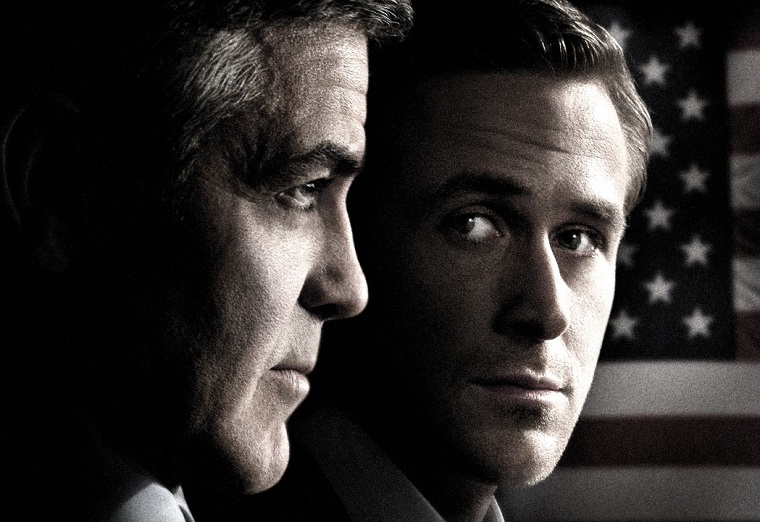
George Clooney, viewed by many as a liberal white knight who really ought to run for office, sends an answer of sorts with “The Ides of March.”

In this political thriller — directed and co-written by Clooney — the charismatic movie star plays a charismatic state governor who has thrown himself into Ohio’s presidential primary in a bid for the Democratic nomination.

Watching Clooney’s Mike Morris gracefully glide through debates, press conferences and stump speeches is a bit weird…it’s like a preview of what a genuine Clooney candidacy would be like. The Morris campaign even has a poster depicting the candidate in the same pop art/street graffiti visual language of that famous Obama image from ’08. Lefties will be swooning.

But this candy apple has a razor blade hidden inside.

(more…)

Read Full Post »