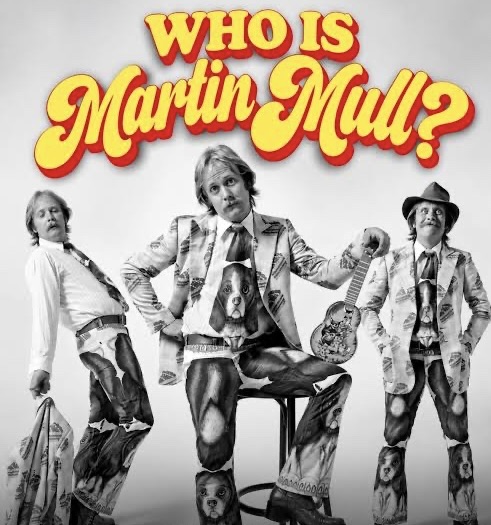
“WHO IS MARTIN MULL”?” My rating: B+ (Netflix)
94 minutes | No MPAA rating
Like most folk, I know the late Martin Mull as a comic force from television (“Mary Hartman, Mary Hartman,” “Fernwood Tonight,” “Roseanne” and as a long-time guest host on “The Tonight Show”), films (“Mr. Mom,” “Clue”), recordings (six albums mixing comedy and music — “A Girl Named Johnny Cash”) and live performances (caught his act years ago at the Uptown Theatre. It was magical.)
And now I find, thanks to “Who is Martin Mull?”, that he didn’t give a hoot for any of that. Performing was a way of underwriting his art career.
This doc began as a project by Mull’s good friend and fellow comic, Bob Saget. The two sat down for a series of filmed conversations interrupted by Saget’s death in 2022.
After Mull’s death in 2024 filmmaker Neil Berkeley (who’s done docs on comics Maria Bamford and Gilbert Gottfried) picked up that footage, augmenting it with talking-head interviews with Mull’s friends and admirers (Steve Martin, Patton Oswalt, David Alan Grier, Eric Idle and Laurie Metcalf…just for starters) and a slew of movie, TV and performance clips,
The results are revelatory and just plain wonderful.
“I guess documentaries are done about people who’ve done something extremely well,” Mull apologizes to the camera. “But in my case, I think it’s like that I did a number of different things… and got at least passing grades in all of them. I don’t have a one-man show at the Museum of Modern Art. I don’t have an Oscar. I don’t have a Grammy… that’s a problem in a documentary.”
Mull’s stage persona — that of a vaguely smarmy egotist — was a part of his personality, certainly. But it was also a cover.
He grew up virtually ignored by his father (he was jealous because the Old Man would beat up his brother, but not Marty) and feeling out of whack with his red-white-and-blue suburban environment.
Of his years at the Rhode Island School of Design (“It made me what I am…or destroyed what I was”) convinced him that he should devote his life to art. Except that art didn’t pay.
Which is how Mull drifted into the folk scene, mixing music with standup elements (or rather sit-down elements…he performed in an overstuffed chair he lugged from show to show), then got into television and all those other outlets.
He was doing well, but was miserable, describing himself as a functioning alcoholic. Eventually he turned his life around with an assist from longtime friend and bandmate Wendy Haas, who would become his wife.
Anyway, performing allowed him to spend his spare time painting. And Holy Shit, was he good!
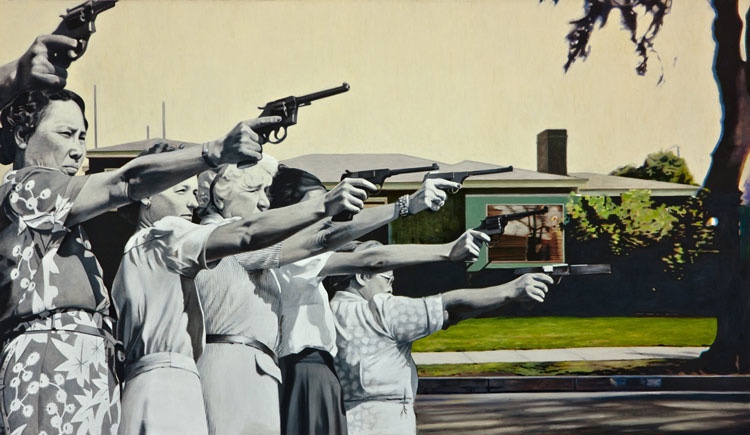
“Tea Party” by Martin Mull (2010)
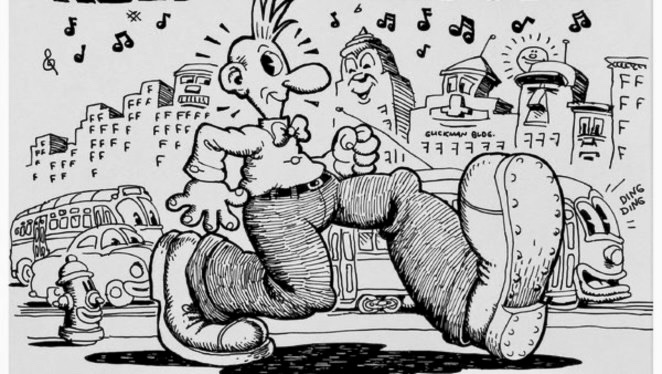
The suburban world in which he felt so out of place became the subject of countless surreal canvases mixing photo-realism against pop art backgrounds that sometimes looked like paint-by-numbers landscapes. He combined oil with collages, often incorporating imagery from old children’s books, magazines and family snapshots.
It’s an astounding body of work which will be celebrated next summer at the Santa Barbara Museum of Art in the show “Martin Mull: The Joys of Indoor/Outdoor Living.”
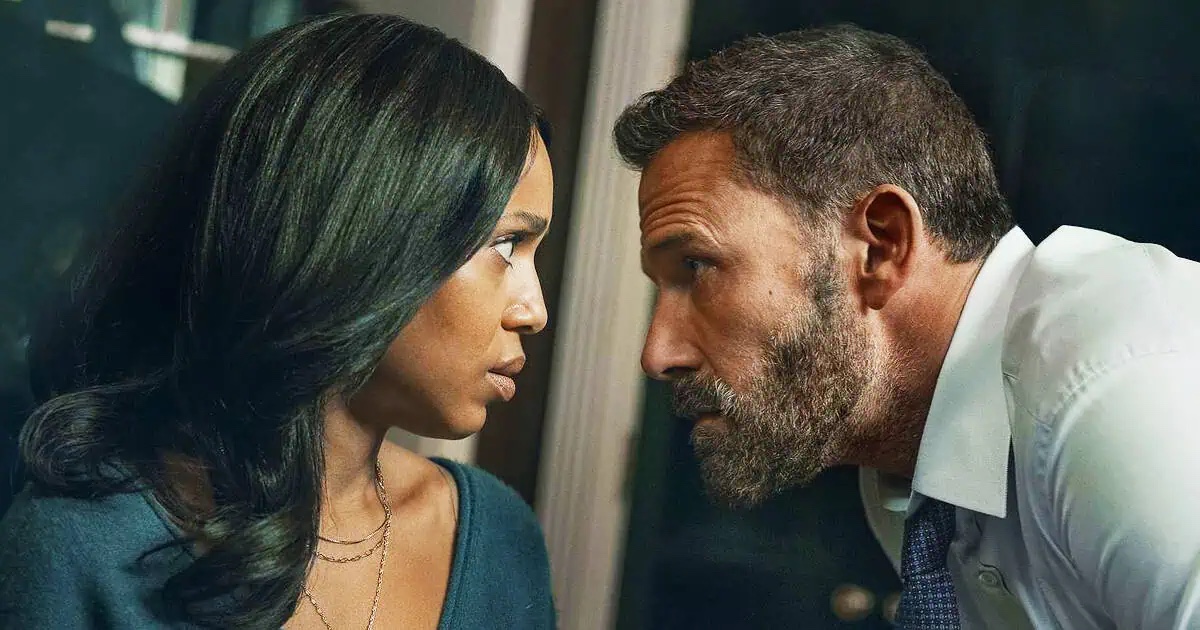
Kerry Washington, Ben Affleck
“ANIMALS” My rating: C (Netflix)
106 minutes | MPAA rating: R
It features Gillian Anderson in a gratifyingly bizarre performance, but other than that “Animals” is a sad ripoff.
Directed by Ben Affleck and written by Affleck, Connor O. McIntyre and Billy Ray, “Animals” is a shameless steal from Kurosawa’s acclaimed 1963 kidnap drama “High and Low,” which was remade last year by Spike Lee with the title “Highest 2 Lowest.” Lee had the decency to credit his movie as “based on” the Kurosawa classic; Affleck and his co-conspirators apparently lack that quality.
Affleck stars as attorney Mark Kimball, currently in the final stages of his campaign for mayor of Los Angeles.
Kimball is so obsessed with winning that he spends most of his time with his scheming campaign manager, Sam (Steven Yuen), more or less ignoring his wife Abigail (Kerry Washington), who is having a secret affair with another man, and their son Denny (Christopher Woodley). There’s also the uncomfortable fact that without telling his family Kimball has mortgaged everything they own to finance his run.
But that’s all background. The yarn kicks into gear when Denny fails to return home from trick-or-treating and they get a mysterious call from a man who claims to have taken the boy. He wants millions for the kid’s return.
As was the case with the Kurosawa film, the bad guy has snatched the wrong child. Instead of Denny he’s taken the son of the Kimballs’ housekeeper (Adriana Paz) and gardener (Luis Geraro Mendez). After way too much soul searching the couple decide they must step up and pay the ransom.
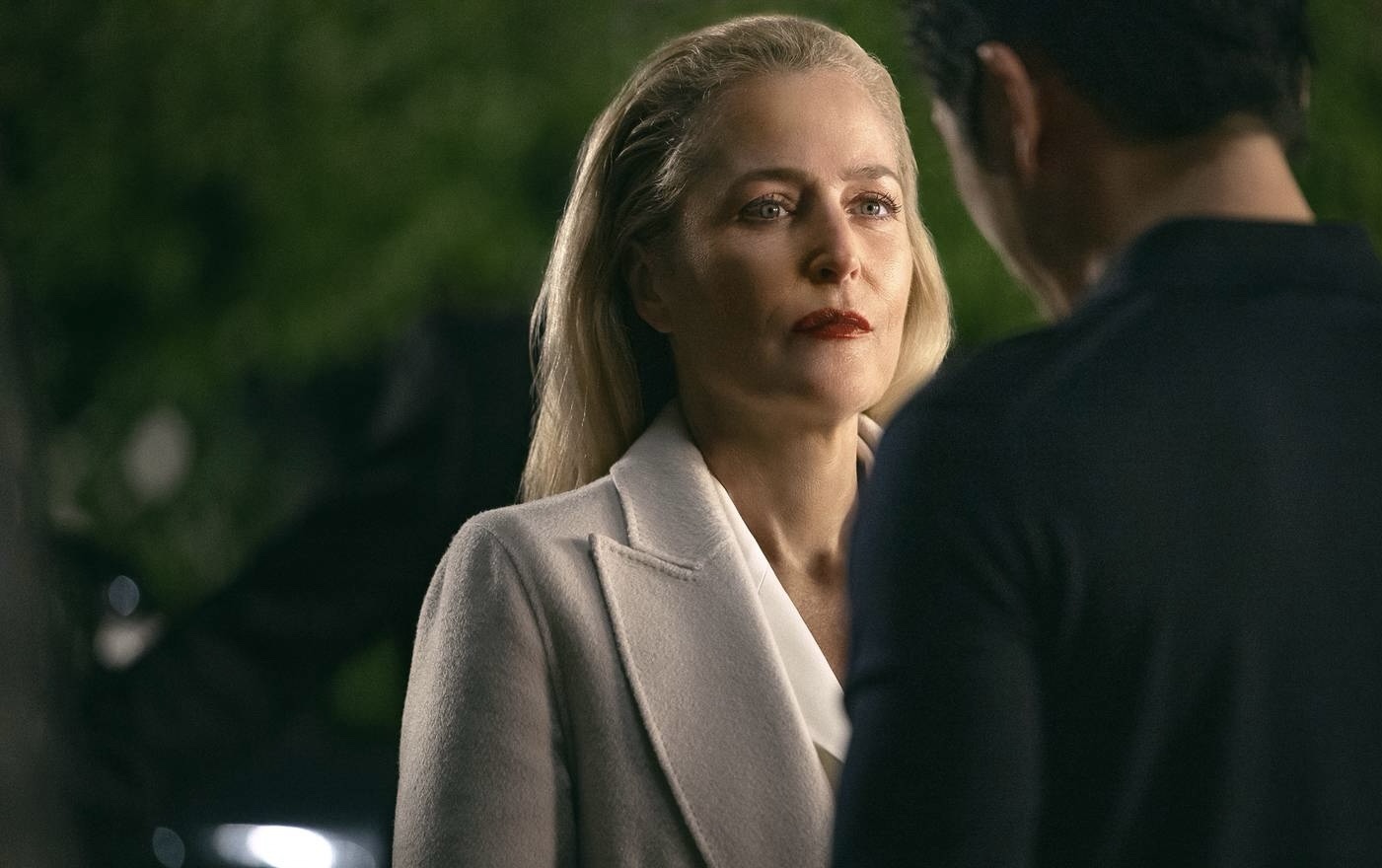
Gillian Anderson
Except…they no longer have any money. Enter Anderson as Dayle Burton, some sort of high society fixer who cruises around in a stretch limo (her driver is also an assassin), dresses all in white and shows the emotional range of an ice cube.
As written the role is ridiculous — Dayle just happens to have several million in cash in her car trunk and apparently knows more about kidnapping schemes than any cop. Also she’s demanding major interest on her “loan” to the Kimballs.
Thing is, Anderson’s perf is so fascinating that she lifts the film out of it cliched quagmire. Believable? Not for a minute. But with an empty enterprise like this one you take what comfort you can.
The Kimballs come off as wealthy, self-obsessed assholes. Whether this was Affleck and Crew’s intention I don’t know. But “Animals” gives us few characters to root for.
| Robert W. Butler