Feeds:
Posts
Comments

Posts Tagged ‘horror’

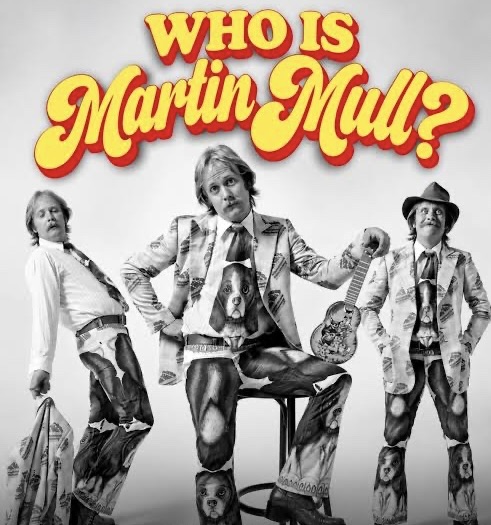
“WHO IS MARTIN MULL”?” My rating: B+ (Netflix)

94 minutes | No MPAA rating

Like most folk, I know the late Martin Mull as a comic force from television (“Mary Hartman, Mary Hartman,” “Fernwood Tonight,” “Roseanne” and as a long-time guest host on “The Tonight Show”), films (“Mr. Mom,” “Clue”), recordings (six albums mixing comedy and music — “A Girl Named Johnny Cash”) and live performances (caught his act years ago at the Uptown Theatre.  It was magical.)

And now I find, thanks to “Who is Martin Mull?”, that he didn’t give a hoot for any of that.  Performing was a way of underwriting his art career.

This doc began as a project by Mull’s good friend and fellow comic, Bob Saget.  The two sat down for a series of filmed conversations interrupted by Saget’s death in 2022. 

After Mull’s death in 2024 filmmaker Neil Berkeley (who’s done docs on comics Maria Bamford and Gilbert Gottfried) picked up that footage, augmenting it with talking-head interviews with Mull’s friends and admirers (Steve Martin, Patton Oswalt, David Alan Grier, Eric Idle and Laurie Metcalf…just for starters) and a slew of movie, TV and performance clips, 

The results are revelatory and just plain wonderful.

“I guess documentaries are done about people who’ve done something extremely well,” Mull apologizes to the camera. “But in my case, I think it’s like that I did a number of different things… and got at least passing grades in all of them. I don’t have a one-man show at the Museum of Modern Art. I don’t have an Oscar. I don’t have a Grammy… that’s a problem in a documentary.” 

Mull’s stage persona — that of a vaguely smarmy egotist — was a part of his personality, certainly.  But it was also a cover. 

He grew up virtually ignored by his father (he was jealous because the Old Man would beat up  his brother, but not Marty) and feeling out of whack with his red-white-and-blue suburban environment.

Of his years at the Rhode Island School of Design (“It made me what I am…or destroyed what I was”) convinced him that he should devote his life to art.  Except that art didn’t pay.  

Which is how Mull drifted into the folk scene, mixing music with standup elements (or rather sit-down elements…he performed in an overstuffed chair he lugged from show to show), then got into television and all those other outlets.

He was doing well, but was miserable, describing himself as a functioning alcoholic.  Eventually he turned his life around with an assist from longtime friend and bandmate Wendy Haas, who would become his wife.

Anyway, performing allowed him to spend his spare time painting. And Holy Shit, was he good!

“Tea Party” by Martin Mull (2010)

The suburban world in which he felt so out of place became the subject of countless surreal canvases mixing photo-realism against pop art backgrounds that sometimes looked like paint-by-numbers landscapes.  He combined oil with collages, often incorporating imagery from old children’s books, magazines and family snapshots.

It’s an astounding body of work which will be celebrated next summer at the Santa Barbara Museum of Art in the show “Martin Mull: The Joys of Indoor/Outdoor Living.”
Kerry Washington, Ben Affleck

“ANIMALS” My rating: C (Netflix)

106 minutes | MPAA rating: R

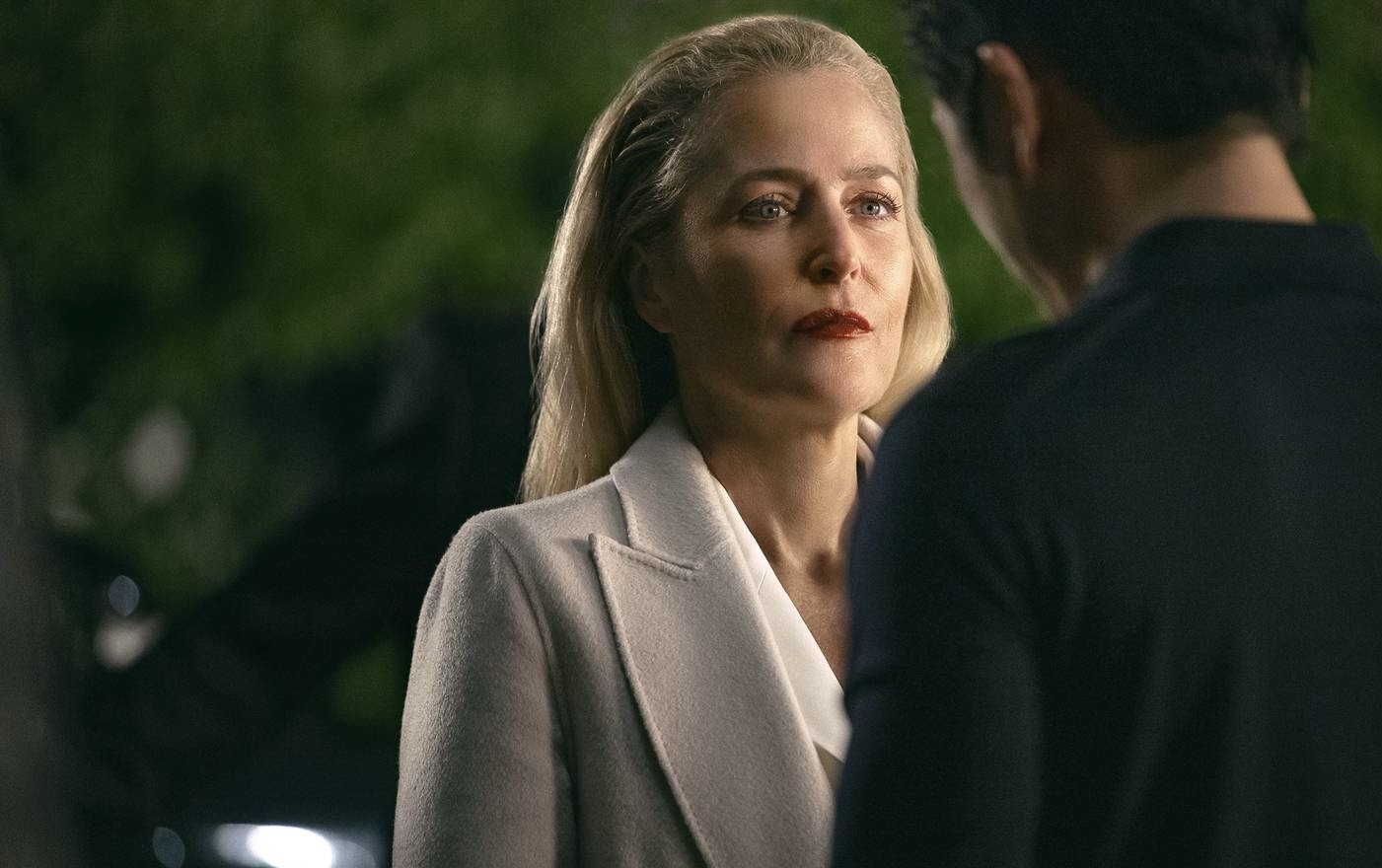
It features Gillian Anderson in a gratifyingly bizarre performance, but other than that “Animals” is a sad ripoff.

Directed by Ben Affleck and written by Affleck, Connor O. McIntyre and Billy Ray, “Animals” is a shameless steal from Kurosawa’s acclaimed 1963 kidnap drama “High and Low,” which was remade last year by Spike Lee with the title “Highest 2 Lowest.”  Lee had the decency to credit his movie as “based on” the Kurosawa classic; Affleck and his co-conspirators apparently lack that quality.

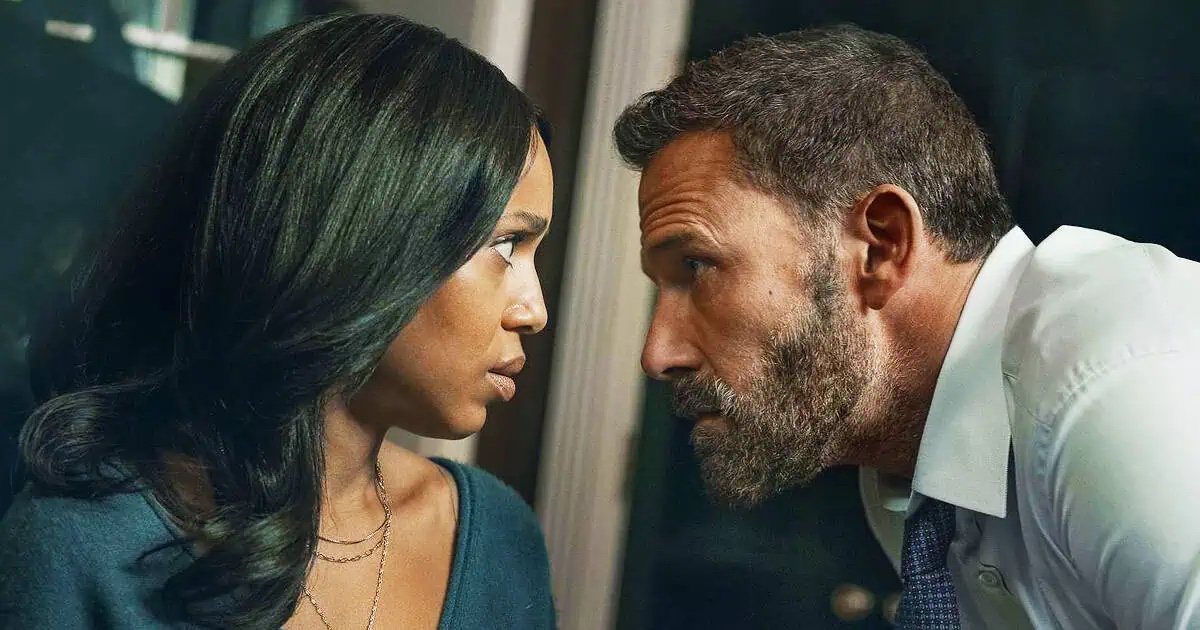
Affleck stars as attorney Mark Kimball, currently in the final stages of his campaign for mayor of Los Angeles. 

Kimball is so obsessed with winning that he spends most of his time with his scheming campaign manager, Sam (Steven Yuen), more or less ignoring his wife Abigail (Kerry Washington), who is having a secret affair with another man, and their son Denny (Christopher Woodley). There’s also the uncomfortable fact that without telling his family Kimball has mortgaged everything they own to finance his run.

But that’s all background. The yarn kicks into gear when Denny fails to return home from trick-or-treating and they get a mysterious call from a man who claims to have taken the boy.  He wants millions for the kid’s return.

As was the case with the Kurosawa film, the bad guy has snatched the wrong child.  Instead of Denny he’s taken the son of the Kimballs’ housekeeper (Adriana Paz) and gardener (Luis Geraro Mendez). After way too  much soul searching the couple decide they must step up and pay the ransom.
Gillian Anderson

Except…they no longer have any money.  Enter Anderson as Dayle Burton, some sort of high society fixer who cruises around in a stretch limo (her driver is also an assassin), dresses all in white and shows the emotional range of an ice cube.

As written the role is ridiculous — Dayle just happens to have several million in cash in her car trunk and apparently knows more about kidnapping schemes than any cop. Also she’s demanding major interest on her “loan” to the Kimballs.

Thing is, Anderson’s perf is so fascinating that she lifts the film out of it cliched quagmire. Believable? Not for a minute. But with an empty enterprise like this one you take what comfort you can.

The Kimballs come off as wealthy, self-obsessed assholes.  Whether this was Affleck and Crew’s intention I don’t know.  But “Animals” gives us few characters to root for.

| Robert W. Butler
Read Full Post »

Hannah Einbinder, Gillian Anderson

“TEENAGE SEX AND DEATH AT CAMP MIASMA” My rating: B (In theaters on Aug. 21)

112 minutes | MPAA rating: R

There’s so much to unpack in Jane Schoenbrun’s “Teenage Sex and Death at Camp Miasma” that you practically need a flow chart to keep on top of all its ideas.

As the name implies, it’s a parody of those teen slasher films in which horny adolescents are carved up by a mysterious masked individual.

But it’s also a tale of sexual liberation.  And a visual tour de force.  And a sly look at the process of artistic creation.

And, believe it or not, a showcase for two of the year’s best performances.

That said, it ain’t for everyone. 

Schoenbrun’s previous film, 2024’s “I Saw the TV Glow,” centered on outsider teens obsessed with a cheesy ’80’s TV horror/fantasy.  It was a somber affair, sad even, but it got under my skin even if I wasn’t quite sure of just what was going on.

“Teenage Sex…,” on the other hand, is a goofy lark, albeit one that draws heavily on Schoenbrun’s own childhood and career.  

Just so you know where we’re coming from here: Schoenbrun is transgender (their early films were made under the name Dan Schoenbrun) and while in the fifth grade they devoted a month to watching every “Nightmare on Elm Street” film.  All that is in evidence in this latest effort.

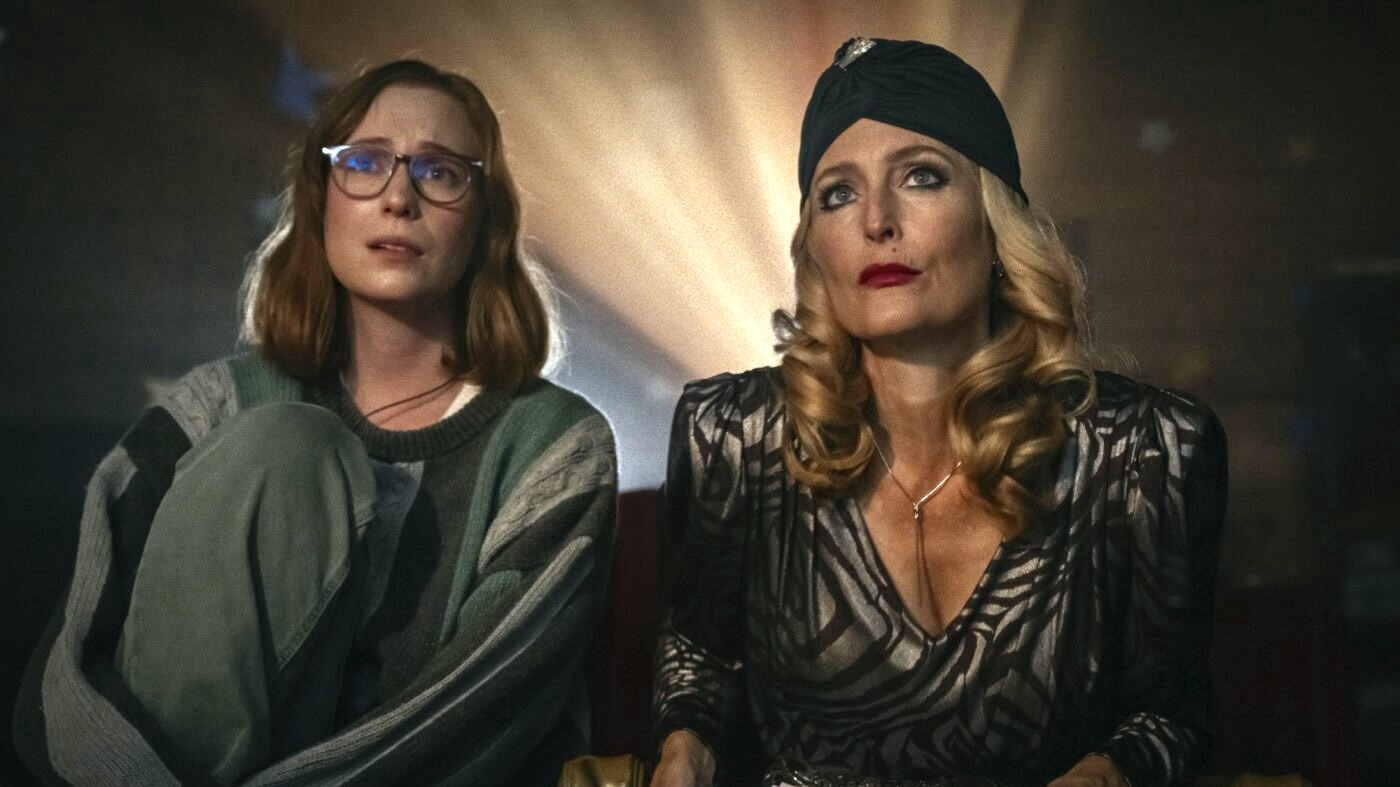
The setup:  Lesbian filmmaker Kris (Hannah Einbinder) has come to the Pacific Northwest to visit the summer camp that was the setting for her favorite series of horror flicks.  She’s planning a reboot of the “Camp Miasma” franchise, and her goal is to track down the female star of the original film.

That would be Billy (Gillian Anderson), who dropped off the map after her screen debut and for 30 years has been living as a recluse in a cabin at the long-abandoned summer camp.

Einbinder and Anderson dominate what is essentially a two-character film.  As she showed in her Emmy-winning work in “Hacks,” Einbinder is a comic engine. Here she lacks the killer one-liners that fueled “Hacks,” but makes up for it in dorky earnestness and her fan-boy mania. Kris is a post-modern intellectual, but when it comes to her unfulfilled sexual and emotional needs she’s comically childlike.

Anderson’s Billy, on the other hand, comes off a bit like a turbaned Gloria Swanson in “Sunset Boulevard,” albeit with a molasses-tinged southern accent. Sexy but weird.

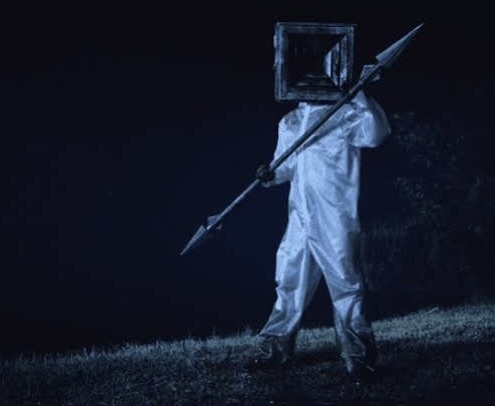
Schoenbrun’s screenplay has Kris staying at the snowbound camp so as to coax Billy into signing up for her new movie.  Along the way they watch the original “Camp Miasma,” which introduced Little Death, a killer in a white hazmat suit and a head-covering mask that looks like an air duct vent.

So basically we’ve got two movies here.  The one about Kris and Billy, and then the one they’re watching on an old 16mm film projector. “Teenage Sex…” is forever shifting between the two.

Little Death

All this comes to a head when Little Death rises from the lake bottom where he/she/it has been hibernating and gets to work slashing.  Simultaneously the uptight Kris at last finds sexual liberation in Billy’s arms.

The name “Little Death” (the character is portrayed by trans actor Jack Haven, who starred in “I Saw the TV Glow” under the name Brigette Lundy-Pain) is an English translation of the French term le petite mort, a reference to  post-orgasmic bliss.

So the threat posed by Little Death drives Kris to sexual fulfillment.

Or maybe not.  Perhaps all this is just happening in Kris’ fevered mind.  

While some of “Teenage Sex…” has been shot in a real summer camp, other scenes play out against stagey  backdrops done in such a way that you have to look twice to be sure whether it’s a real forest or just painted canvas. I think it’s Shoenbrun’s way of telling us not to trust everything we see — especially when it comes to the over-the-top gore of Little Death’s killing spree.

The film is also a sort of cautionary comedy about artistic struggle.  There’s a marvelous scene which has Kris dealing with three of her producers on a Zoom call…Dylan Baker is spot on as a crass philistine who hasn’t time for Kris’ intellectual navel-gazing.  He’s the kind of guy who just wants a movie with tits and blood. A demand, by the way, that Shoenbrun slyly satisfies.

Not everything here works.  The movie-within-a-movie sequences, for example, so accurately mimic those old slasher flicks that, like the originals, they’re boring between bloodbaths. Is bad acting bad acting, even if it’s a parody of bad acting?

And Schoenbrun’s fragmented narrative style is bound to alienate literal-minded audiences. What can I say?  Dreams and nightmares don’t always make sense.  But the weirder they get the more we remember them. And  it’ll be hard to forget “Teenage Sex and Death at Camp Miasma.”

| Robert W. Butler

Read Full Post »

Jacob Elordi

“FRANKENSTEIN” *My rating: B+ (Netflix)

149 minutes | MPAA: R

For the first hour or so Guillermo del Toro’s new (and let’s face it, ultimate) version of “Frankenstein” left me a bit cold.

It’s been brilliantly designed and photographed but emotionally…kinda meh.  

Turns out I just had to show a little patience.  For once the Creature comes to life, so does the movie.

Indeed, our sympathies lie with none of the human characters…least of all Oscar Isaac’s Victor Frankenstein, the ruthless and ego-driven medical genius bent on reanimating dead corpses.

No, this “Frankenstein” belongs to Jacob Elordi’s Creature…and please note that he will not be described here as “the Monster.”  For this stitched-together superman exhibits more pure humanity than any of the “normal” folk around him.  It’s a performance that transcends the scars and death-blue pallor of the Creature’s skin to reveal, well, a beautiful soul.

Expect an Oscar nomination for Elordi, a screen heartthrob and sexual icon (“Saltburn,” the Max series “Euphoria”) who here shows unpredictable depths of loneliness, love, rage and compassion.

Del Toro’s adaptation of Mary Shelley’s novel begins at the end.  The crew of a sailing ship trapped in the Arctic ice take aboard a frostbitten man being pursued by a terrifying giant.  This is Victor Frankenstein, and to the Captain (Lars Mikkelsen) he relates his tale.

We see the boy Victor dealing with his icily controlling and intellectually cruel father (Charles Dance); this helps explain why as an adult Victor is a bit of a medical oddball, convinced of his own brilliance and openly contemptuous of his colleagues.

Victor’s ambitions know no bounds, and with the help of a rich benefactor (Christoph Waltz) — who it turns out has his own twisted motives — our man gets to work sorting through the bodies left on a recent battlefield (the setting is 1850s Europe), looking for pieces that can be sewn together and animated with a jolt of lightening.

When not impersonating God, Victor expresses a bad case of the hots for Elizabeth (Mia Goth), the fiancé of his brother (Felix Kammerer). Clearly he observes few moral boundaries.

Oscar Isaac

That becomes even more clear in his relationship with the Creature.  He keeps his nearly naked (and weirdly erotic) creation chained in the castle basement, where he berates the poor unfortunate for lacking the mental acuity to match his physical power.

It is Elizabeth who breaks through, treating the Creature with kindness and unlocking his emotions and intellect. But exasperated by what he views as a failed experiment, Victor attempts to destroy his creation in a massive conflagration.

Turns out the Creature cannot die, as much as he might wish for it. The second half of the film finds the Creature joining Victor and the captain aboard the ship to explain why he’s been pursuing the semi-mad doctor over land, sea and ice.

It is in the Creature’s backstory that we find grace notes of beauty and longing.  The highlight is his “adoption” of a farm family.  Hiding in their idle gristmill he emerges at night to leave presents of dead game and firewood at their door.  They call their mysterious and unseen benefactor “the spirit of the woods.”  

The Creature’s real education begins when the blind grandfather is left alone and befriends this stranger, teaching him to read (how a blind man teaches someone to read is a poser, but I’m not complaining) and opening up his intellect to literature, history and philosophy.

Maddened by the knowledge of both his “otherness” and his inability to end his miserable existence, the Creature decides on revenge.  He’ll pursue Victor halfway around the world for a final confrontation between father and son.

The old “Bride of Frankenstein” attempted to humanize the Monster (the blind hermit had a brief but telling scene), but the dominant themes of that classic were horror and camp.  Here del Toro goes for an emotional and spiritual catharsis.  That might seem a stretch for what is essentially a horror movie, but damned if he doesn’t pull it off.

In the end we’re left not so much with lingering terror as a disquieting sadness.

Well done.

Julia Garner

“WEAPONS My rating: B (HBO Max)

128 minutes | MPAA rating: R

A long tantalizing  tease capped by a what-the-hell ending pretty much describes every horror movie I’ve seen in recent years.

It’s no different with “Weapons,” writer/director Zach Cregger’s followup to his brutally effective creepfest “Barbarian.”

The film opens with spectacular imagery…at exactly the same moment one fall night, nearly two dozen elementary school students rise from their beds and in their pajamas race away from their  homes with arms stretched at a weird angle…it’s simultaneously scary and beautiful.

Turns out all the missing children were from the class taught by Justine (Julia Garner).  Only one little boy, Alex (Cary Christopher), shows up at school the next day.

The others seem to have vanished without a trace.

The authorities are baffled. The parents frantic…and then vengeful.  They turn on Justine, accusing her of being behind the disappearances/abductions. She’s told to go on hiatus until things settle down.

Cregger’s screenplay tells the story from several different perspectives.  First there’s Justine, whose long-dormant drinking problem gets kicked back into high gear.  There ‘sthe local cop (Alden Ehrenreich) who is part of the search and has a sexual relationship with Justine.

Archer (Josh Brolin) is one of the parents, driven to acts of desperation by the loss of his son.

Marcus (Benedict Wong) is the principal, trying to keep a lid on the town’s boiling emotions.

Austin Abrams is a young drug addict pulled into the mystery.

And finally there’s little Alex, whose home life harbors a dark secret.

Amy Madigan

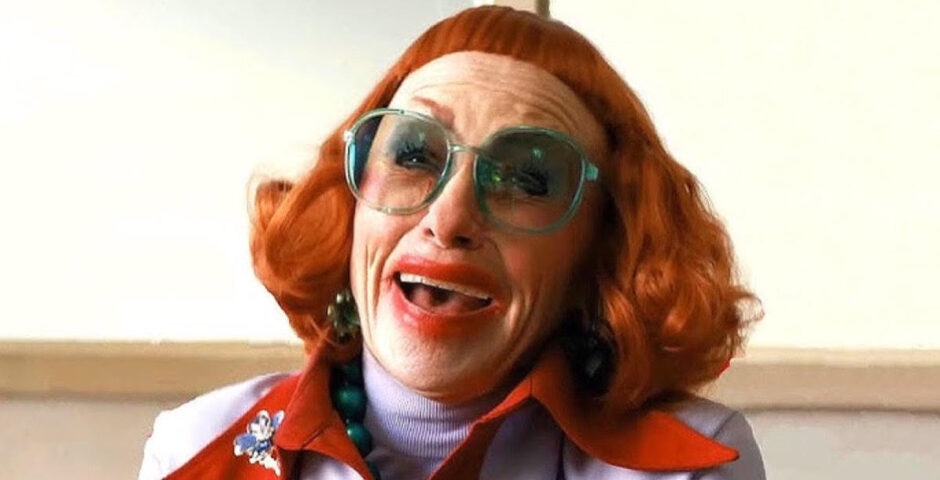
About two-thirds of the way through the film we meet Alex’s Aunt Gladys (a nearly unrecognizable Amy Madigan), who’s just come to town and wears a gosh-awful orange wig that makes her look like a septagenarian Bette Davis after an all-night rave. Gladys is bleakly funny and not a little creepy — you just know she’s got something to do with the mass vanishing.

With its elements of the Pied Piper legend plopped down in contemporary suburbia, “Weapons” certainly grabs our interest and keeps us guessing as to what’s going on.  If the final reveal is a bit underwhelming, Cregger seems to think so, too, because at the last moment “Weapons” shifts from slow-creep dread to over-the-top physical comedy.

Even if the big explanation is a fairy-tale head-slapper, most of “Weapons” is extremely watchable and quite involving.

| Robert W. Butler

Read Full Post »